

The Washington’s home sits on a bluff overlooking the Potomac River.
Washington's Mount Vernon, VA
Denise Sloan
His resume reads a bit like an overachiever: two-time President of the United States, creator of the US Army and Navy, creator of the new nation’s capitol, presided over the Constitutional Convention, commander of the Continental Army and all of Virginia’s forces during the French and Indian War.
In just 67 years, George Washington managed to cram more life experiences in than people half his age. But few Americans realize George Washington interests extended well beyond his impressive military and political pursuits. At Mount Vernon, his home along the Potomac River in Virginia, we learned about the rest of the man.
Similar to Washington, the Mount Vernon estate peels back in layers to reveal more and more about the whole family that lived there. It’s not just a pretty house to tour.
Every time I visited I learned something new. On this trip my parents and I interacted with historical characters, met some farm animals, stepped into the commander’s shoes to “Be Washington” and wandered through the dormant gardens and farm area.
Historic Treats
The folks and I started our day with food, lots of food. We enjoyed a delicious lunch at the Mount Vernon Inn Restaurant. The menu offers some traditional foods from Washington’s day like peanut soup as well as modern favorites like salads and burgers.

My Dad enjoyed his own pan of yummy cornbread at the Mount Vernon Inn Restaurant.
After fueling up with lunch, we wound our way through the 23-gallery museum. We enjoyed a variety of movies about Washington’s military life, the restoration of Mount Vernon and the 40-year romance of George and Martha.
Of course we stopped at the gift shop before heading out of the museum complex. We found everything from authentic Washington-era china patterns, 18th century cookbooks and kids games to modern t-shirts in every size, color and shape. The gift shop offered a dazzling amount of choices. But we loved the unique “Mount Vernon” Christmas decorations the most.
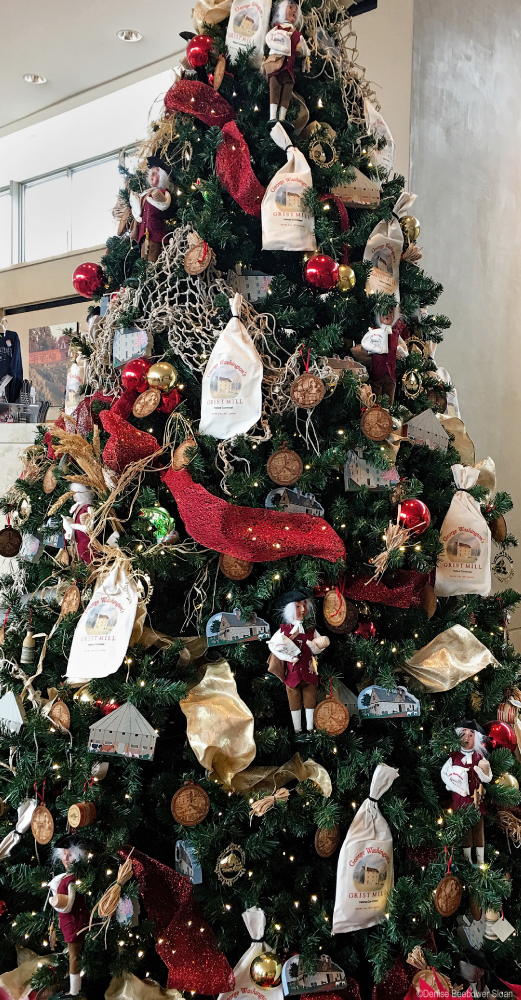
The gift shop Christmas tree sported items unique to a Mount Vernon Christmas, like Washington’s gristmill flour bags.
The Mansion
At the appointed time, we headed out the doors to the mansion for our tour. Our tour guide, a “retired” military spouse, gave our group a thorough peek into the lives of our first President and his beloved First Lady.
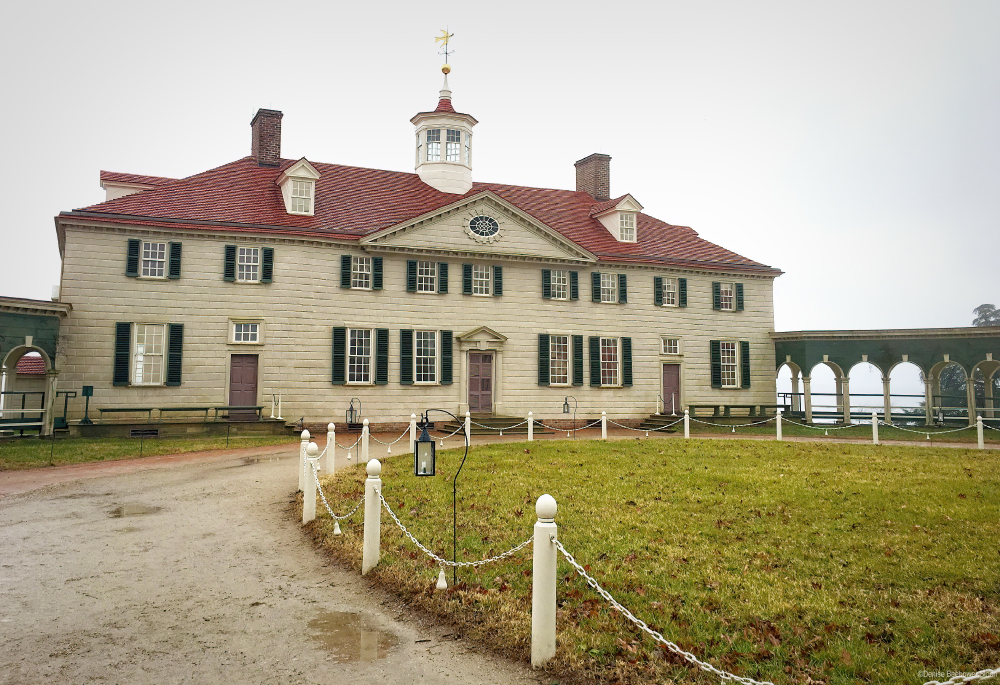
This impressive view greeted guests who arrived by carriage to Mount Vernon.
George Washington’s father Augustine built the one-and-a-half story house in 1734. George finally inherited the house in 1761 after leasing it for about nine years. At that point, he added two wings and a cupola.
George supervised every detail of each renovation. When he died in 1799, the expansive home had 21 rooms as well as a distinctive piazza or porch.
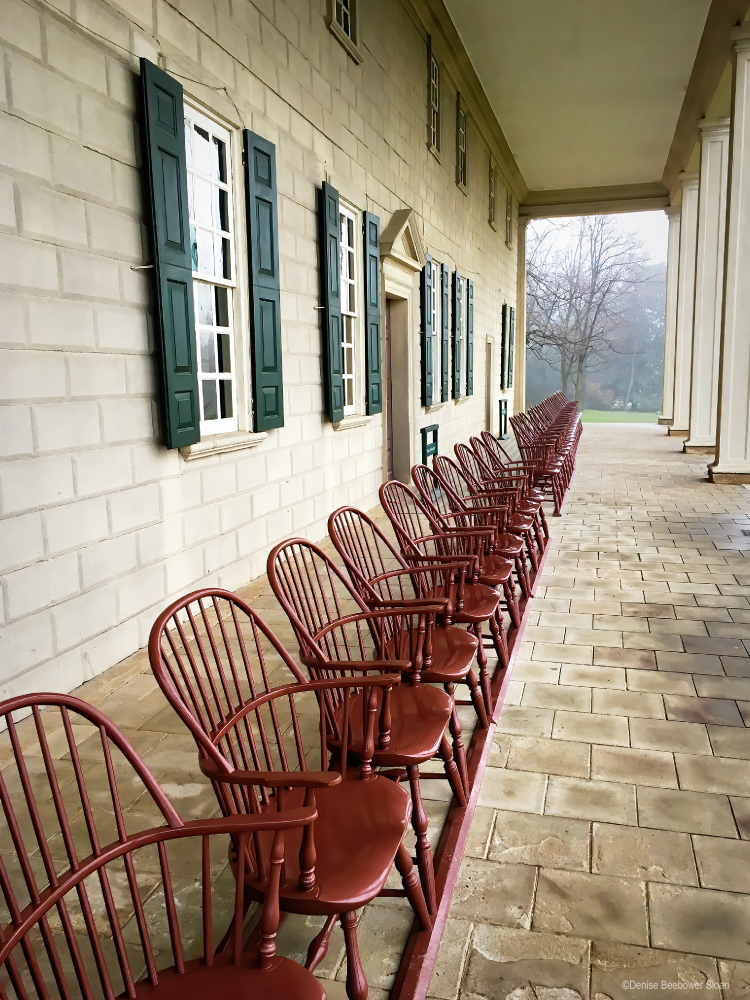
George Washington designed this two-story piazza or porch, a very unique feature for an 18th century home.
The home expansion served a purpose. Thanks to George’s illustrious military career and time as President, the Washingtons found themselves entertaining an extraordinary amount of guests each year. In 1798 alone they hosted 677 visitors! They needed rooms to house and entertain their massive procession of guests.
One of the more interesting tidbits we learned involved the white “stone work” on the outside of the building. Washington cleverly used yellow pine siding carved to look like stone slabs. Artisans coated wood with oil paint. While the paint was still wet, they threw sand on each board to create the stone texture.
Walking the Grounds
After our mansion tour, we decided to wander down South Lane toward the farm. A variety of buildings like the smoke house, stables and wash house line the lane. Each building’s display explains the importance of the space.

Buildings such as the smokehouse, wash house and stables line the estate’s South Lane.
At the end of the lane, we found the stables, a place the Washingtons enjoyed. Both George and Martha loved horseback riding. George even bred mules after receiving one as gift from the King of Spain.
Our self-guided wanderings then led us to the family burial vault, the final resting place of both George and Martha Washington. We stopped to pay our respects.
Here we learned that after the Revolutionary War, George simply wanted to return home to Mount Vernon. Instead he was persuaded to serve two terms as president of the United States. He returned to Mount Vernon in 1797 at the end of his second term. He enjoyed just two years at his beloved home before a throat infection claimed his life.
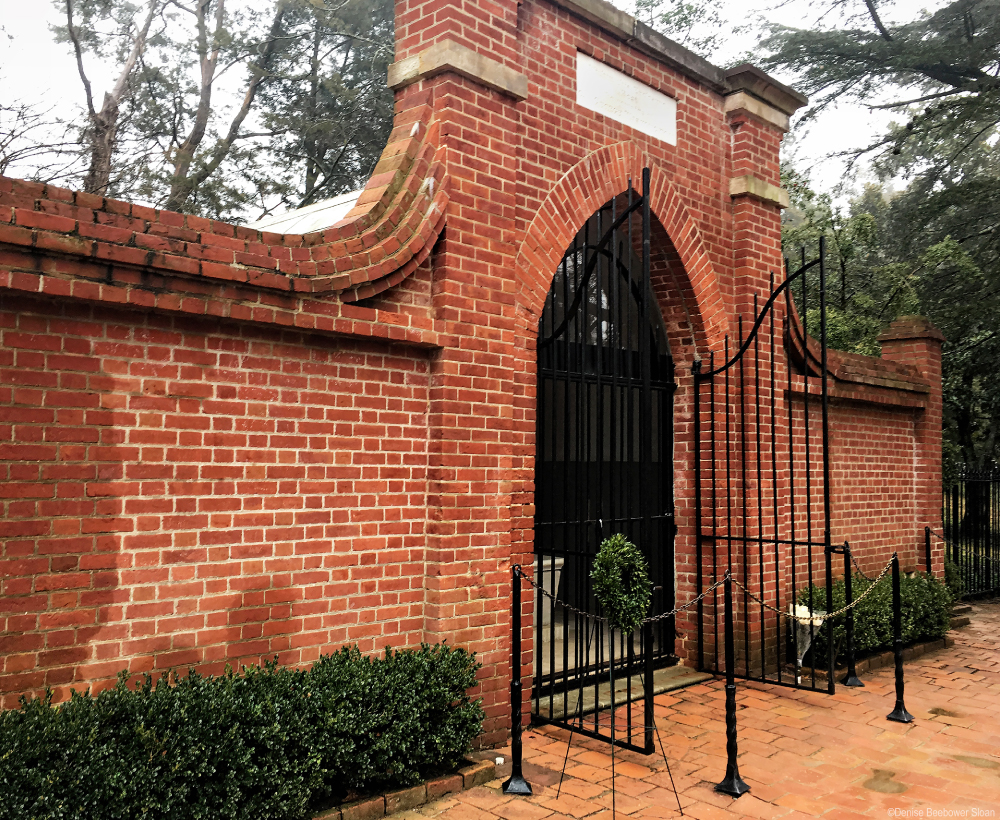
The President and First Lady’s final resting place is the family burial vault at Mount Vernon.
Agricultural Rockstar
During his few years at home, George focused on improving his fruit garden, farm, distillery, fisheries and gristmill. He was wildly successful farmer and entrepreneur.
Down the hill from the family tombs, the pioneer farmer site recreated what life was like for the slaves who farmed the land for the Washingtons and the animals who lived on the estate.
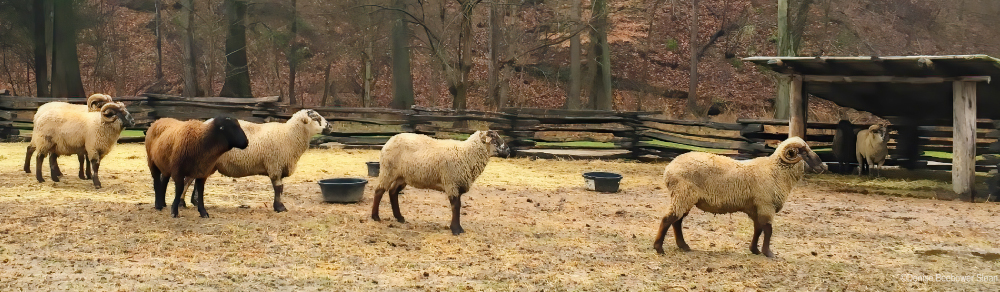
Hog Island Sheep wander together in the Pioneer Farmer Site at Mount Vernon.
We visited in the winter but during the summer, visitors can see living history actors give farming demonstrations plus hogs, chicken and horses.
Slavery at Mount Vernon
After taking a quick peak at the Potomac River by the docks, we climbed back up the hill to the main house. Our last stop was the female slave quarters. The Washingtons did own slaves, 577 to be exact (over George’s lifetime).
This room in the slave quarters often housed an astonishing 15-20 women and children whose work included things like spinning wool, cooking, gardening, doing laundry and knitting. The children often hauled water and cared for younger children. It was a hard life as this spartan room clearly conveys.
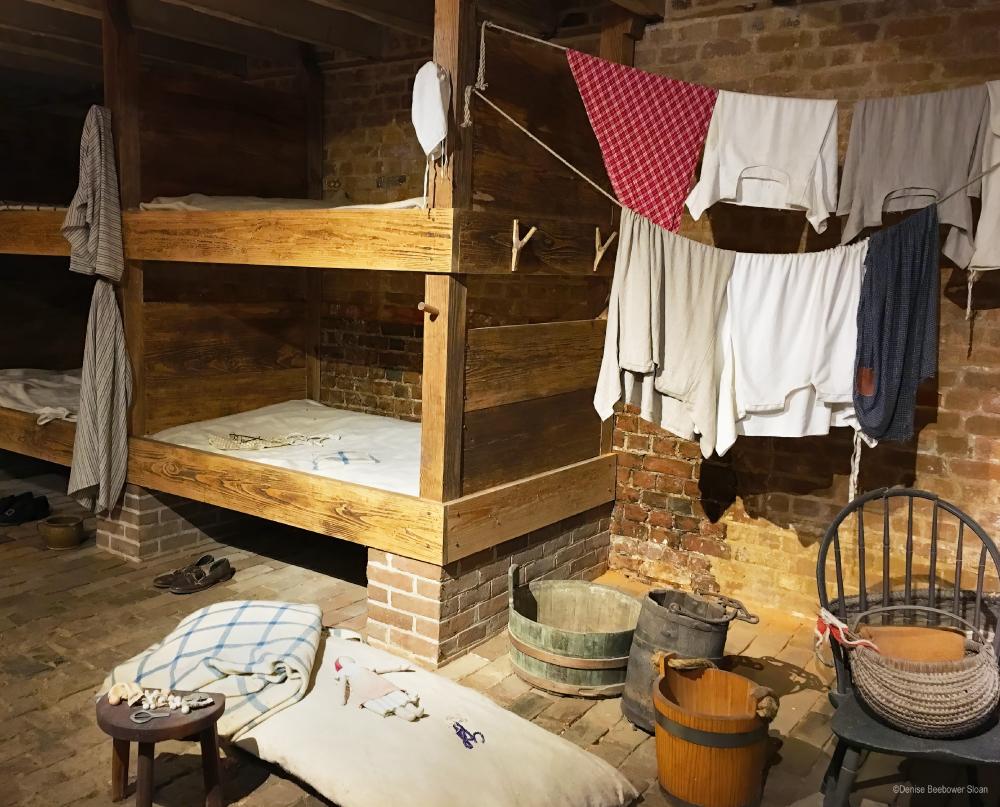
Up to 20 female slaves lived in these austere barracks at Mount Vernon.
Over his lifetime, George’s opinion changed from pro-slavery to anti-slavery. His will stated his slaves were to be freed upon his wife Martha’s death. Martha decided not to wait and freed George’s slaves in 1802.
Wrapping It Up
At the end of the day, we discovered George Washington’s resume should include a few more things: skilled farmer, a plantation manager, entrepreneur of several businesses, map maker, book author and breeder of the American Foxhound and mule.
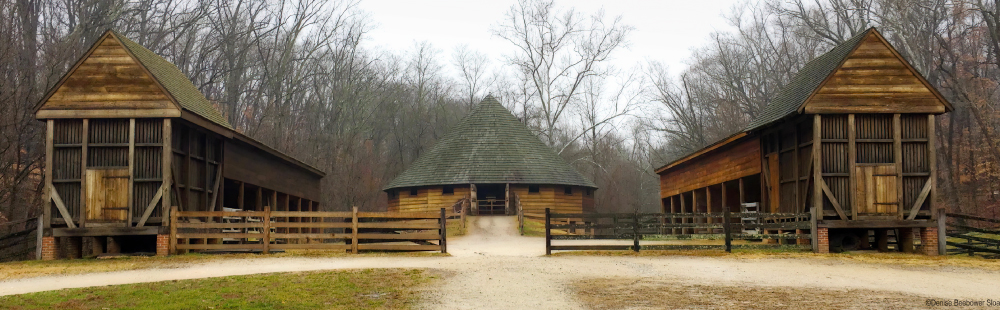
Two stables with corn cribs and a 16-sided barn made up part of the Pioneer Farmer Site.
Like a fabled Renaissance Man, this self-educated farmer did indeed help his young country on the battlefield as well as from his Virginia home.
Closest Military Installations
MWR Locations Nearby
Fort Belvoir Travel Camp, VA (20 min) | Joint Base Andrews FamCamp, VA (40 min) | Navy Getaways Annapolis, MD (1 hr 15 min) | Camp Meade RV Park, MD (1 hr 20 min) | Champ’s Camp RV Park, Fort A.P. Hill, VA (1 hr 40 min) | Navy Getaways Solomon’s Island, MD (2 hours) | Richmond Family, Morale, Welfare and Recreation RV Camp (2 hours) | Goose Creek Campgrounds, VA (2 hours) | Marylander RV Park and Shore Park Travel Camp, MD (2 hours) | Dover Air Force Base FamCamp, DE (2 hr 30 min) | Cheatham Annex Outdoors and Cottages (2 hr 40 min) | Fort Eustis Recreation Area, VA (2 hr 45 min) | Bethel FamCamp, VA (3 hours)
If You Go:
- Visit mountvernon.org to get the current hours, directions, ticket prices and special event information.
- Purchase your tickets online. The mansion and speciality tours required timed tickets. During peak months these tickets sell out quickly and capacity is limited on the tours.
- Mount Vernon offers lots of kid friendly things to do. Check out here for current events.
- Mount Vernon offers free, on site parking.
- You must pass through a security screening to enter the grounds. Your bags will be searched. Anything larger than 16x16x18” is banned. Strollers are allowed.
- No outside food or drinks are allowed on the grounds. There is a food court inside the museum/gift shop area. The Mount Vernon Inn Restaurant is just outside the museum area.
- Dress appropriately for the weather and wear good walking shoes. The estate covers a large area so you will walk a lot during the day.
- Plan to spend a couple of hours here if you want to see everything.
- Strollers are allowed on the grounds but must be parked outside the buildings before entering for a tour.
- Surprisingly Mount Vernon welcomes dogs. Well mannered and leashed pooches may roam the grounds although they can’t enter buildings.