

Containers make PCSing frequently and gardening compatible.
Portable Gardens
Denise Sloan
Gardening when you move every couple of years can be challenging. Prior to marrying my husband, I always grew flowers and vegetables in the ground. So when we moved in to our first house, I quickly dug up a spot in the backyard for my garden. Even though it was small, it was still a lot of work because the ground was rock hard. Nonetheless, I persisted and was rewarded with produce that summer.
We moved the next year from a house with a big backyard in Texas to a postage-stamp yard in Arizona. Half of the yard was a cement patio. The other half was mostly weeds with a few sprigs of grass thrown in for good effect. And the soil? Desert sand.
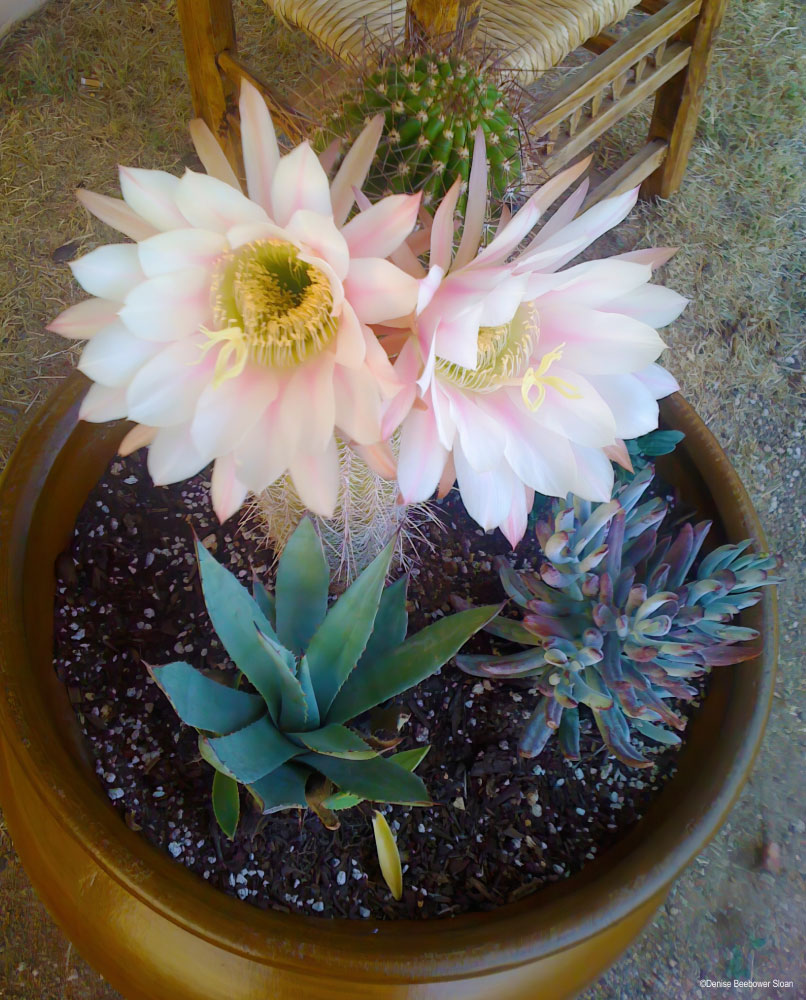
This collection of a cactus, succulents and an agave thrilled visitors in a pot outside our front door.
Gardening wasn’t going to be easy here. That’s when I started thinking about container gardening. I could see a number of benefits:
- No digging required
- Worked with flowers as well as veggies
- Offered total control of the soil so plants would be happy
- Portability if the light conditions weren’t quite right
- Doubled my planting space
- No need to restore grass when we PCSed
- Easy to move the potted plants with us to the next house.
- Easy to change pots appearance with spray paint
Types of Containers
It didn’t take long to sell me on container gardening. Over the years I experimented with a lot of containers.
But before diving in to each type of container and which are my favorites, let me add a caveat for you to consider. Climate matters when choosing a planter.
Some containers do better in cooler temperatures and others work well in very hot climates. Do some research to find out what your plants prefer. Do they grow better in sizzling heat? Or do they thrive in milder weather?
Another factor that changes the temperature is location. Pots sitting in the grass are cooler than pots sitting on cement in the sun.
So take these factors into consideration when selecting containers. Then, depending on your plant’s needs, choose the type of pot that helps retain or repel heat.
Alright. The cheapest and most common option is a plastic container. These come in all shapes and sizes from small round pots to large rectangular boxes. Plants do well in these containers as long as there are multiple drainage holes at the bottom.

This plastic containers came with a bulit-in trellis perfect for staking tomatoes.
I’ve grown everything from perennial plants to tomato plants in these pots. Some even come with a built in trellis system, perfect for climbing vines or staking tomatoes.
Bonus-Plastic pots weigh next to nothing when empty. This certainly helps keep your weight under the limit when PCSing.
Just keep in mind that plastic does heat up fast in warm climates and it freezes quickly in cold climates. Plant roots generally don’t like either of those extremes.
Next up, clay pots. Simple terra-cotta clay pots are cheap and great for growing plants. They come in glazed or non-glazed. The porous nature of non-glazed clay allows the roots to breathe. Water and air can easily penetrate through the clay to the roots. Plants are less likely to be waterlogged and die.
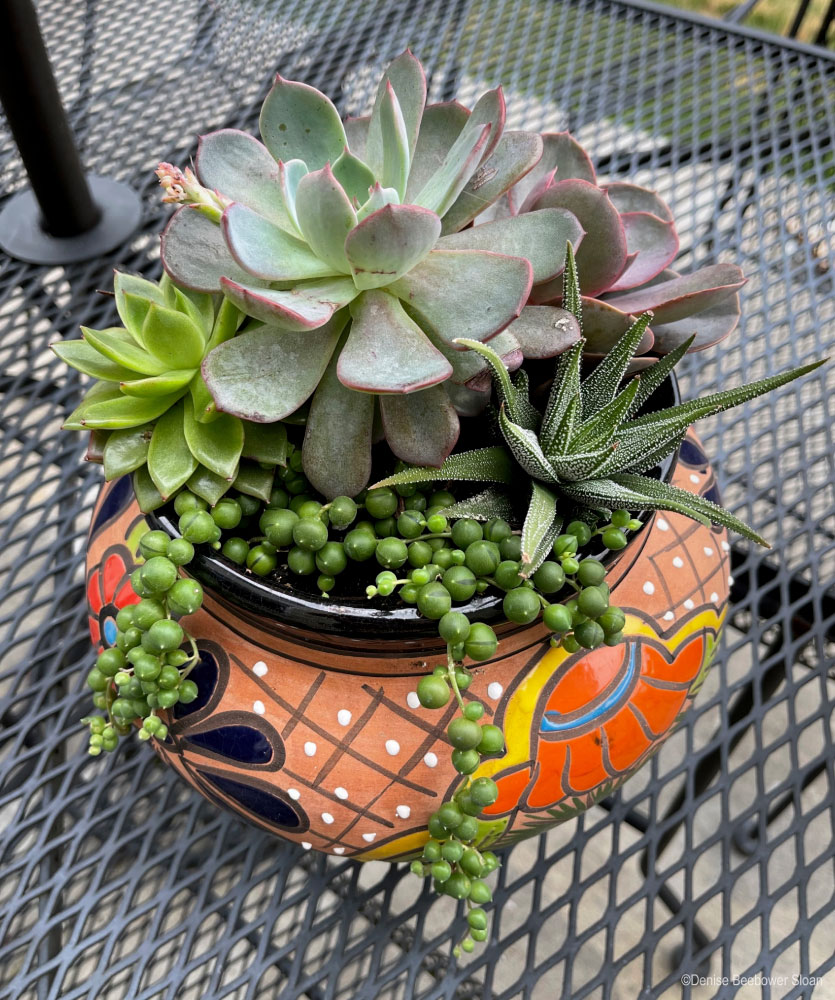
I love the detail and color of Talaveras pottery.
One of my favorite clay pots is made in Mexico. I love Talaveras pottery. For centuries, artists in the village of Talavera de la Reina have created these beautiful pots by hand with vibrant colors and and floral designs. Some pots are completely glazed after painting and others have a partial glaze.
It’s important to know that like plastic, glazed clay pots tend to retain more water and allow less air to reach the roots. So don’t over water the plants or choose plants that enjoy soggy feet.
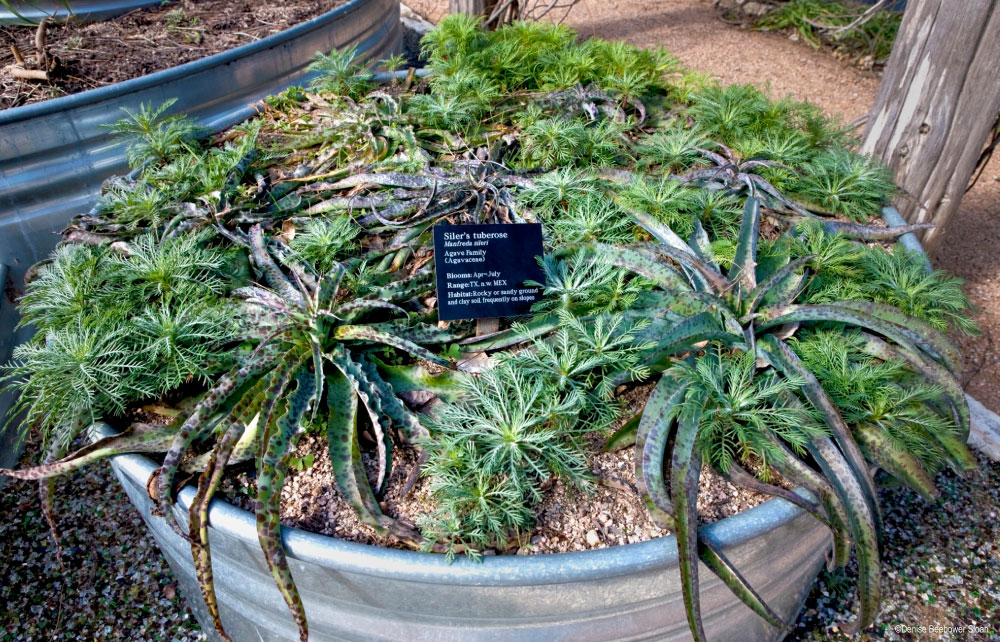
Large metal containers add a farmhouse feel to a yard.
Metal planters bring a rustic farm feel to any garden. The big draw back is that metal retains heat, especially in the desert Southwest and the Southeastern United States. So choose plants that can handle the heat.
Also make sure to drill adequate drainage holes in the bottom if the container doesn’t already have them. Oh, and don’t grab the metal on a hot summer day.
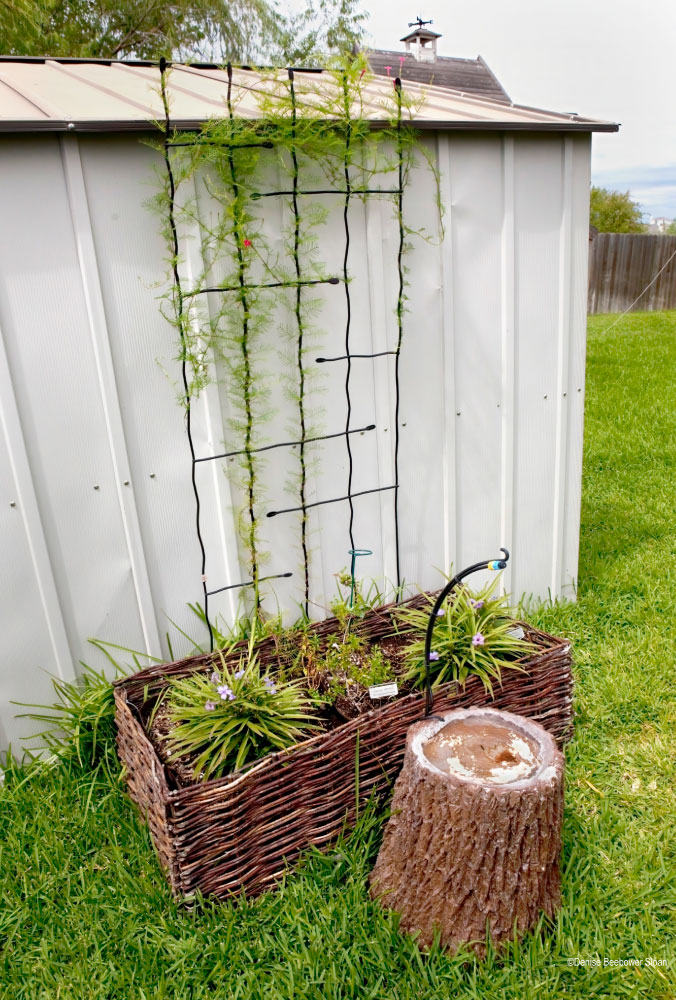
A fabric bag gave these flowers a nice home until the bag disintegrated.
One of the more recent trends is gardening is the fabric bag planter. I’m always interested in trying new techniques in portable gardening, so I jumped on this one.
I found a black bag set that came with an attractive willow cover. I set it up in Texas at the beginning of spring and had no trouble growing flowers and a hummingbird vine. Unfortunately the bag disintegrated by the next spring. I wrote off the fabric bag for future gardening because of the yearly replacement cost. But it might be just fine for short military assignment.
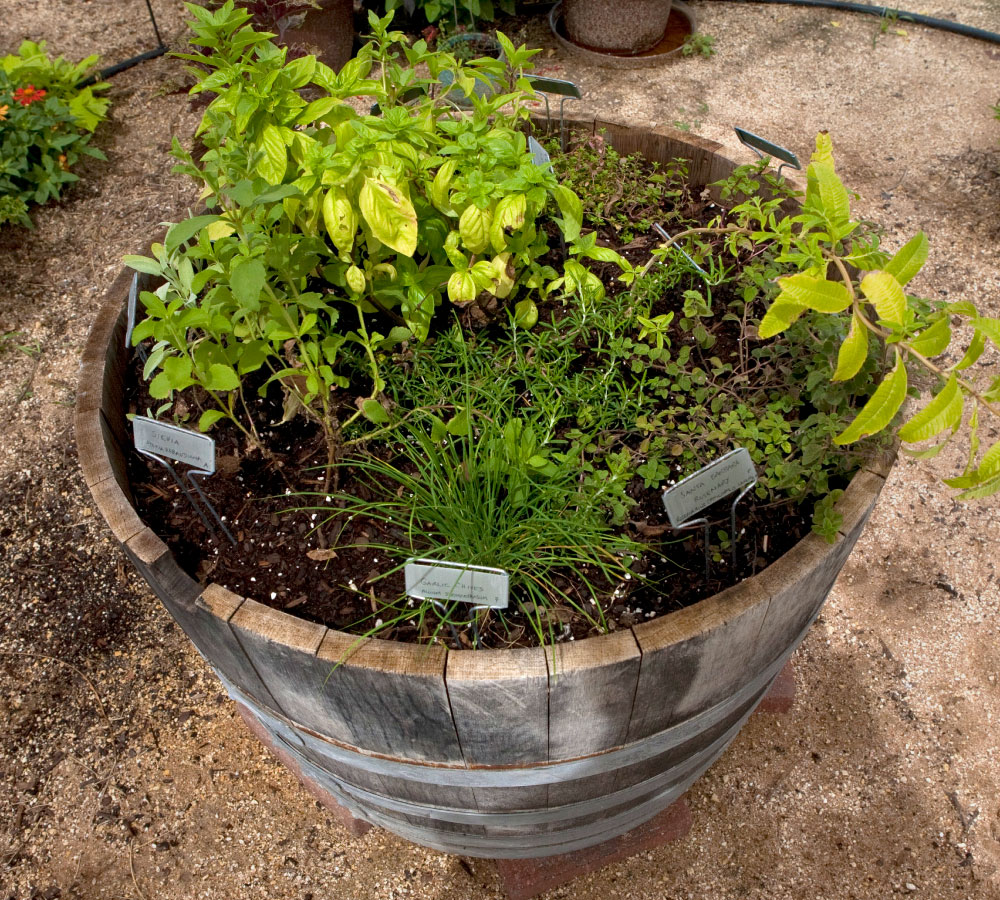
My herbs grew well in this whiskey barrel planter.
The sky’s the limit on unique containers if you’re creative enough. I grew herbs in a whiskey barrel. They did great. The only draw back was the weight of the barrel when it came time to move.
I’ve seen people grow flowers in wheelbarrows, cowboy boots, wooden bowls and even old-fashioned washing pitchers. Anything goes as long as the soil and drainage are good.
Sometimes when we moved, I had little space for a traditional garden, but I did have room to hang things. In fact, I once used multiple hanging baskets to give us a little privacy from neighbors.
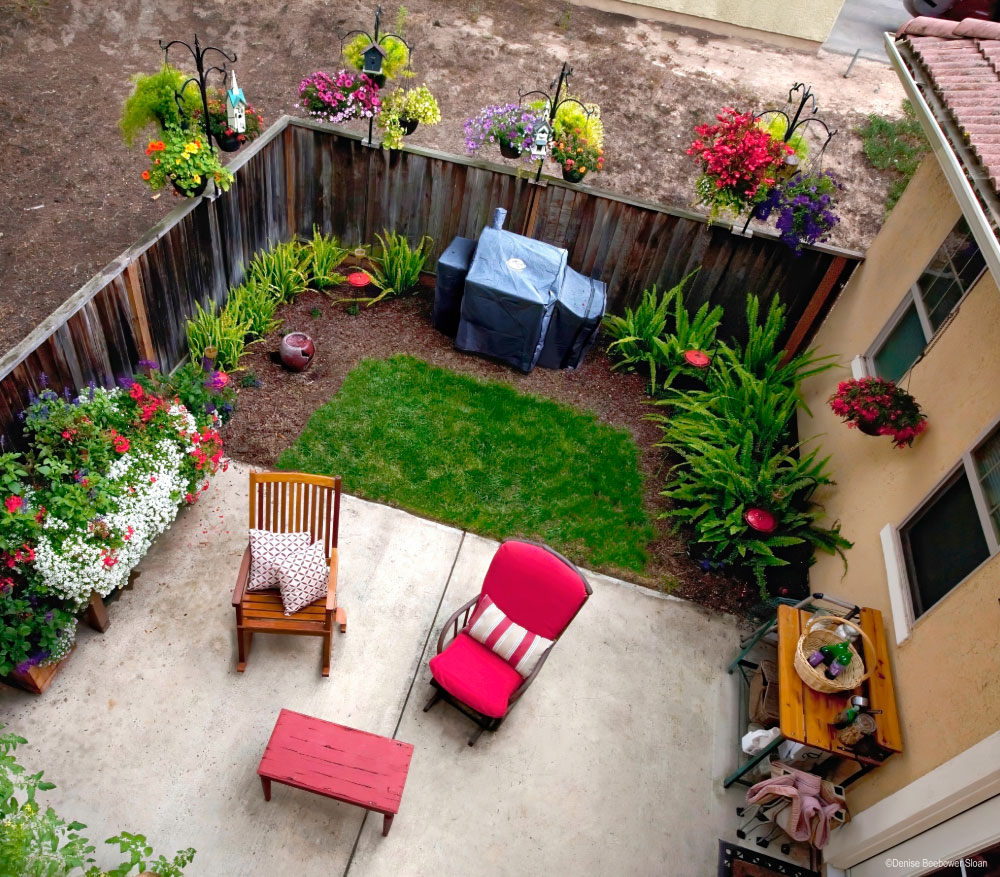
Hanging baskets broke up the neighbors’ sightline into our yard and added a splash of color.
Hanging baskets are great for putting a splash of color in unlikely spots and for screening the neighbors’ views. They do require more watering than a traditional pot, though. Since they are smaller and more exposed to the elements like wind, the soil tries out faster.
To get that really beautiful cascading effect, I learned the average hanging basket wouldn’t do the trick. Now the only one I use is Pamela Crawford’s tiered baskets.

Gronomics garden boxes and trellis were a winning combo for cucumber cultivation.
I saved my favorite garden container for last. In 2011 I purchased my first Gronomic’s garden box. Since then I’ve grown bountiful gardens with minimal bending over to weed or water. That’s important since I’ve got a neck issue that’s aggravated by those activities.
I’ve successfully crammed these boxes with veggies each season and harvested bumper crops. They drain well and last years since they are made of cedar. I absolutely love, love, love these boxes!

Gronomics garden boxes and trellis were a winning combo for cucumber cultivation.
One of Gronomic’s most recent additions is a folding trellis. It’s easy to install with a few screws, performed beautifully for both tomatoes and cucumbers and was a breeze to fold up for our PCS.

The Gronomics garden boxes break down into a small pile of boards, perfect for PCsing!
Not only are they great for growing, the Gronomics boxes come apart when it’s time to move. They breakdown in to a small pile of wood that’s easy to reassemble on the other end of a PCS.
Container Tips and Tricks
So here are a few things I’ve learned over the years while gardening with containers:
- Put some filler material at the bottom of the container. This could be gravel, stones or even empty soda bottles. This provides great drainage, thus keeping the roots from water logging.
- It’s better to water less frequently but deeply. To help your plant grow nice deep and healthy roots pour on the water until it runs out the bottom of the pot. It’s time to water again once the top couple of inches of soil dry out.
- How often you need to water will depend on the stage of the plant’s growth, the size and type of pot, amount of direct sun, temperatures, wind (dries out plants faster) and the amount of water a particular plants requires (think cactus vs ferns).
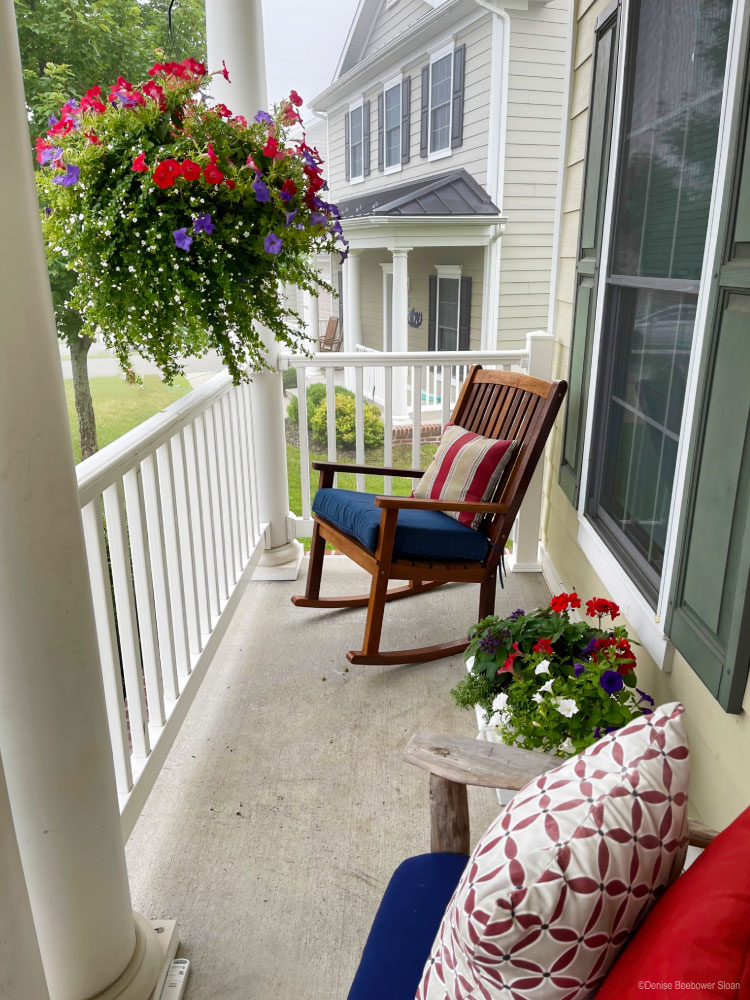
Hanging baskets add color and interest where in-ground flowerbeds are lacking.
- Hanging baskets will probably need to be watered daily.
- While gone on vacation use an olla. These clever clay pots get buried in the soil and filled with water. The water slowly oozes out as the soil begins to dry ensuring your plants survive your vacation. This version uses a slightly different set up but with the same results.
- Because pots require so much more water than plants in the ground, you will need to fertilize them weekly during the growing season. The frequent watering leaches out minerals faster.
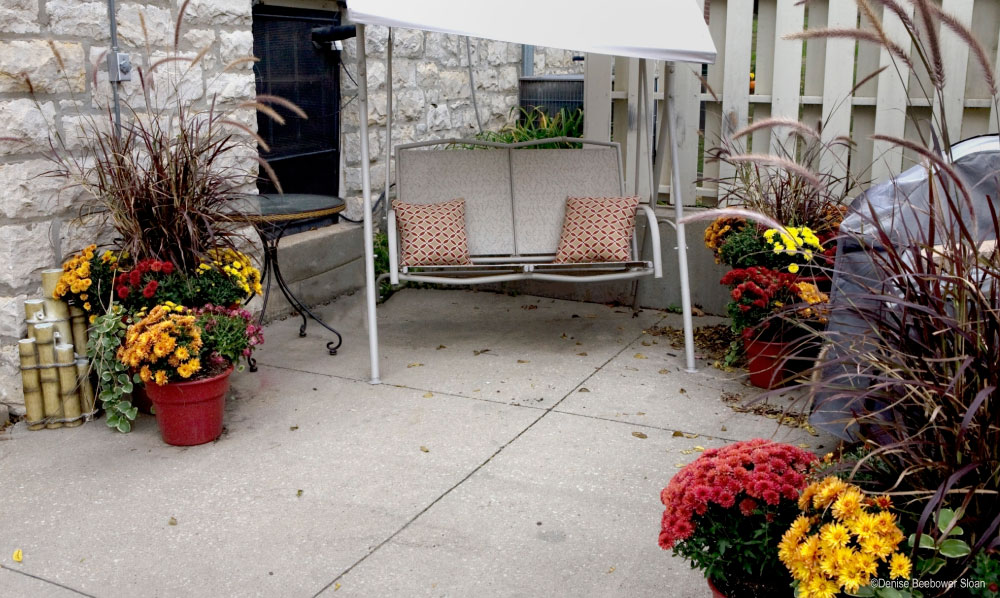
It was easy to bring fall color through containers to the cement porch area.
- Check plants regularly to see if they’re root bound. This happens when the roots run out of space to expand and begin to grown in a circles around the bottom of a pot or out the drainage holes.
- When that happens, it’s time to move to a larger pot. If left too long while root bound, the growth will be stunted.
- If you live in a particularly cold climate, bring your pots in to a protected area for the winter. The repetition of water, freezing, thawing and repeating can break pots.
- Each spring before replanting make sure to add some fresh soil and fertilizer to the pot.

When plants are happy in a container, the results are spectacular!
Consider adding pot feet to the base of your pots. These elevate pots for better drainage and allow air to circulate keeping the roots inside the pot cooler.
Invest in a pot lifter if you think you’ll ever move any of of your filled, larger containers.
So there you have it. A portable garden that you can take around the world. I spent 23 years gardening wherever the military sent us. I learned to work smarter, not harder when it came to my garden. Hopefully you can too!