
Denise Sloan/PCS Adventures
Visitors get to assume cover stories and test their spy skills.
International Spy Museum, DC
Denise Sloan
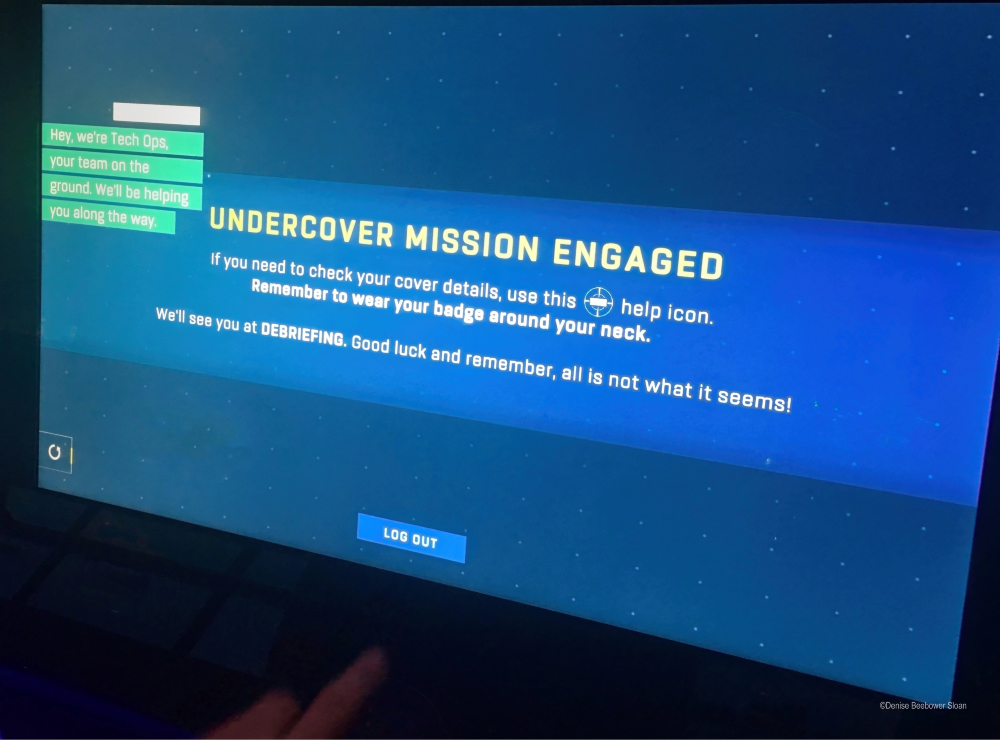
My mind stretched to absorb this mission before the countdown clock hit zero. I needed to infiltrate the safe house where a rebel group hid a really bad guy. My cover: Finley Gonzalez, a photographer from Puebla City, Mexico. My destination: Jakarta, Indonesia.
My spy persona brimmed with confidence about this mission, but the real me struggled to remember much beyond my occupation as a photographer. Maybe that’s because I actually am a photographer.
Anyway, after a few minutes of memorizing my cover details, I convinced myself I was ready to test my spy skills at the International Spy Museum in Washington, D.C.
School for Spies
I thought our trip to the museum would be your average museum visit—look at displays, learn facts and head home. After all the massive building holds over 7,000 spy-related artifacts with over 1,000 on display. But was about way more than looking at “stuff”. Little did I know, I’d actually become a spy at this museum.
Denise Sloan/PCS Adventures
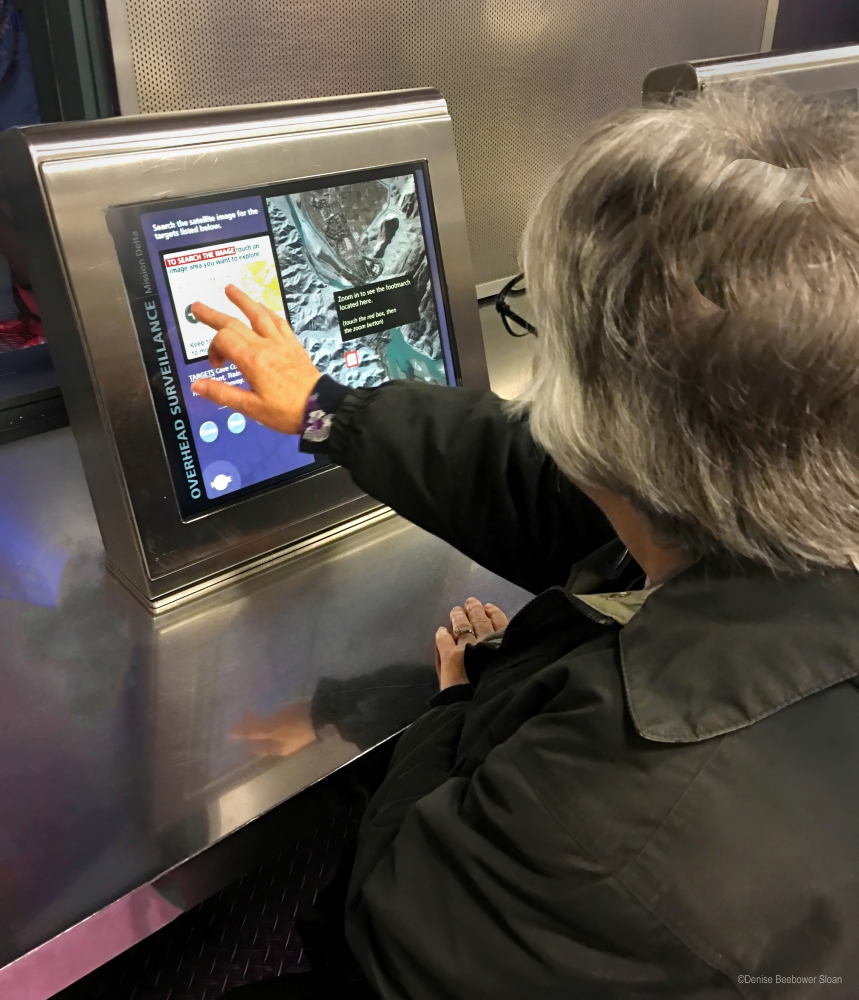
One of the spy skills was analyzing overhead surveillance.
Each visitor got sucked into the mystery and intrigue of the museum. It started with a personalized cover story and then activities to practice spy skills. Mixed in with the spy skill stations were fascinating exhibits about all aspects of spying.
Two floors of exhibits ranged from how spies steal secrets to spying that changed history. One of the most unique things about the museum was the international aspect. The exhibits covered spying from numerous countries around the world in addition to the United States.

I go undercover with a stellar disguise.
One of the first spy skill tests was disguises. The test: change your appearance enough to fool even your family. The kiosk presented all sorts of tools like wigs, glasses, and clothing to help turn you into someone new.
I did pretty well at this station, although my picture reminded me of a bad DMV photo. But I didn’t exactly look like myself, so I counted it a win.
Denise Sloan/PCS Adventures
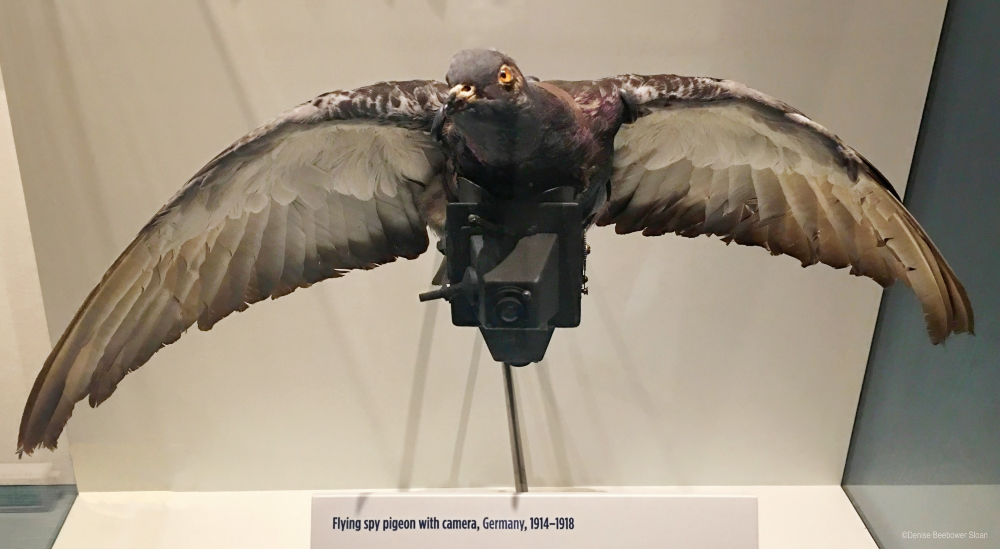
Germans used trained pigeons to spy on their enemies during World War I.
As I walked on to the next section of the museum, I stumbled upon the pigeon camera. Yes, during World War I, the Germans strapped cameras on well-trained carrier pigeons. The birds then flew over the enemy while the cameras snapped photos. It was definitely a creative use of “current” technology to gather intelligence.
Denise Sloan/PCS Adventures
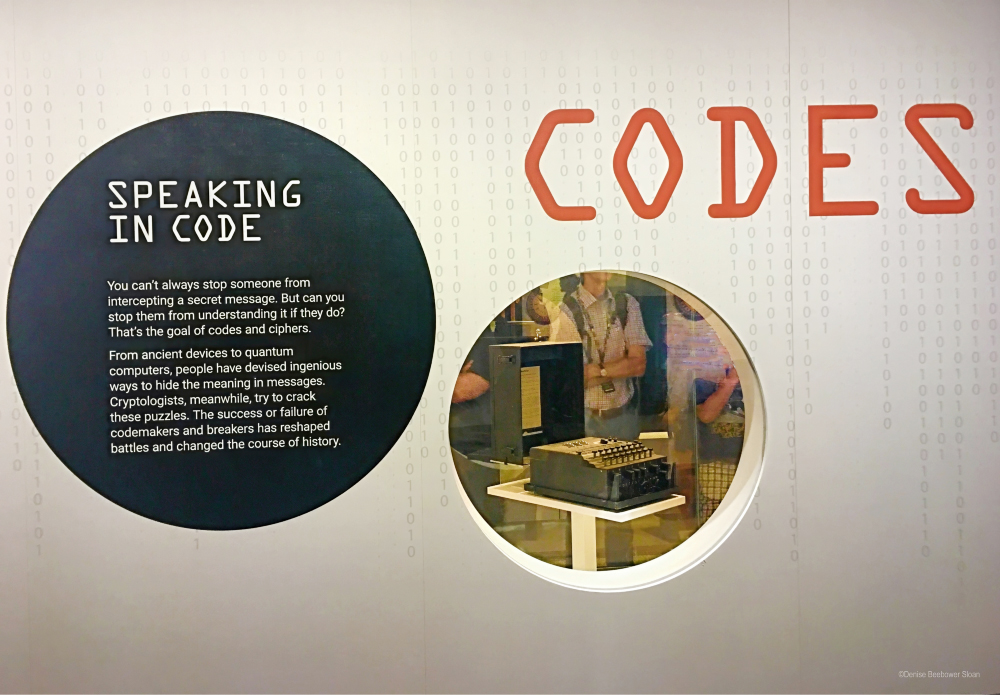
The code breaking section of the museum was my nemesis.
“The Making Sense of Secrets” section of the museum turned out to be my nemesis when it came to spy skills. According to my mission ratings, I was terrible at breaking codes. Thankfully there are many patriotic Americans who are really good at that.
Spy Rings, Inflatable Tanks and War
I did, however, get to see the famous Enigma machine that helped the Germans and Japanese send coded messages during World War II. The Allies managed to break the code and that played a significant part in winning World War II.
Codes and spies have played an important part in making world history. In fact, a whole section of the fourth floor exhibits focus on “Spying that Shaped History”.
Denise Sloan/PCS Adventures
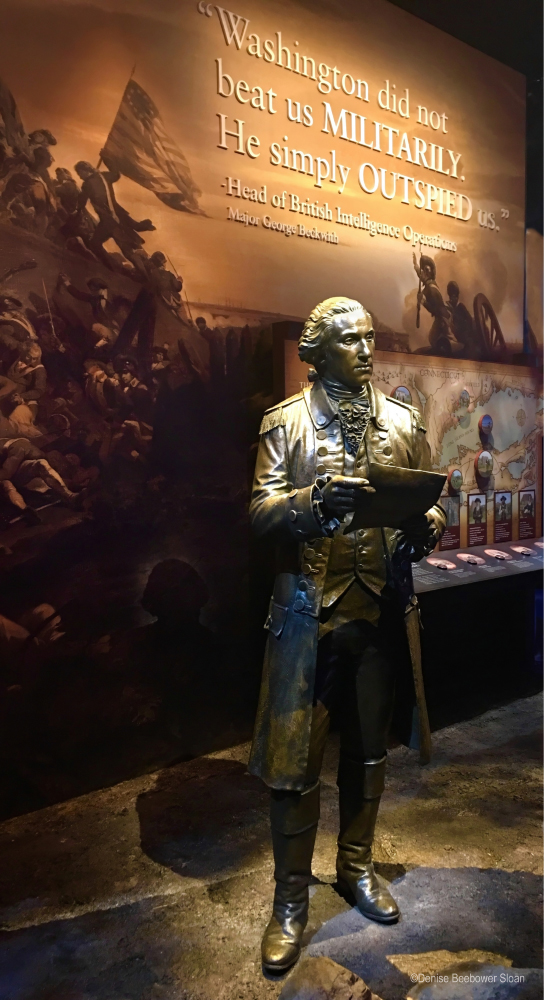
I love the exhibit that explains George Washington’s spy ring.
One of my favorite exhibits highlights the role of George Washington’s spies played in the founding of the nation. The history geek in me loved getting a look at his handwritten letter from 1777 employing Nathaniel Sackett not only as a spy for the Continental Army, but also a recruiter for a new spy ring.
Another notable exhibit features Operation Bodyguard from World War II. The Allies not only planned the Normandy invasion. They also planned a large scale deception to throw the Germans off of their true plans.
The Allies created two fake armies including General George Patton’s “First US Army Group” that massed along south England. This “army” included inflatable Sherman tanks, canvas and wood aircraft as well as landing crafts. As the Germans surveilled from planes, it looked like a true massing of resources in southern England for an invasion of Pas-de-Calasis instead of Normandy. Amazing that it worked!

My spy skills were evaluated in the debriefing.
Finally, after strolling through “Spying in the Market Place” each visitor entered the “debriefing” area to see the results of their spy skills tests. According to my instructors, I aced the disguise portion of my mission and I was a tech ops whiz. My mind was also a steel trap and I could easily keep my cover story intact. I did, however, suck at code cracking. Well, you can’t be good at everything.
Bond, James Bond
Once we finished debriefing, we headed down to the third floor. This would be a hit with anyone who loved James Bond movies. The entire floor, paid tribute to her Majesty’s favorite philandering spy 007. When we visited, this portion of the museum was included in our ticket price. It looks like a separate charge now.
Denise Sloan/PCS Adventures
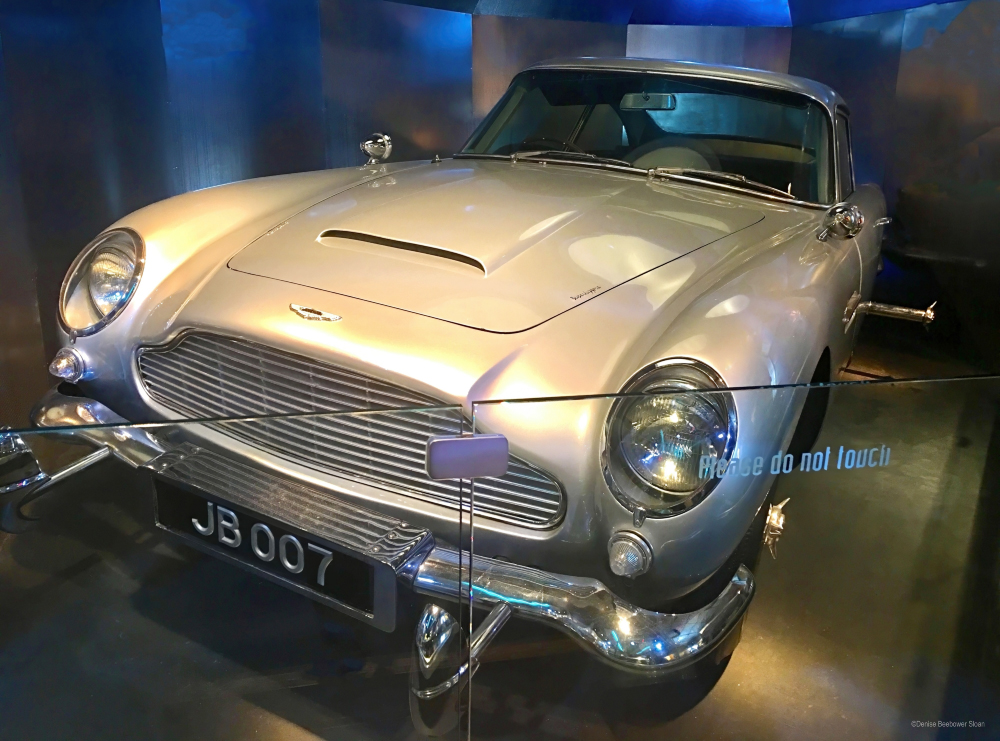
James Bond’s Aston Martin is just one of the cars displayed at the museum.
Currently, the exhibit showcases “Bond in Motion” with vehicles, all used by Bond, his allies or his enemies in the movies. Movie buffs and car aficionados both will love this stroll through movie history.
James Bond came from the creative imagination of Ian Fleming who actually worked for Britain’s Naval Intelligence Division during World War II. After the war, he became a journalist. His first Bond novel was published in 1952 and the first movie “Dr. No” appeared in theaters in 1962. Since then Hollywood produced 25 Bond movies.
Whether you choose to see all of the museum or just the spy sections, I’d highly recommend a trip to the International Spy Museum. Both kids and adults will enjoy the adventure and polish those spy skills.
Closest Military Installations
MWR Locations Nearby
If You Go:
- This museum is very popular. During the summer and holidays so many people pack the museum you can’t see the exhibits. I suggest going early or later in the day and on a non-holiday weekday for the best experience.
- Purchase your tickets in advance for a discount. The further ahead you buy the tickets, the larger the discount. The museum also offers a military discount.
- When we visited the Bond exhibit was included in admission. It looks like that’s a separate charge now.
- We parked at the L ‘Enfant Plaza Ace Parking Garage behind the museum. You can reserve a spot via the ACE website. Just bring a smaller-sized vehicle. The garage is not built for big trucks.
- Don’t bring a lot of stuff with you. There are a limited number of lockers for storage.
- You can bring strollers but they must fit the size requirements on the website.
- Plan to spend 2-3 hours at the museum. There’s a lot to see!
- The only food at the museum are drinks and snacks in the gift shop. But there are several choices at the L’Enfant Plaza Food Court. You can not bring food, drink or gum in the museum.