
Denise Sloan/PCS Adventures
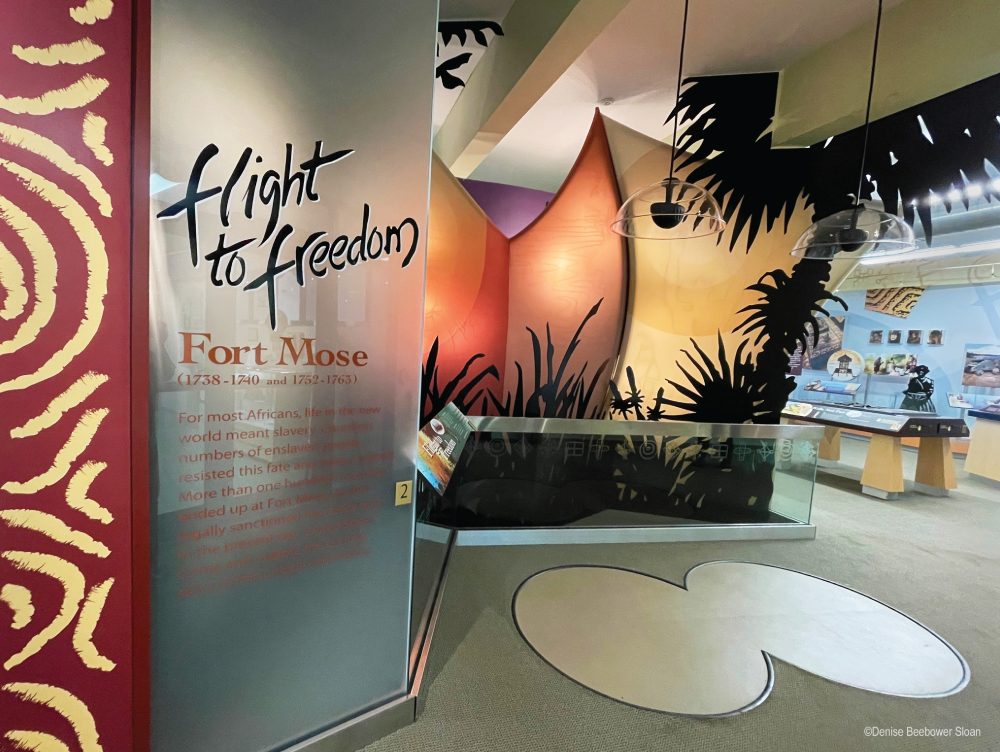
The Fort Mose museum provides interactive exhibits that bring the park’s history to life.
Fort Mose Historic State Park, FL
Denise Sloan
Tucked away behind a quiet residential neighborhood in St. Augustine, Florida, a historic state park waits to tell the story of former slaves who found freedom on the Florida coast.
Almost 300 hundred years ago, Fort Mose housed the first free African settlement in what would eventually become the United States. But I don’t remember hearing about this in my history classes.
What I do remember is that England and Spain were battling to gain control of the New World. Pro-slavery England held Georgia and the Carolinas. Spain controlled Florida. The first permanent settlements were Jamestown for the English and St. Augustine for the Spanish. Thus it became a top priority for Spain to defend St. Augustine from British incursions.
In 1693 the Spanish King saw a chance to destabilize the British by offering freedom to slaves who made it to Florida. In exchange for freedom, the new residents had to declare allegiance to the Spanish King, join the militia and convert to Catholicism.
But it wasn’t until 1738 that the Spanish governor created the Fort Mose settlement or the Gracia Real de Santa Teresa de Mose.

Denise Sloan/PCS Adventures
To achieve freedom, slaves had to join the Spanish Militia.
Over the years at least 100 slaves successfully made this “Flight to Freedom”. The Yamassee Indians helped the slaves travel through thick forests and dangerous swamps, creating the original underground railroad. As a result the slaves brought some of the natives’ culture to Fort Mose.
The former slaves built a self-sufficient community with farming and hunting. The men also participated in the Spanish militia. African-born Captain Francisco Menendez and his men constructed the wooden fort called Fort Mose. The fort served in a line of defense for St. Augustine.
Visiting Fort Mose
Our visit to this historic spot started with a movie in the Visitors Center. The movie laid out the history, personalized the slaves’ journey south and gave us a sense of the community the former slaves built.
Next, we toured the museum. I must say, it’s well done. It alternated telling the big story of Fort Mose with individual people’s stories. There were interactive exhibits, artifacts from the fort and a giant timeline to help us keep the history straight.
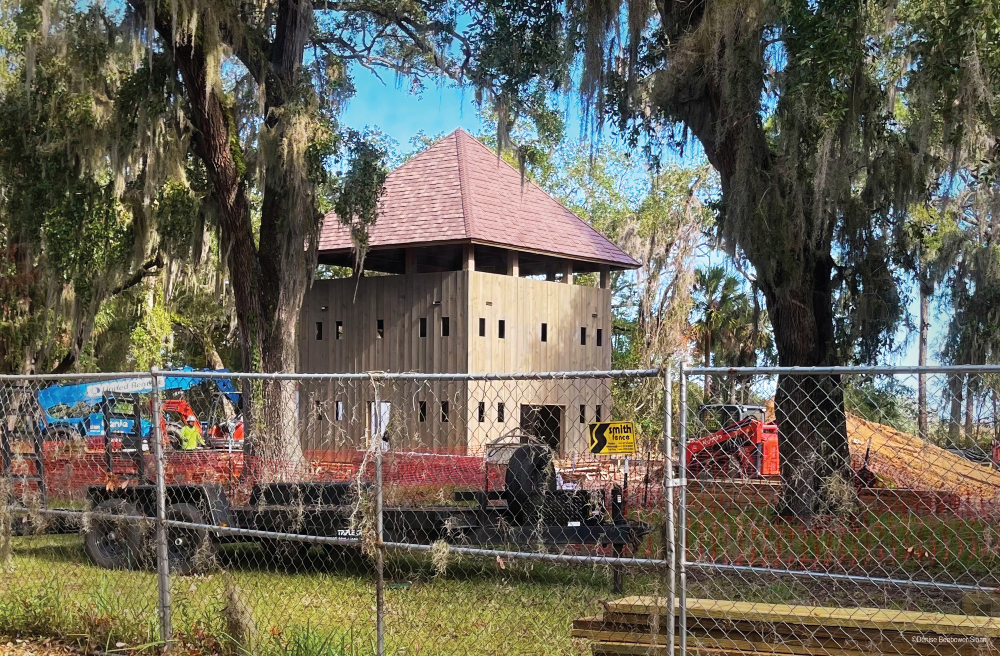
But perhaps one of the most interesting exhibits was still under construction during our visit. A peek out the back windows of the museum showed what will be the reconstructed Fort Mose. We weren’t able to tour it, obviously, but the manager said it should completed by the summer of 2025. What we did see looked impressive!
Denise Sloan/PCS Adventures
The reconstruction of Fort Mose takes shape behind the visitor’s center.
We also learned throughout the year the park hosts many special events that bring history to life. The first Saturday of each month, reenactors portray the Fort Moses militia muster.
February offers the Flight to Freedom event on the boardwalk with special tours that focus on the journey south to freedom. March brings the Founders Day celebration where visitors can watch as former slaves receive their freedom from the Spanish government.
Then in June reenactors stage the 1740 Battle of Bloody Moses to determine wether the English or the Spanish retain control of the fort.
November highlights the civilian side of life with the Fort Mose First Harvest event. The celebration commemorates the townspeople’s first harvest after their flight to freedom. Costumed reenactors prepare a typical 18th century Spanish feast. See the “If You Go” section for a link to the events calendar.
Walkway to Freedom
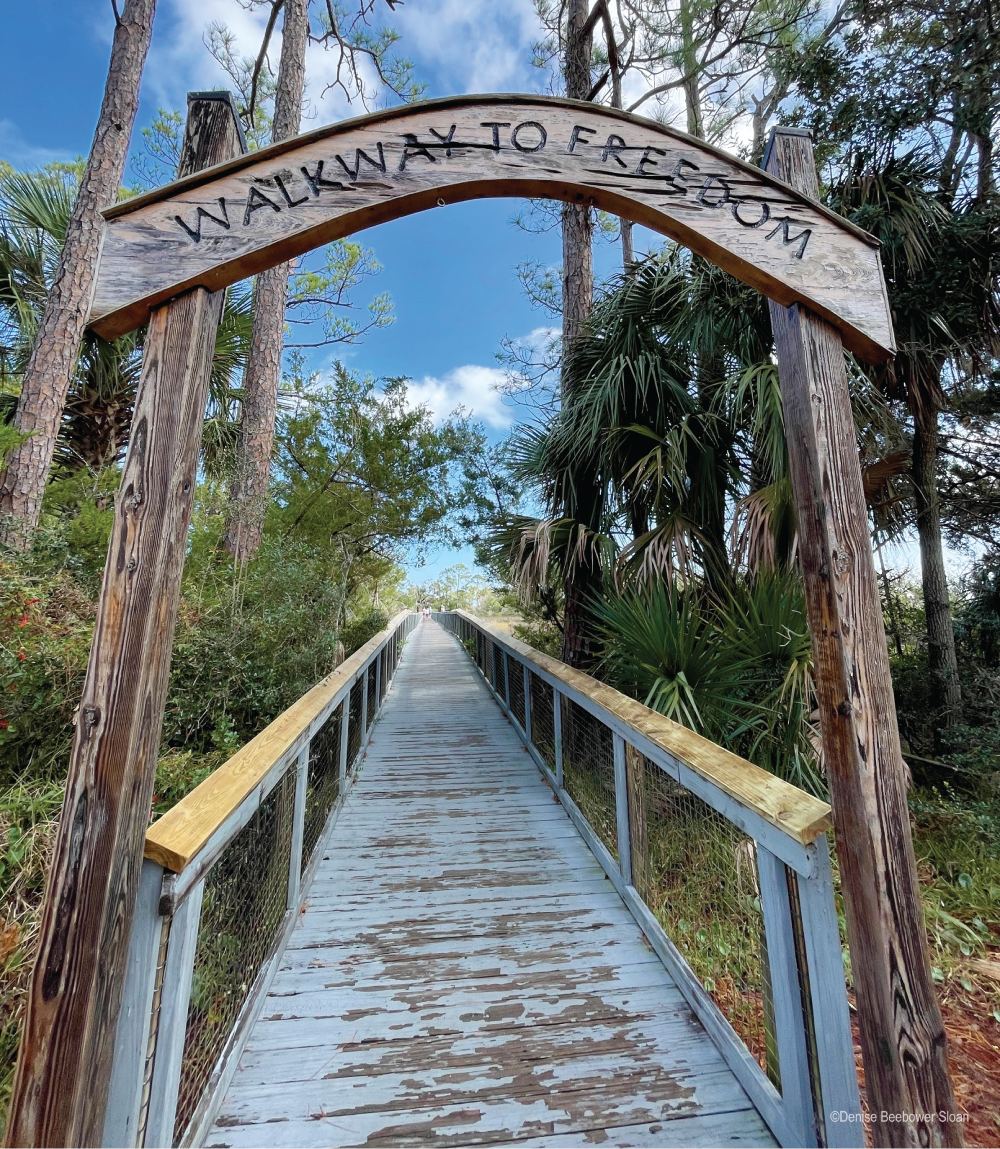
The movie and museum did a great job explaining about the fort, but there was more to see on the boardwalk. We headed out from the visitor center and went past the picnic area where we saw the dramatic sign “Walkway to Freedom” above the boardwalk.
We wanted to see the spot where the original Fort Mose stood. Signs along the boardwalk gave more information about life around the fort.
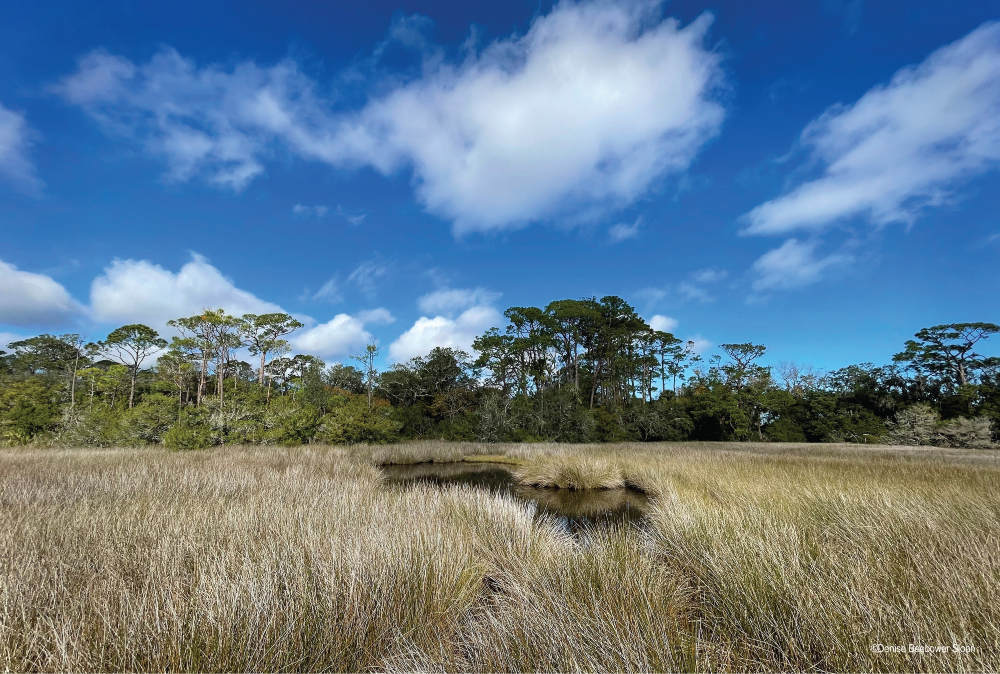
During its heyday the area around Fort Mose was dry land with farming fields. Over time human activity like dredging created a marsh area with plentiful wildlife, particularly shore birds and birds of prey.
Denise Sloan/PCS Adventures
The Walkway to Freedom takes visitors to the original site of Fort Mose.
At the end of the boardwalk a sign showed where the first Fort Mose stood. It’s currently under water, but archaeologists and historians believe the second fort stood on a small piece of land in the marsh.
A second fort? Yes! In 1740, the British invaded Florida and began capturing forts near the St. John’s River. Their goal? Conquer St. Augustine and bring Florida under British control. The last fort standing in their way was Fort Mose.
The Spanish knew the British were coming and they evacuated everyone to St. Augustine, seemingly abandoning Fort Mose. Overnight, however, the Spanish forces launched a surprise attack on the British. The British retreated and St. Augustine survived, but the fort was destroyed.
Denise Sloan/PCS Adventures
The boardwalk takes visitors through the marsh area to the original location of Fort Mose.
The Mose residents remained in St. Augustine for the next 12 years until Spanish officials force them to rebuild the fort and once again defend St. Augustine from the British.
In 1763 the war came to an end and Spain gave Florida to England. The loyal residents and militia members at Fort Mose fled with many people to Spanish Cuba.
During our walk on the boardwalk we saw a lot of wildlife. A tricolored heron, white ibis and an osprey eating a fish made the walk unique. Apparently roseate spoonbills and wood storks are also a common sight. Bald eagles frequent the marsh during fall migration.
Fort Mose offered us a chance to learn about a little known piece of Florida history and savor the local wildlife. This hidden gem is well worth a stop when visiting the St.
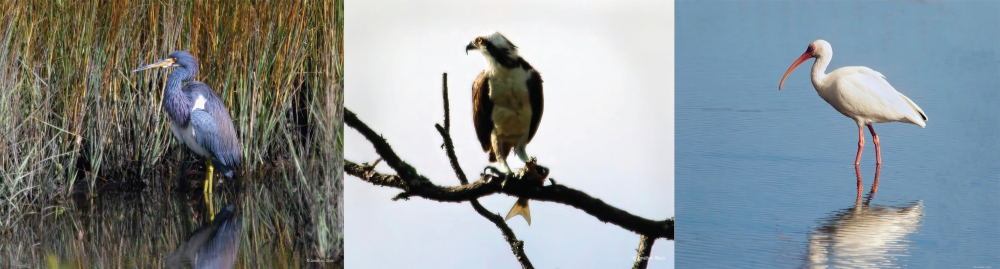
Jonathan Sloan/PCS Adventures
We saw a tricolored heron, an osprey and a white ibis in the marsh along the Walkway to Freedom.
Closest Military Installations
MWR Locations Nearby
If You Go:
- Parking is free and museum admission is $2.00 per person. Cash is best in case the office isn’t staffed during your visit. The QR code payment system wasn’t working for us. I didn’t have small enough bills to pay our fee, so we made a donation with a larger bill.
- Check the park website for current hours.
- Check the Fort Mose Historical Society’s website special events at the park.
- The outdoor trails are pet friendly, but you must keep your pet on a leash.
- Bring water, a hat and bug spray. The boardwalk trail can be hot and buggy during the summer.