
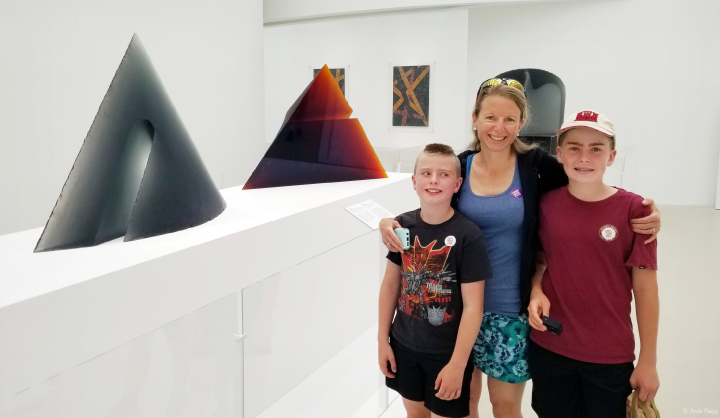
The boys and I check out some cool glass pyramid-like displays.
Corning Museum of Glass, NY
Ande Flagg
The boys stared at the performance on the stage. The spinning, semi-liquid blob captivated their attention. They scrutinized each movement as the glass blower put the long metal pipe to his lips. Even my husband Tim was transfixed on the action.
Tim was a glass artist before he was a soldier. He dreamt of visiting the Corning Museum of Glass for at least 4 years before we married. I remember him telling me with eyes-a -gleaming how visiting the museum was on his bucket list.
A Museum of Dishes?
Are you thinking what I’m thinking?
“You mean the place where my mom’s dishes (or maybe your grandma’s dishes) were manufactured? The place that makes those cheap, ubiquitous, flower-speckled dishes? THOSE dishes have a museum dedicated to them?”
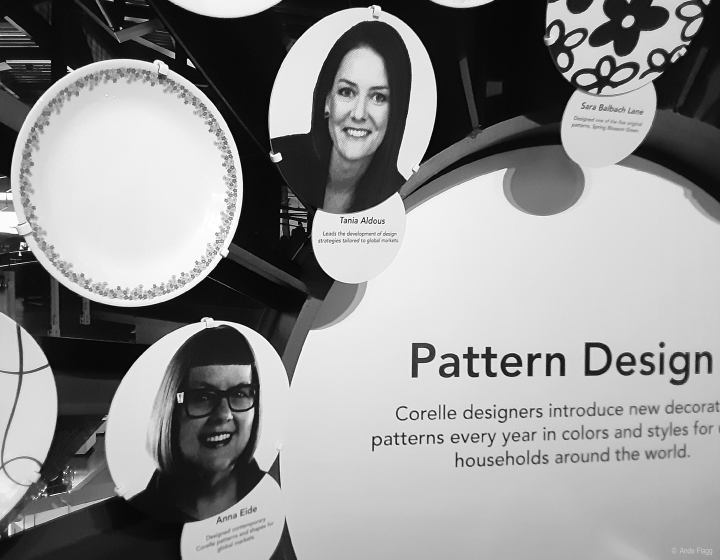
Corelle dinnerware plates by Corning once graced my table growing up.
YES!
And, no.
I must say, it was a little alarming to see my mother’s dishes, the dishes from my childhood, behind glass in a display case as if they were the Mona Lisa, but that is not what the museum is all about. The Corning Museum of Glass, “is the home to the world’s most comprehensive collection of glass and foremost library on glass, and one of the top glass-working schools in the world” according to the website.
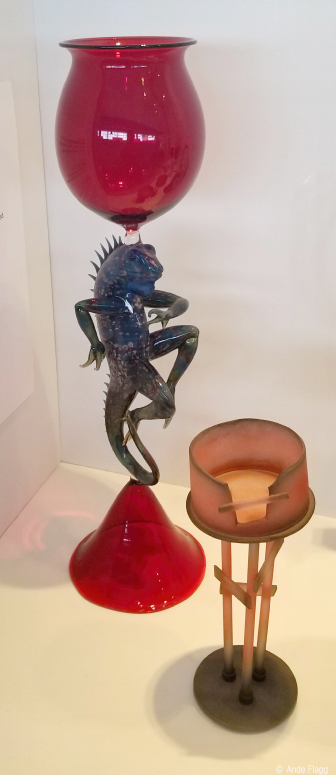
What is it? The boys wondered if anyone ever really used some of these things.
Not convinced?
Blown Away
Have you seen the Netflix show “Blown Away”? No, it wasn’t filmed in Corning, but in the final challenge of at least one season, glass blowers from Corning Museum of Glass assist the contestants.
In fact, we watched a demonstration by one of the “assistants” on stage at Corning prior to watching the Netflix original show.
When we saw him on the show, we all jumped up and pointed “that’s one of the guys from the museum!”
In actuality, he is a master glass artist.
The point isn’t that you might see someone from a niche Netflix show. The point definitely is you can go to the museum to see some really cool stuff, and then watch people create some really cool stuff. All of which is incredibly fragile!
A Day of Wins
We arrived at the small city of Corning the evening before we visited the museum so that we could start fresh the next day. We stayed at one of the “not quite” budget hotels so the boys could swim and get some energy out the night before. Come morning, we ate breakfast and headed to the museum.
The Corning Museum of Glass had just become a Blue Star Family attraction. YAY for free! (Our first of many wins of the day!)
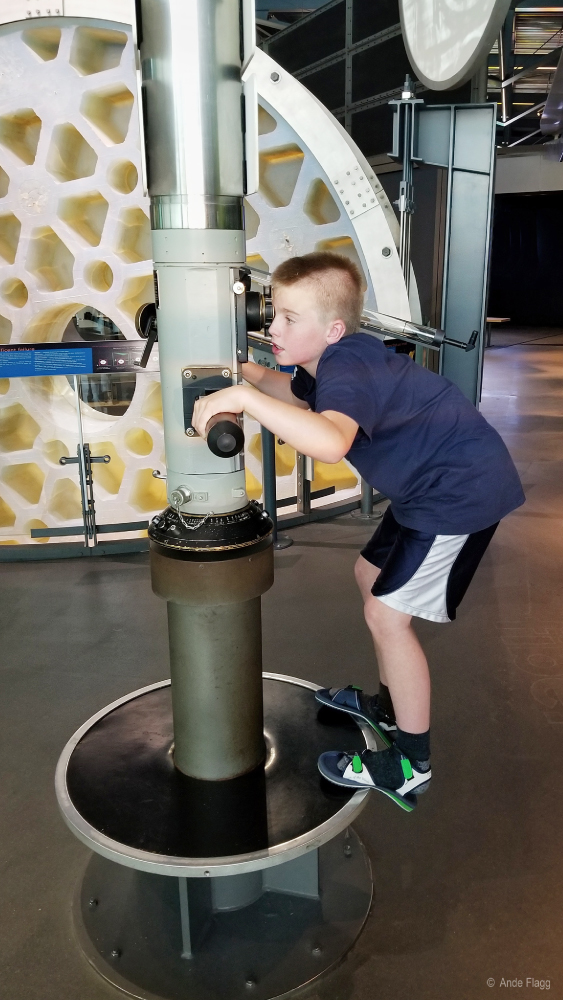
10-year-old Jon checks out the periscope.
We discovered that the first of many hot glass demonstrations would start in about 30 minutes from the time we checked in. While we waited for the demonstration to start in the “Hot Shop” we investigated the nearest display about the commercial uses of glass. There were a few displays that were interactive including a giant lens that distorted one’s face when getting up close, scientific glass and a submarine’s periscope. The interactive nature of these displays proved popular with the kids.
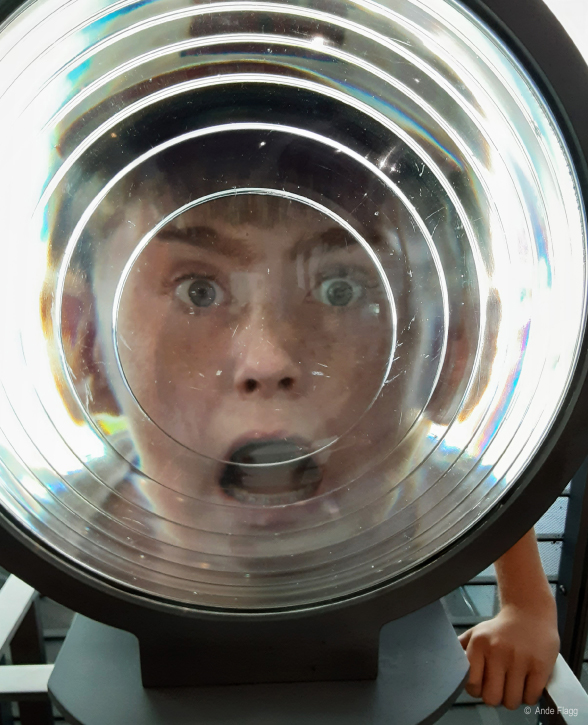
Is Hunter’s head stuck in a coke-bottle glass? Nope. Just a neat display at the museum.
I was fascinated as I learned about the history of glass, both its manufacturing and its usage. Did you know that the first glass windows were handmade blown glass? Ever wonder why there are swirls in those first glass windows? There are so many answers you didn’t even know you needed!
Then we learned more about the innovation of commercial glass after the move of Brooklyn Flint Glass (later Corning Inc.) from Brooklyn to the tiny rural town of Corning in upstate New York.
The Magic of Master Glass Blowers
About the time I started learning about the first years of Corning Glass the hot shop demonstration started. We visited in May of 2021, so the museum was not very crowded. Summer hadn’t arrived yet and people only just started to come out of their hiding places from Covid isolation. Our view was amazing in the hot shop theater. Master glass blowers did their magic right in front of us!
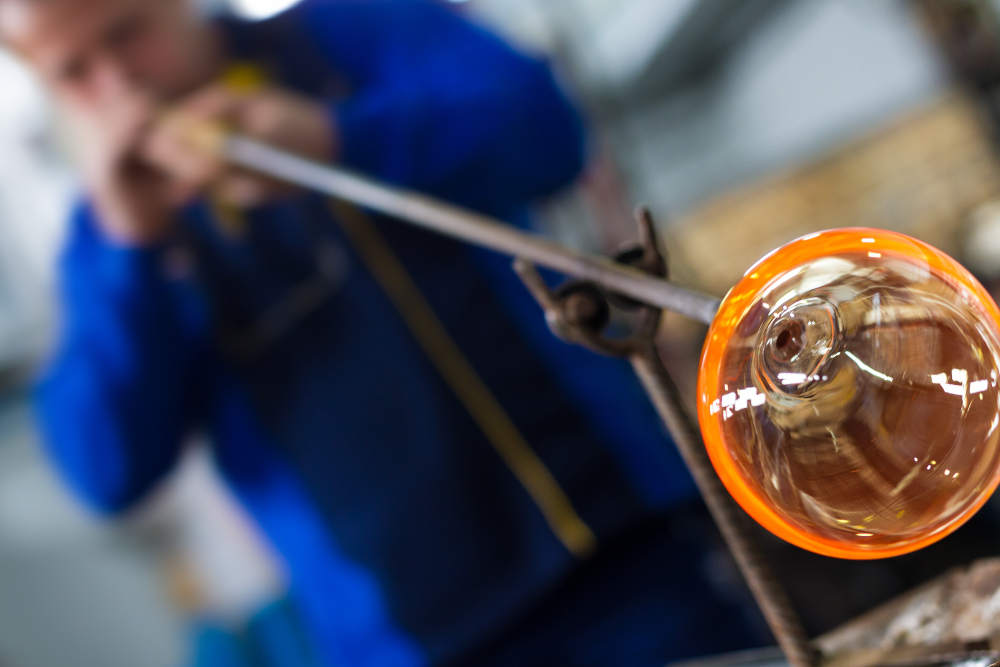
The gaffer's work is similar to what we saw at the museum.
The stage was set for two artists: the gaffer who ran the hot shop and created the design for the project, and the assistant who took the metal blowpipe to the glory hole, and narrated the story of the glass.
The glory hole, a very special chair and a mystery cabinet also sat upon the stage.
The glory hole, a furnace that contained the liquid glass, was kept it at a scalding 2150 degrees Fahrenheit. At this temperature the glass stayed in a constant honey-like state.
The gaffer sat upon the special chair. This armchair was able to withstand the heat of the heavy blowpipe and glass. The gaffer blew into the pipe or rolled it on the arms of the chair, using centripetal force to shape the hot blob.
The mystery cabinet was called an annealer. This secondary furnace allowed the glass to slowly cool in hopes that the finished glass piece would not break.
We watched as the gaffer blew into the mouthpiece on one end of his blowpipe. He fashioned a bubble of air inside the liquified glass on the opposite end of the pipe. The glass blob grew bigger in total volume, yet the glass became thinner. As he made adjustments using a combination of spins and blows, the blob of molten glass started to take shape.
The boys and I tried to guess what the vessel was. A vase? A bowl? It was a pitcher!
Then the piece-de-resistance! The assistant came over with a small blob of glass of his own. We sat on the edge of our seats wondering what he would do. Surely, this wasn’t a glass art-turned jousting competition, was it?
Slowly, the blob formed a delicate handle for the pitcher. Now the whole thing was a pitcher on a stick!
How would the artists remove the pitcher from the blowpipe and put it in the annealer? Would it break? Would we hear the sound no gaffer wants to hear: the crash of a hard day’s work smashed on the floor?
Fortunately, not. We heard a gentle “tink” of the pipe being separated from the finished piece. Voila! A finished pitcher!
The hot shop was definitely our favorite part of the museum. We watched two or three different shows over the next two days.
Torch Artists, Too
Additionally, we caught a mini show of an artist creating a tiny glass piece using small torches. The torch artist was situated in the midst of the exhibit hall on the main floor, so we could walk three-quarters of the way around him to get a multidimensional look at how he used a torch to create the delicate figurine.
We enjoyed watching all of the artists in action. Seeing such a combination of skill, patience and creativity all used at one time was a treat.
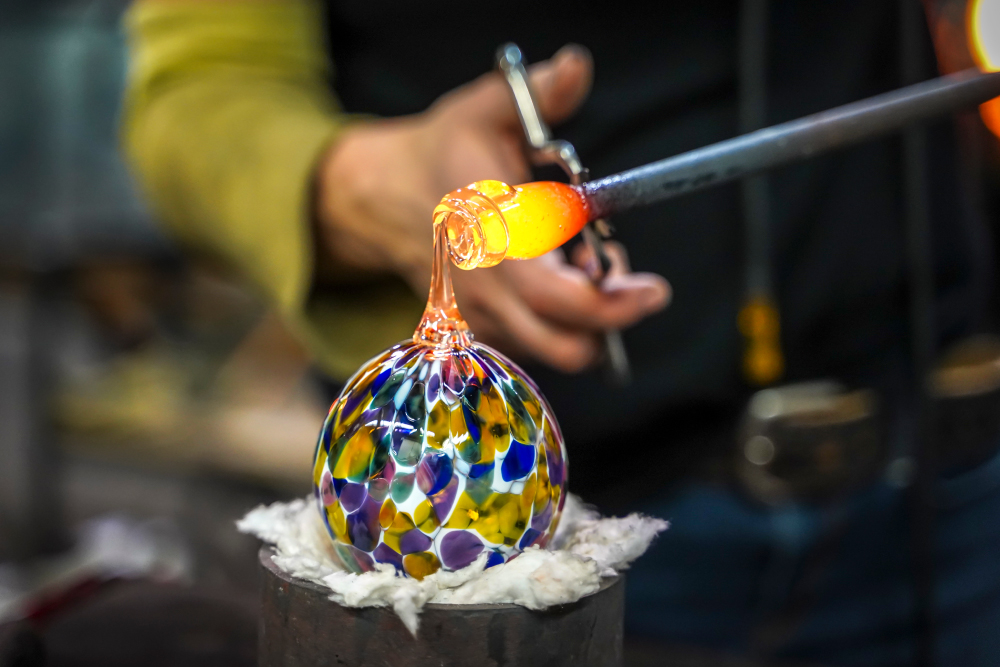
The various, unique pieces of art that can be made from glass are truly impressive
Glass Art Throughout History
Eventually, we investigated the rest of the museum. There was plenty to see! Since I enjoy history, I particularly enjoyed the exhibit hall that showed glass art through history. There were examples of ancient glass through the Renaissance, turn of the century and modern glass art. The variation in technique and function from age to age was quite striking.
Another floor held many “installations” or art made of art. My favorite were shelves of green, yellow and brown drinking glasses positioned in such a way that from across the room they appeared to be trees. Installations might not have been everyone’s preference, but well-placed art can capture the imagination.
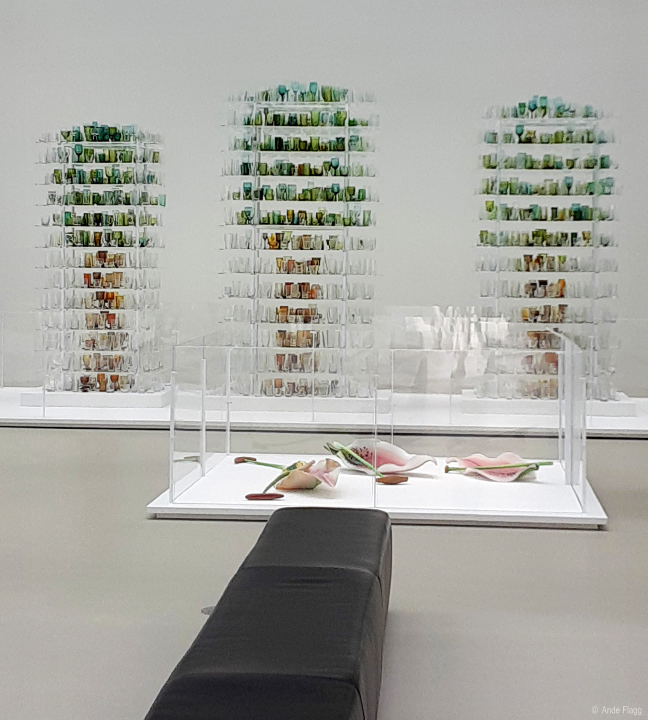
My favorite exhibit was the tree installation.
The boys liked the familiar. A chess board and pieces drew their attention. The intricate figurines reminded me of the torchwork we had just witnessed hours before.
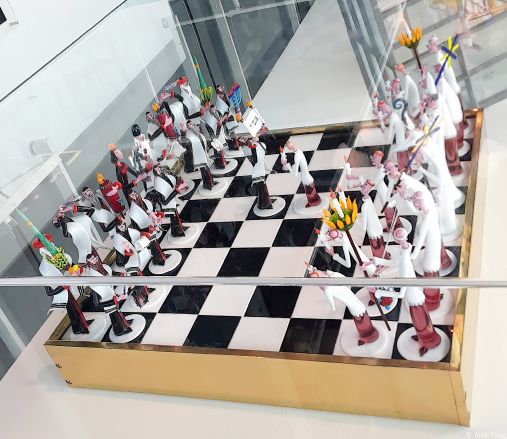
The boys loved the chess set.
Ah ha! Now I understand why this art form might have been popular! The tiny handcrafted pieces would have been useful in much of everyday life and it takes a torch worker with a gentle touch.
DIY Glass Class
Think you’d like to try your hand at glass art? You can take a Do-It-Yourself class!
The boys got to make their own glass clocks! They melted glass onto other glass. (This method is called fusing or slumping). They spent their 30-minute time-slot picking through tiny pieces of glass, called frit, and placing them onto the larger piece of glass that would become the clock face.
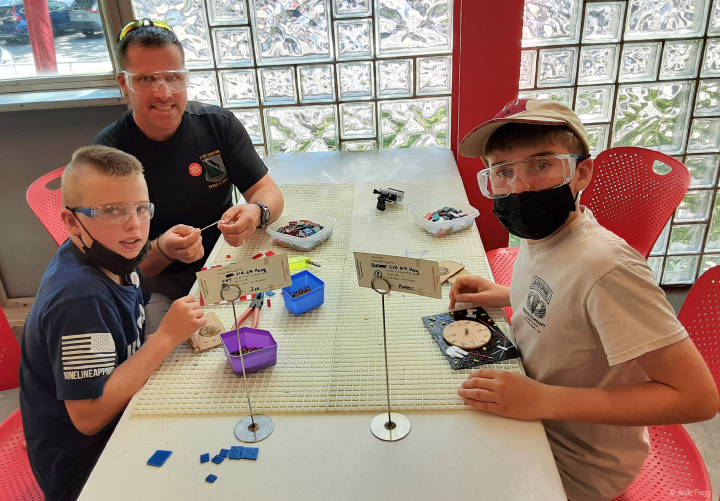
Tim helps the boys with their glass fusing projects.
Instructors guided the boys through the steps. Once complete, we left the creations behind so that the clocks could go into a super-heated oven and the glass pieces could “fuse” together. This would require returning the next day to pick up the projects, but we were OK with that. It meant we could watch another glass show or catch up on the exhibits we missed earlier.
All my guys enjoyed their time at the glass museum. It appealed to all their senses. Once we picked up the boys’ creations, we discussed what we each liked about our time at the Corning Museum of Glass. The shows in the hot shop? The displays? The class? My favorite part: watching my husband share his passion for glass, eyes-a-glow, with the boys.
Closest Military Installations
MWR Locations Nearby
If You Go:
- The Corning Museum of Art is a Blue Star Family Museum. Our whole family entered for free! Here is the website for more information.
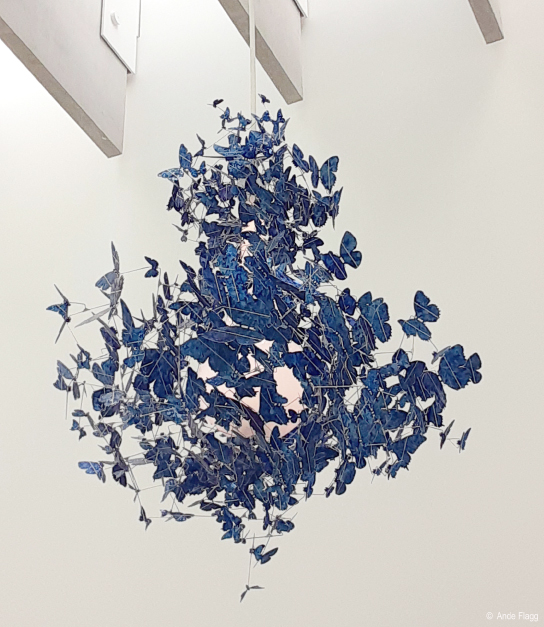
A neat chandelier of blue butterflies dangled above our heads.
- The souvenir shop is extensive, featuring products from local, regional and world-renown artists, as well as one-of-a-kind items and mass-produced items. You can find marbles for the kiddos, crystal for your next adults-only dinner, glass ornaments, and jewelry appropriate for every day or a special night out. If it comes in glass, you will probably find it in the gift shop.
- The museum is family friendly. The glass exhibits are all out of reach of the littles. However, parents may want to hold little bit’s hand in the gift shop. There are many very fragile items within reach of little hands.
- Fused glass classes were the best fit for our schedule. If you go and think you might like to take a class at the museum, look here for information.
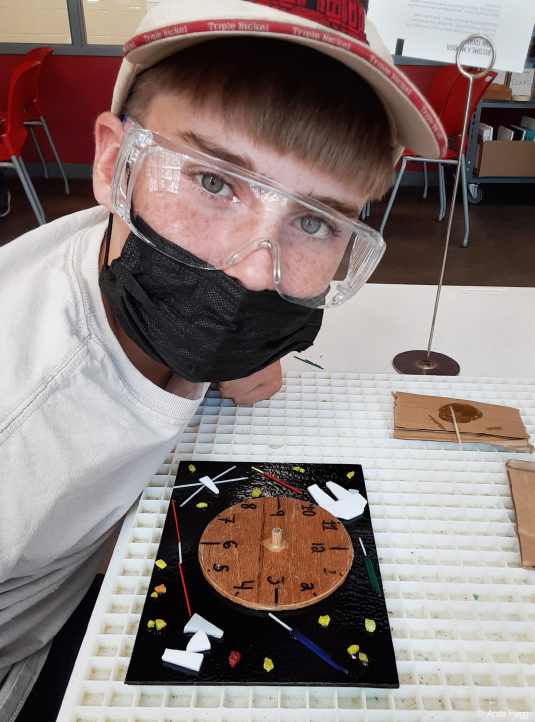
Hunter shows me his ready to fuse clock.
- The whole town is a “glass town.” Many shops and artists in the area feature glass products. We did hit one other glass shop where we took a glass class from a local artist.
- There are a lot of shops and restaurants in the area. Check out the Gaffer district where walking from shop to shop or café to ice cream parlor is easy.
- We hit Toast and Grind for a unique bagel breakfast on day two. Each of us enjoyed our orders and a bit of variety. The atmosphere is super fun, especially if you grew up in the 1980’s!
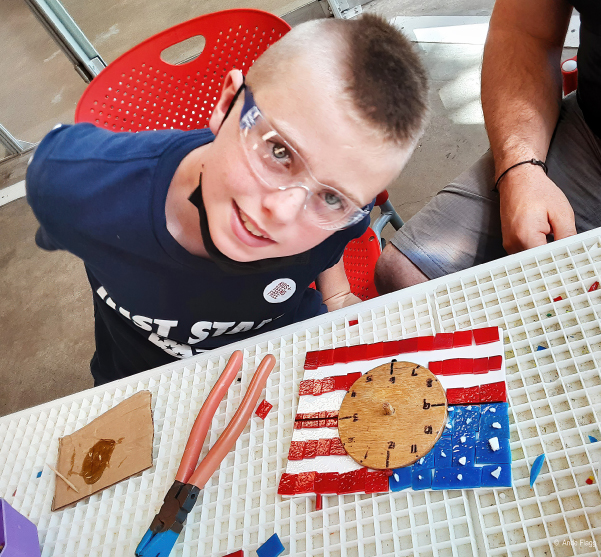
Jon shows me his ready to fuse clock.