
Beckley, WV
Denise Sloan
Jonathan Sloan/PCS Adventures
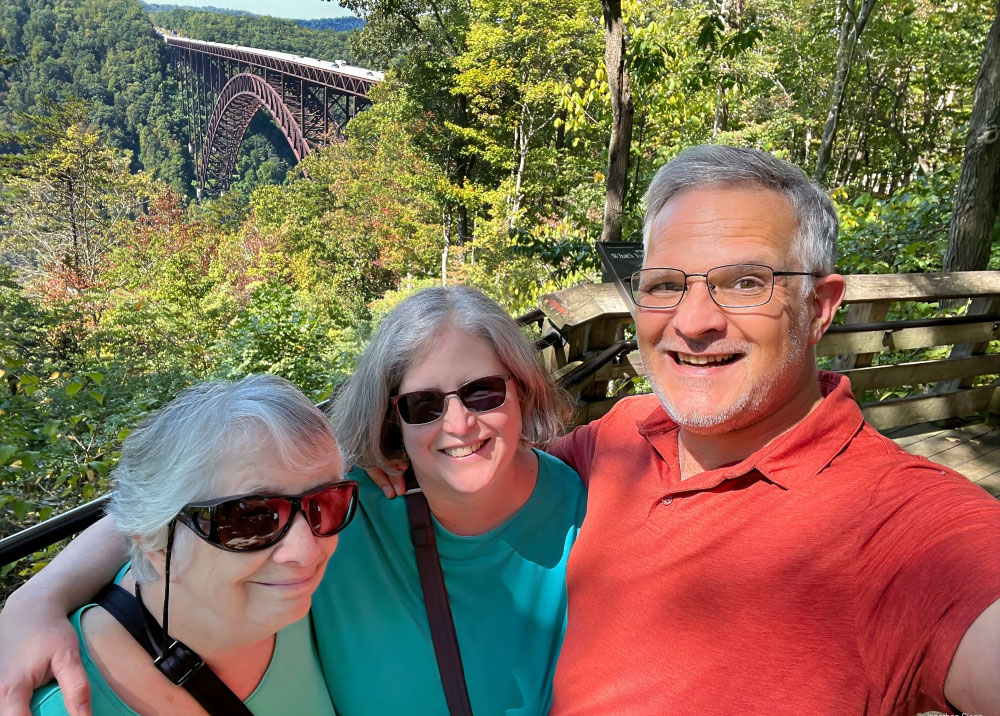
A short trail near the Canyon Rim Visitors Center gives our group a great early morning view of the bridge.
I’ll admit I hadn’t spent much time in West Viriginia before last summer. Most of my impressions about the state came from John Denver’s famous song “Take Me Home, Country Roads”. I pictured winding roads through the mountains and coal mines. It took visiting the state to understand the first line of his song, “Almost Heaven, West Virigina”.
Intitally I planned our family road trip with a brief stop at a national park near Beckley, West Viriginia. I quickly realized there were plenty of reasons to stay more than a few hours in the area.
New River Gorge
I knew a famous bridge spanned a deep canyon with a river running through it. That was the sum total of my knowledge about the New River Gorge National Park and Preserve.
While true, the park offers much more than just a bridge. It covers about 53 miles of land along the New River from Bluestone Dam to Hawk’s Nest Lake. Visitors can go hiking, biking, whitewater rafting (Class III-V), canoeing, rock climbing, fishing, camping and hunting all within the park.
Multiple geographic and cultural wonders all hide in this part of West Virginia’s Appalachian Mountains. The area once bustled with the railroad, coal mines and company towns. Bonus, the mountains and river valley provided stunning visitas to enjoy as we explored this area’s history.
Denise Sloan/PCS Adventures
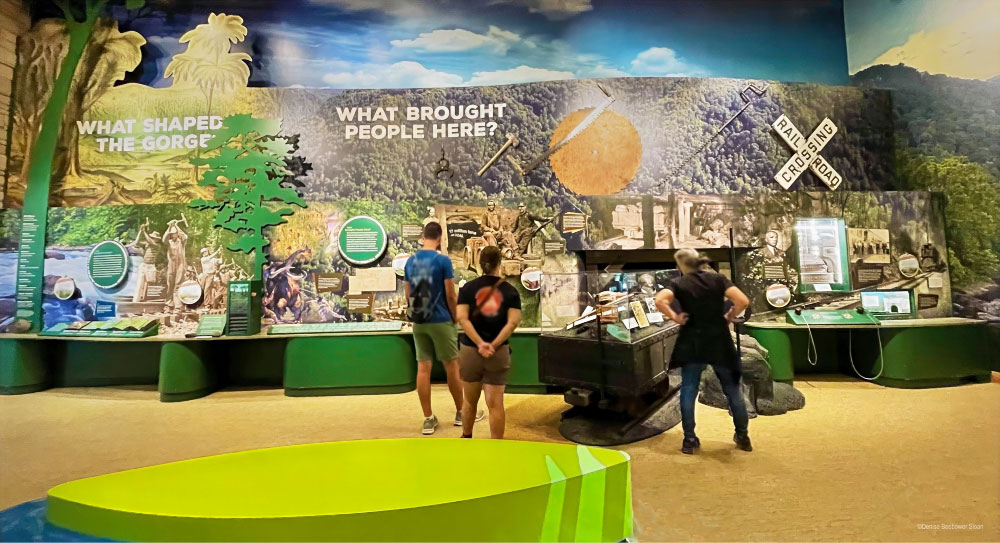
The Canyon Rim Visitors Center makes a great first stop on your visit.
We began our adventure at the Canyon Rim Visitor Center. It’s important to do a little research before heading to the park. Each of the four visitor centers offer something different. Because the park is so large, figuring out what you want to do helps direct you the right part of the park.
We loved the Canyon Rim Vistors Center rocking chairs. They provided a great place to kick back and enjoy the river view. Historical exhibits explained about life in the valley. We watched a short video and headed out to the boardwalk observation decks below.
Denise Sloan/PCS Adventures
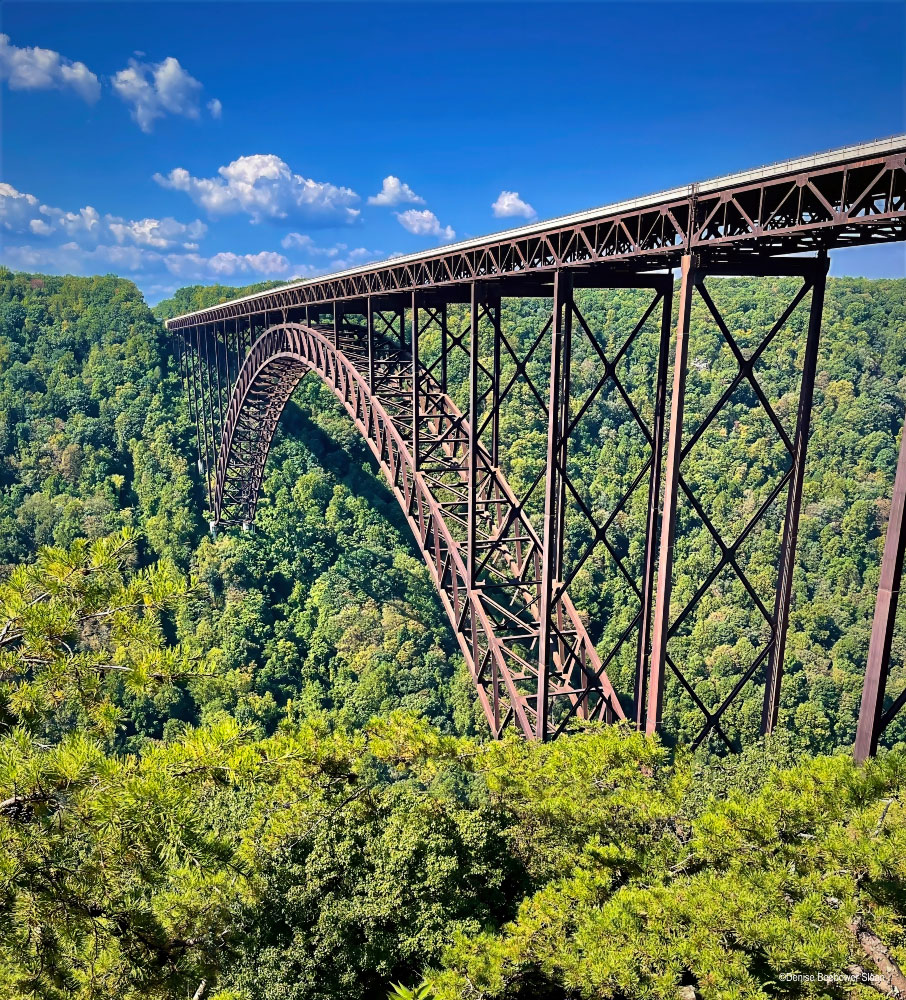
A boardwalk takes visitors down for a closer look at the famous New River Bridge.
An easy boardwalk trail took us down a lot of stairs. That meant a steep climb back up! But at the end of the stairs, a beautiful view of the famous New River Bridge awaited us.
This is the longest steel arch bridge in the Western Hemisphere. Built in 1977, it crosses 876 feet above the river valley below. That makes it the third highest bridge in the United States.
Prior to building the bridge, the drive from one side of the river to the other took 40 minutes. Now it takes just a minute on U.S. Highway 19.
If heights don’t bother you, sign up for the bridge walk tour. Rather than crossing the bridge up top, visitors take a guided walk across the catwalk under the bridge! The tour lasts about two hours and participants are strapped in to a harness for safety. None of us like heights, so we skipped this tour.
If you want even more ways to experience the bridge check out Bridge Day, the third Saturday of October. Officials close the bridge to cars and pedestrians wander across. The festival includes vendors, music, great views, BASE jumping and rappelling.
Thurmond
Next we drove to Thurmond, a railroad town deep in the valley. Originially we wanted to take the Fayetteville Road down to the river, but it is a steep, narrow, winding road and we had a mini van. After checking with the rangers, we decided instead to visit Thurmond.
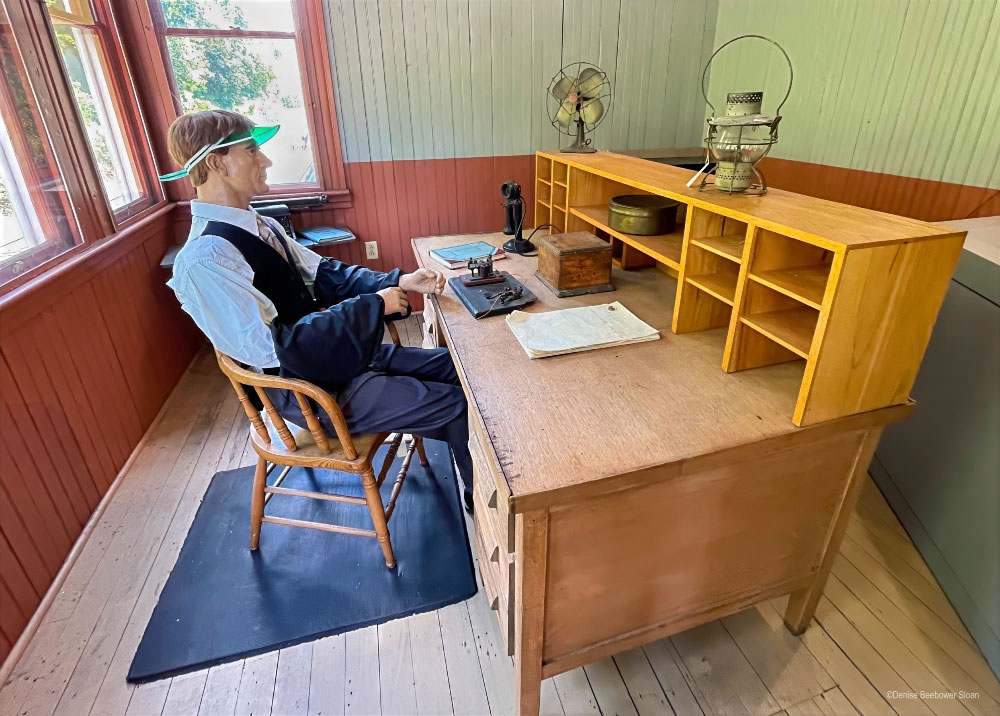
We did make it, although there were a few narrow spots. Just before the town, we crossed the river on a dual railroad/car bridge, and pulled up to the old train depot that now serves as a visitor center. We spent about a half hour looking at the exhibits that recounted the town’s history as a railroad boom town during the early 1900s.
Denise Sloan/PCS Adventures
The Thurmond depot now houses exhibits about Thurmond’s railroad heritage.
The Chesapeake and Ohio Railroad ran up to 15 passenger trains a day through Thurmond in its heyday, bringing up to 95,000 people a year to Thurmond! Visitors found plenty of services in town, including hotels, restaurants and banks, all built thanks to the coal barrons from the surrounding mines.
Thurmond, one of the few places trains could get coal fuel in the valley for the steam-powered passenger trains, also provided a way for local mines to ship their product to cities far away. These two things helped Thurmond grow from the banks of the river right up the hillsides.
Denise Sloan/PCS Adventures
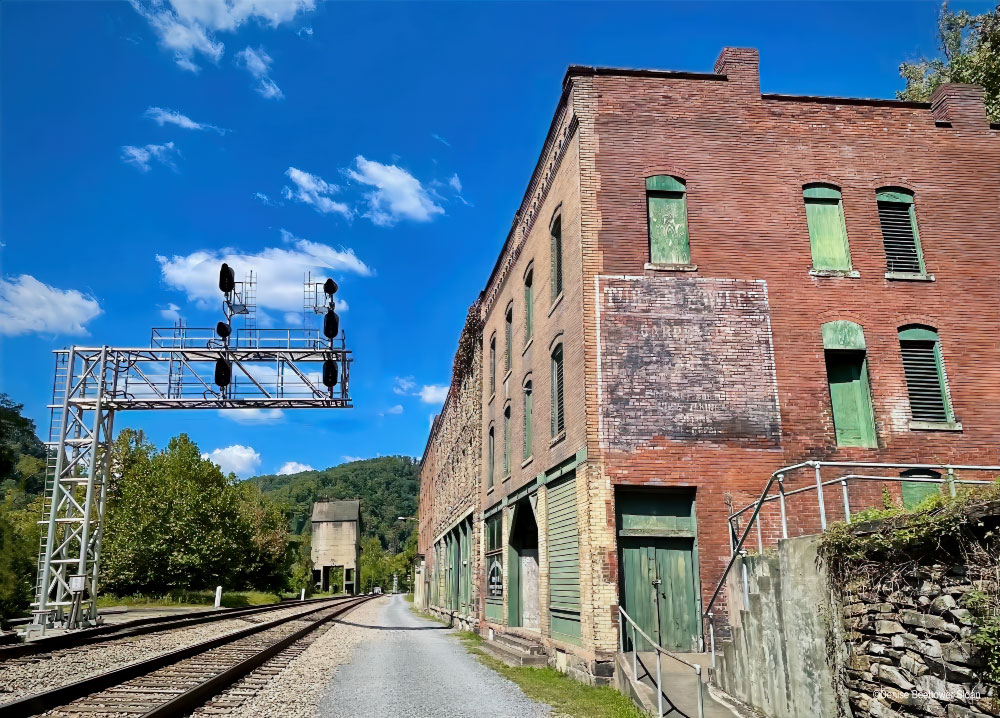
The railroad tracks on Thurmond’s main street are absurdly close to the buildings.
Eventually the invention of the diesel engine spelled the demise of the town. By the 1950s few people remained. Today the town looks like folks just walked away, leaving everything behind. The entire Thurmond Historic District is on the National Register of Historic Places. Surprisingly, CSX and AMTRACK trains still routinely run through Thurmond, so stay off the tracks.
Denise Sloan/PCS Adventures
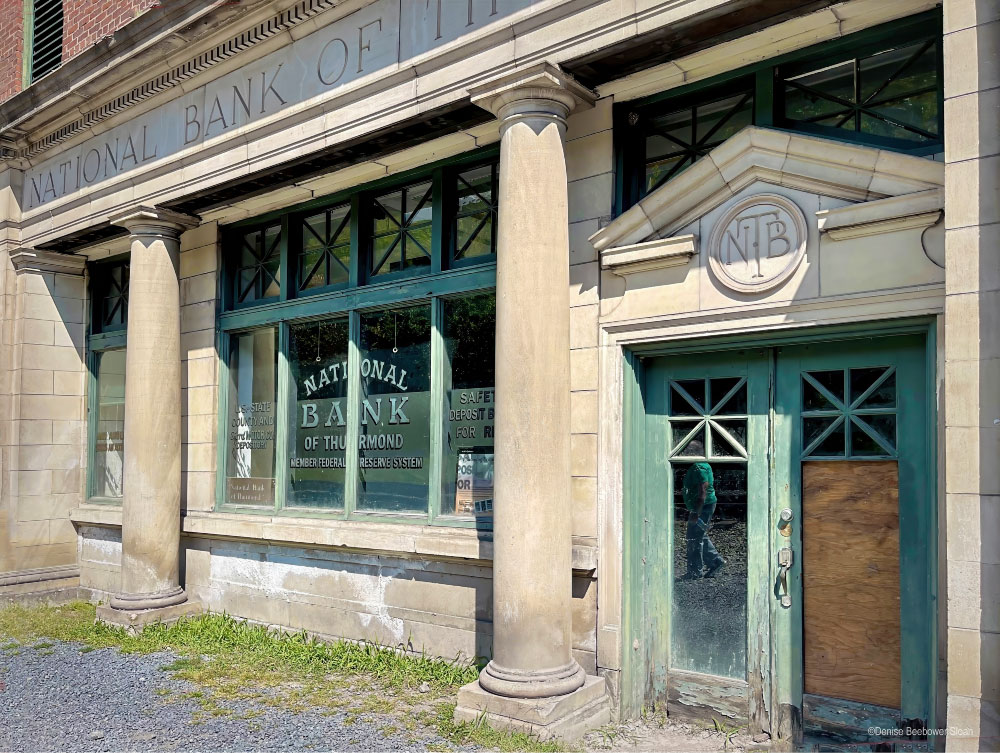
The National Bank of Thurmond is a stone’s throw from the railroad tracks.
We took a stroll down the main street in town. We were stunned at how close to the tracks the buildings really were. Supposedly the patrons at the Hotel Thurmond (long gone now) could reach out from the porch and touch the train.
But much like the citizens of Thurmond, our time ran out in town. We headed into Beckley for our next adventure.
Beckley Exhibition Coal Mine
The town of Beckley was founded 1838 by West Point graduate Alfred Beckley. Today Beckley, not a part of the national park, serves as a regional commerical hub in a mostly rural area of the Appalachian Mountains.
But we weren’t in town for shopping. We wanted to go underground at the Beckley Exhibition Coal Mine. We walked in and got tickets for the last tour of the day. While we waited, we explored the museum and then wandered through the Coal Camp, a collection of buildings that represented what a company coal town would’ve looked like.
Denise Sloan/PCS Adventures
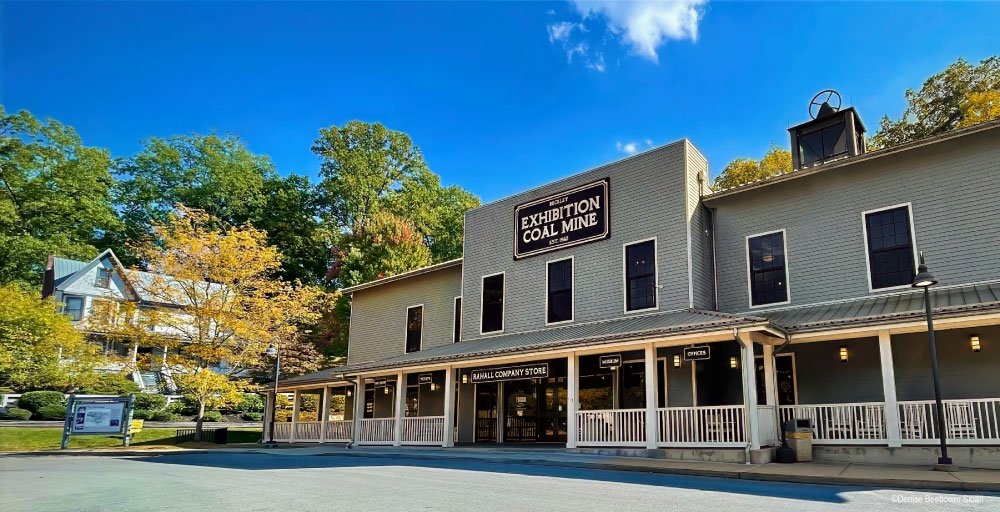
The Beckley Exhibition Mine and super’s house welcome visitors to the Coal Camp.
The mine, opened in 1889, was orginially called the Phillips-Sprague Mine. It produced coal until 1953 when the owners closed it. For nine years it sat abandoned. In 1962 the city of Beckly bought the property and began cleaning it up so the city could offer tours, giving visitors a real look at a coal miner’s life.
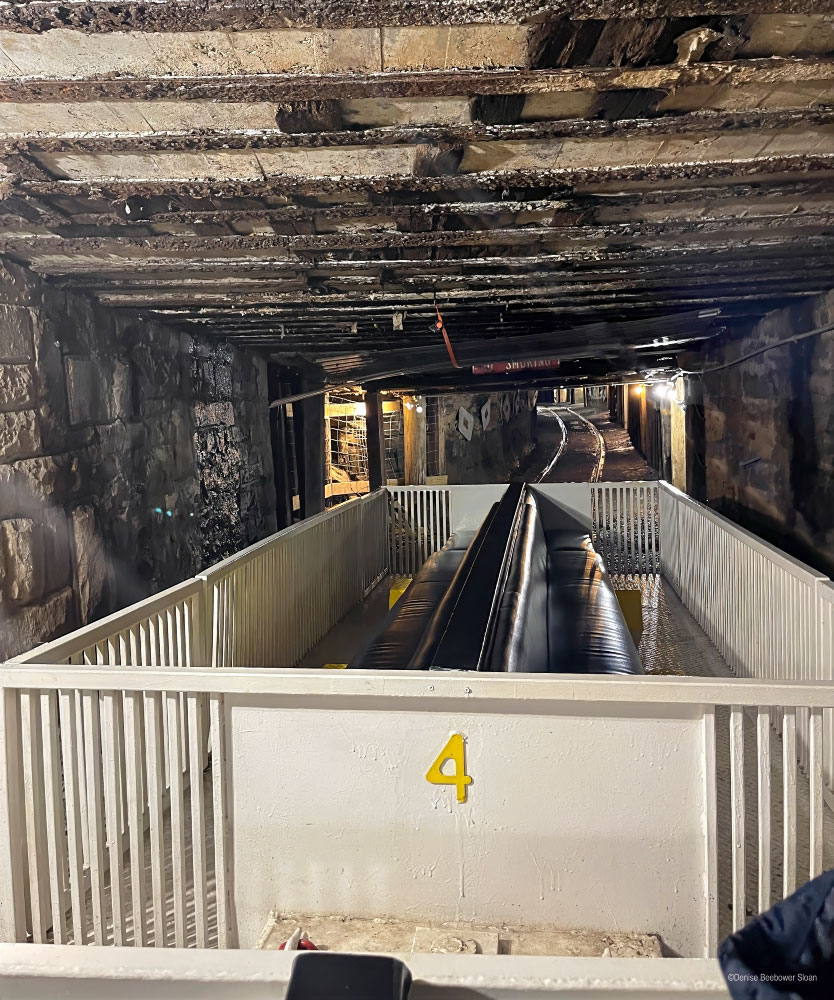
Perhaps the coolest thing about the tour are the guides. They’re all veteran coal miners. When it was time for our tour, we headed to the building behind the museum and ticket office. Our guide placed us all in the “man trip” or rail cars for our tour. Then we headed under the mountain!
I wouldn’t want to have worked in this mine. Originally with passages just four feet tall, the miners worked on their knees or laying down sideways. But don’t worry. The city of Beckley raised the ceiling of the mine to keep visitors comfortable while touring (just don’t stand up on the cart). We got to see the evolution of hand picks to machinery as our car journeyed farther inside.
Denise Sloan/PCS Adventures
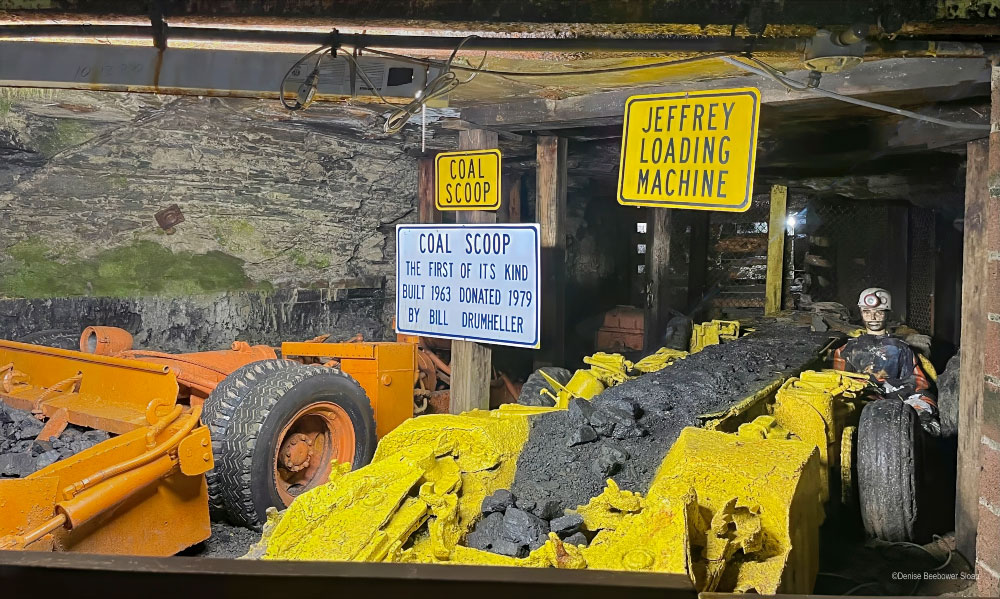
The Jeffrey Loading Machine made life a little easier for miners.
One of the most fascinating (and dangerous) things in the mine were petrified tree stumps embedded in the coal. When a miner hit one of these, it might fall and crush everything under it.
We also learned about happy rat sightings. You read that right. Seeing a rat in the mine was a good thing. It meant enough good air flowed underground to sustain life. If the rats disappeared, the miners knew it was time to leave.
Our tour lasted about 35 minutes and was filled with interesting information and amusing stories.
Denise Sloan/PCS Adventures
Our tour group heads back out of the mine.
The mine was the last item on our agenda for the day. If we’d had more time, we would’ve explored the Youth Museum next door, the Tamarack Marketplace, The Resort at Glade Springs golf course, Winterpark Ski Resort and Little Beaver State Park, but we’d planned to head north the next morning.
This part of West Viriginia pleasantly surprised us with the amount of adventures available. Beckley made the perfect base camp for us and we were sorry to leave the next morning. We may have even sung “Almost home, West Virginia…” under our breath as we drove to Ohio.
Closest Military Installations
MWR Locations Nearby
None within 4 hours
If You Go:
New River Gorge National Park and Preserve
- New River Gorge does not charge an entry fee.
- The park covers a large area. Decide where you’d like to explore before heading to the park.
- Many of the roads through the park are narrow, widing and/or rough. Check in with rangers at the visitor centers to see if your vehicle can make the drive.
- The park offers multiple visitors centers. Canyon Rim & Sandstone are open year round. Grandview and Thurmond are seasonal.
- GPS can send you to wrong, remote locations. Use the directions on the national park website or pick up a park map at one of the visitor centers.
- The park does not accept camping reservations. It’s first come, first served.
- The coal mine tour is closed November-March.
- Bring a jacket. The temperature stays at 58 degrees inside the mine.
- Advance reservations aren’t required. We walked in and got tickets for the next tour.
- The coal mine tours generally begin on the half hour and hour. They last about 35 minutes.