

The Post Hospital now serves as the park’s Visitor Center.
Fort Scott NHS, KS
by Denise Sloan
My visit to Fort Scott National Historic Site in Kansas confirmed two things for me: 1) The Army really does go rolling along—-until the big wigs change their minds. Then it often reverses previous decisions. 2) Army Arichitects have been obsessed with duplexes since at least 1842.
My parents’ visit one summer led us on a two-hour trek south to Fort Scott, a real frontier Army post. After 10 years as a military spouse, curiosity about early military spouses led me to the historic site.
Time Traveling
We started our tour at the Visitors Center that once housed the post hospital. Here American history came to life through the stories of soldiers and families that actually lived through keeping the peace between settlers and Indians, traveling the Santa Fe and Oregon Trail, fighting in the Mexican American War, policing Bloody Kansas, supplying Civil War troops and protecting the great railroad race across America.
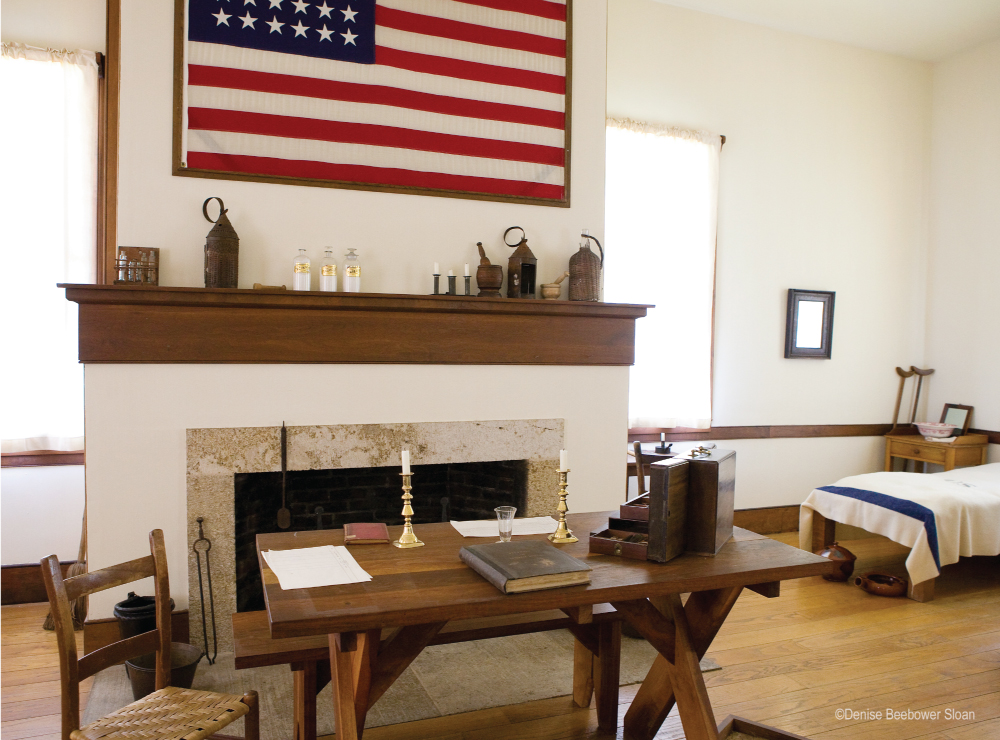
Soldiers received treatment in one of two hospital wardrooms.
The Army’s on-again, off-again relationship with Fort Scott started in 1842. (For those keeping track, that’s grand opening #1.) Army brass established a line of posts from Fort Snelling in Minnesota to Fort Jesup in Louisiana to keep the peace between American settlers in the east and Native American tribes that had been relocated west of Mississippi River. Fort Scott sat in about the middle of that north-south line on the wide-open frontier.
The years passed quickly and the American “frontier” gradually got pushed further west. Eventually the leaders in Washington, D.C. dismissed the idea of permanent Indian lands. Unfortunately for the soldiers at Fort Scott, those two facts meant the post no longer was needed.
The Army abandoned Fort Scott in 1853, but didn’t auction the buildings until 1855. (That’s closure #1.) The trappings of a military post soon gave birth to the town of Fort Scott. Yep, the town’s people chose the same name as the fort.
The Tour
After seeing a 20-minute film in the visitors center, we opted for a self-guided tour of this amazing piece of American history. Each of the building’s displays explained the history in the ensuing years. With so much to see and learn about, we enjoyed exploring at our own pace.
Like modern Army posts, the main buildings of Fort Scott surrounded the parade field. We methodically worked our way around the field checking out each building.
First we head to the barracks. Both infantry and dragoon soldiers manned the fort and each group had its own barracks. Much to their disgust, the infantry soldiers provided most of the manual labor initially needed to build the fort.
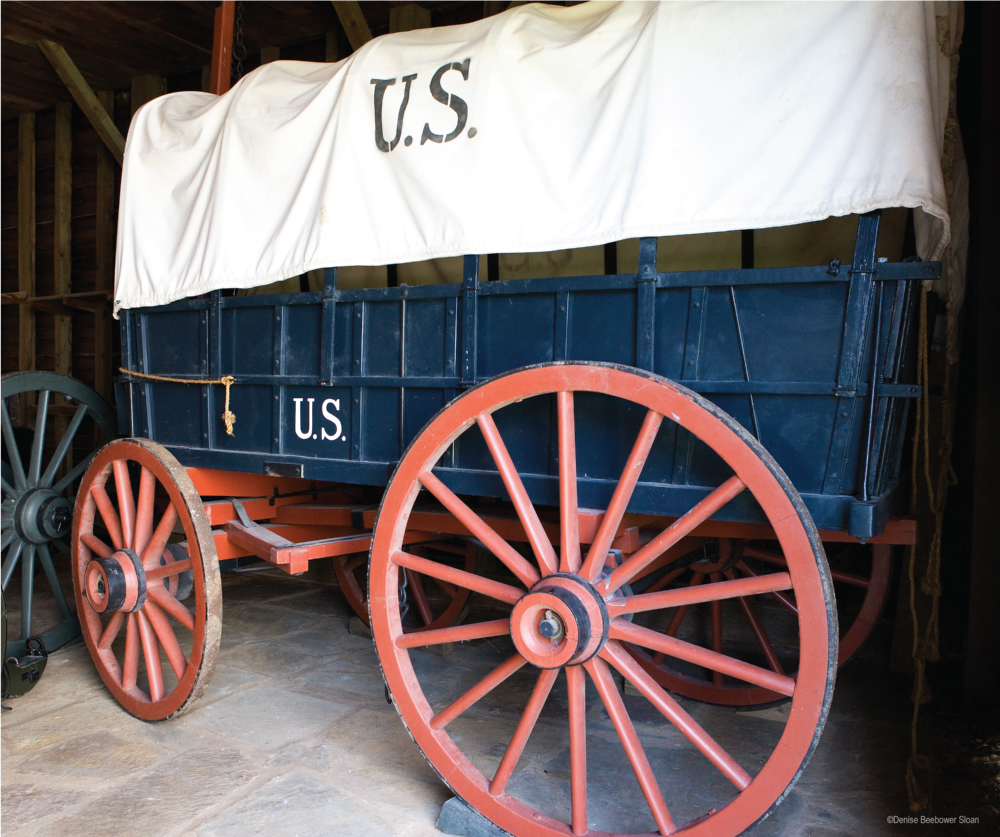
The Army used wagons like this to haul supplies.
The dragoons, elite horse-mounted soldiers, provided safe passage to settlers heading west and helped to map the uncharted territory. They also participated in the Mexican-American War from 1846-1848.
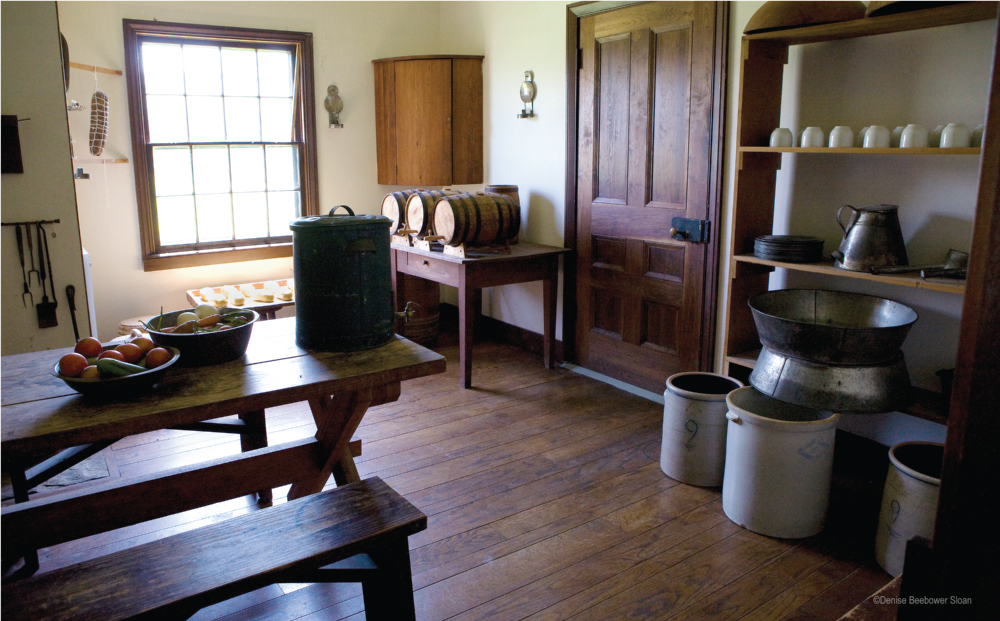
Dragoon soldiers ate their meals together in the first floor mess hall.
Down past the post headquarter’s building, the officers houses made life nicer for the leaders at Fort Scott. The wide porches, dormers and fireplaces made it easy to love these houses.
I was, however, shocked to learn the houses were duplexes. I thought that was a modern Army fad to save money. Yet even in 1842 the Army built duplexes. Apparently thanks to the Army’s love of tradition, duplexes live on in the 21st century.

These duplexes housed officers and their families.
These houses also played a big part during the Bloody Kansas period before the Civil War. The towns people fought a mini Civil War with the houses serving as gathering places for abolition and pro-slavery groups. Skirmishes, fires, death and chaos reigned in Fort Scott during this period.
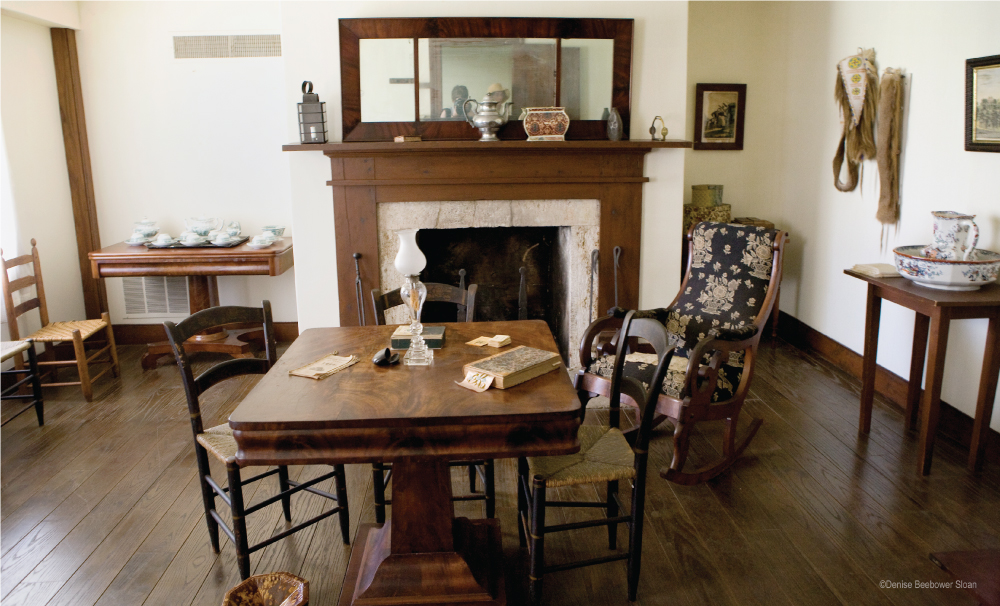
Considerably nicer than the barracks, officer’s quarters included a sitting room in addition to a parlor, dining room, a kitchen and two bedrooms.
The Army bigwigs temporarily sent soldiers back to Fort Scott to calm the deadly situation. But peace only lasted until each time the soldiers left. Finally in 1861, Kansas entered the Union as a free state.
It’s On Again
Further down the parade field, the Quartermaster Storehouse housed all the supplies for building forts and feeding the Army. The quartermaster helped revive Fort Scott as a military post at the beginning of the Civil War. (That’s grand opening #2.)
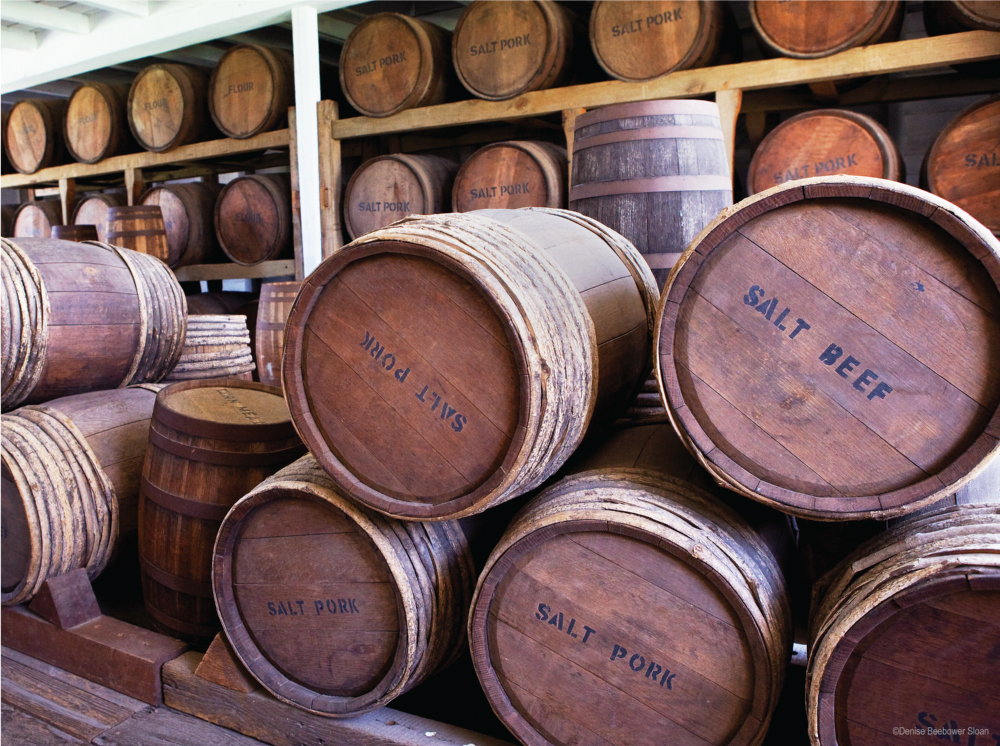
The commissary supplied soldiers with preserved food, dry goods, candles and soap.
The bigwigs in the national’s capitol decided the fort would serve as a major supply depot for western Army units and as a defensive point for any Confederate attacks against Kansas.
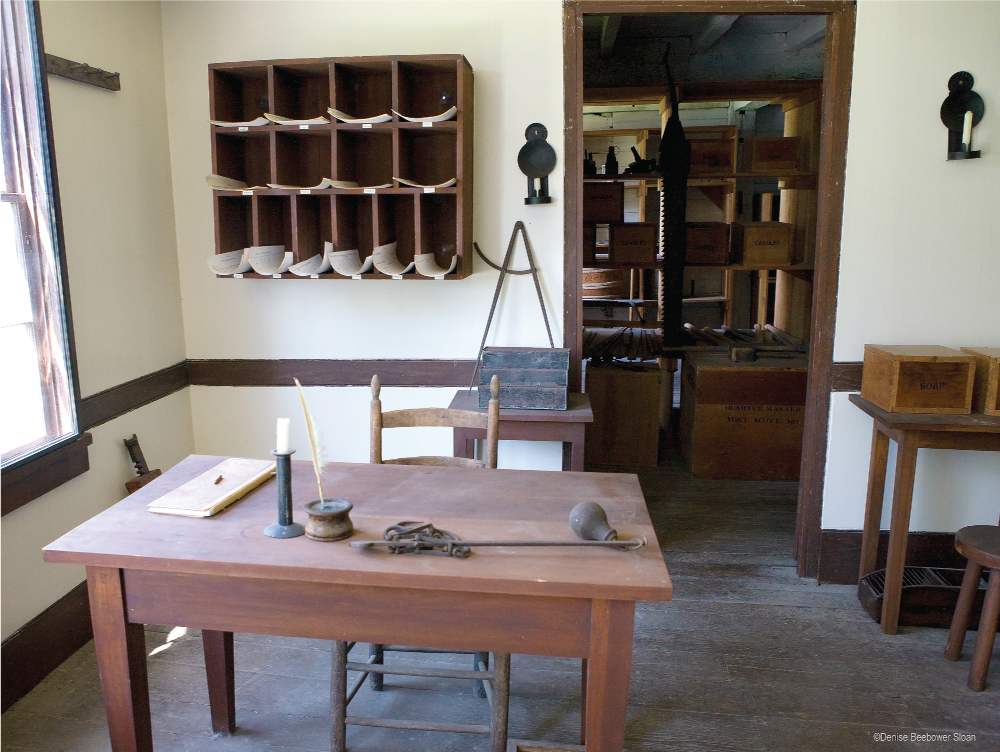
The quartermaster provided everything a soldier needed to build housing or office space.
Soldiers took over the existing buildings and constructed new additions too, fabricating 40 miles of defenses. The fort became a refuge for those fleeing war including Native Americans and slaves. Many of these refugees joined the Union Army at Fort Scott.
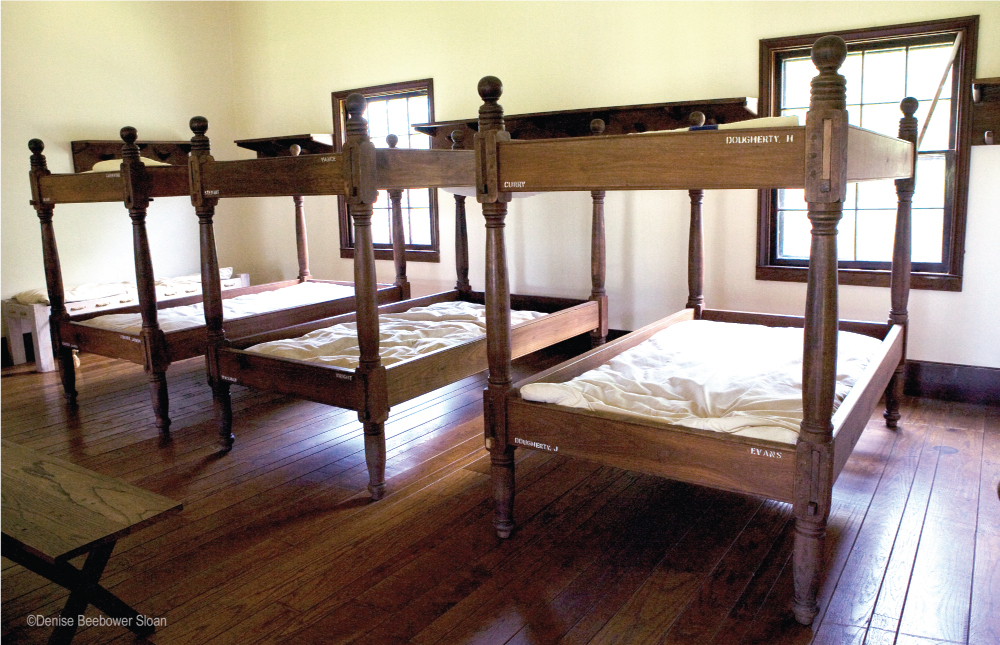
Dragoon soldiers slept in a large open room in the barracks.
The post never experienced a direct battle, although there were skirmishes with guerrilla warfare regularly involving the town of Fort Scott. When the war ended in 1865, the Army again shuttered the post and left. (That’s closure #2.)
One Last Battle
America’s quest for a system of railroads to connect the country from coast to coast brought the Army back to Fort Scott in 1869. (That’s grand opening #3.) The post functioned as a headquarters for troops assigned to protect railroad workers who were being attacked by settlers living in a disputed chunk of land near Fort Scott. This weird situation created one of the few times the US Army fought American citizens.
By 1873 cooler heads settled the dispute in favor of the railroads. The Army left Fort Scott for good. (That’s closure #3.)
The Fort on the Prairie
In addition to the buildings, we also walked through the restored tall grass prairie. The park staff maintains five acres of what was once a vast prairie surrounding the fort. That helps visitors understand why walls weren’t necessary around the post. Soldiers could see for miles in all directions thanks to the wide-open grasslands.
We finished our tour with a peek in the prison. Unfortunate soldiers who ended up here lived on a bread and water, literally.
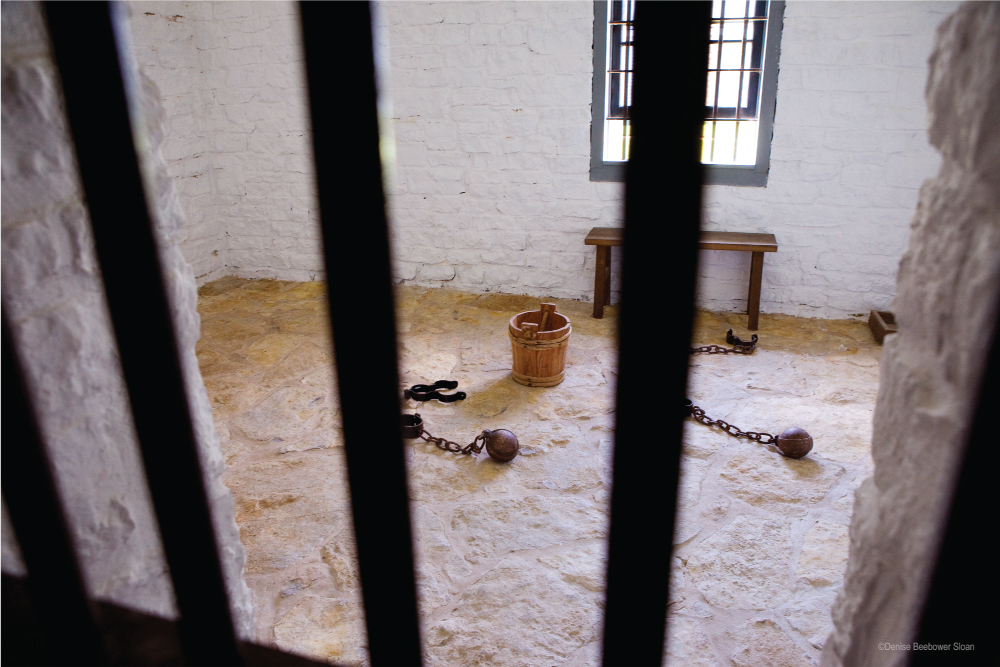
The prison offered enlisted soldiers little comfort and harsh punishments.
From a tiny fort on the vast prairies to a big player in America’s early history, Fort Scott shows visitors how the Army helped build the country. It also confirmed one Army spouse’s long held observations. The Army’s love of rapidly changing plans and affinity for duplexes continues to stretch across the centuries.
Closest Military Installations
MWR Locations Nearby
If You Go:
- Admission is free.
- The grounds are open 1/2 hour before sunrise to 1/2 hour after sunset. They are closed on all federal holidays.
- Summer visitors center hours are 8 a.m.-5 p.m. daily. Winter visitor center hours are 8:30 a.m.-4:30 p.m.
- Parking is available near the visitors center.
- Dress appropriately. Spring and fall are pleasant but summers can be very hot and humid. Winter often brings snow and ice.
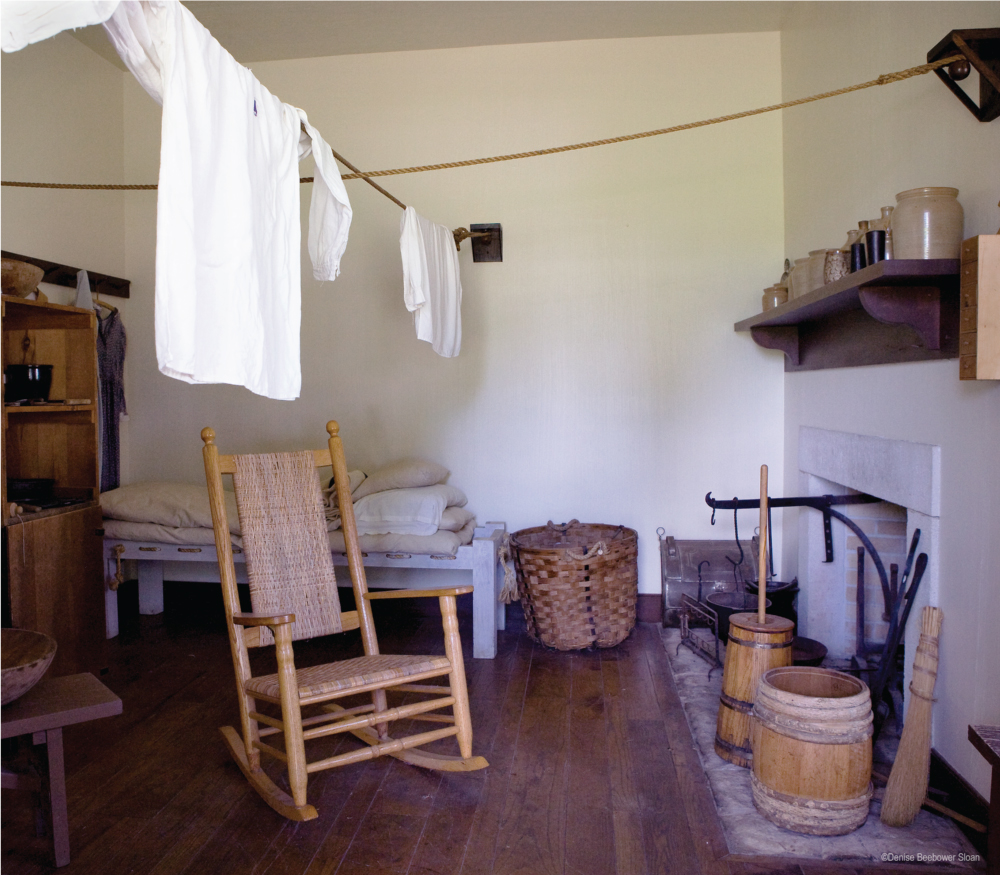
The laundress kept the single soldiers clothed in clean uniforms.
- Guided tours are available from the visitors center 10 a.m.-1 p.m. May through September. Check with rangers for winter tour times.
- Download a guided cell phone tour from the park website
- Leashed pets are welcome on the grounds but not in the buildings.
- Food, lodging and services are available in Fort Scott, the town adjacent to the park.