
adragan/Adobe Stock
Figuring out a good moving date means juggling lots of moving parts.
How To Plan a CONUS PCS (Pt. 3)
Denise Sloan
Over the last two weeks, I explained the basics of a CONUS PCS from acronyms to the types of moves available. Today I’ll walk you through how to pick your actual moving dates.
But first let me share a tip. Remain extremely flexible during this whole PCS planning process. Often we’ve burned through Plan A, B & C only to end up back on Plan A. The more flexible you remain, the less frustrated you’ll be.
To make planning easier for you, we created the CONUS PCS Travel Dates Worksheet. Simply click and print.
OK, pull out your PCS orders, a calendar and the worksheet. You’re going to back plan your move from the service member’s report date at the new duty station.
Step by Step
Let’s start with the actual moving days. If you choose the government contracted move, packing and loading can take anywhere from 1-4 days. It really depends on how many pounds the packers must handle and how many crew members they send.
For example, our last government contracted company sent five packers. It took two days to pack and one day to load our out-of-state 14,000 pound shipment.
Recently we completed a civilian move with a company we hired. They sent eight workers for 14,000 pounds. It took one day to pack and one day to load for a local move.
If you choose the PPM route, you’ll have to guesstimate how many days you’ll need to pack and load. There are many options for a PPM: do-it-yourself moving trucks, hiring a load/unload crew for your moving truck, having a container delivered or even a hiring a full-service company yourself. Each option varies in the time needed for the packing and loading.
Next add an extra day or two for cleaning your home and a housing inspection before turning over the keys to rentals. You may need additional days if you’re selling a house.
Now figure out how many days you need to travel from your current duty station to your new duty station. Usually there are allotted travel days listed on the orders. That’s the amount of time the military says it should take an average person to travel a specific distance, while stopping for normal things like gas, food or rest.

Denise Sloan/PCS Adventures
National parks, like Shenandoah, make great stops on a PCS road trip.
Think about your specific situation. You may want to stop and visit friends or family along the way or turn the road trip from utilitarian to fun with stops at attractions. The service member will need to take leave if you plan to do anything beyond getting from Point A to Point B. So write down the number of days for travel plus any time you want to take leave.
Finally the service member should consider whether he/she wants to sign-in shortly after arrival at the new duty station or have a few days off to get settled. If they do want that time on the other end, add those leave days to your running total.
The service member may also be able to take permissive TDY either before or at the end of a move. This is basically paid time off that doesn’t count against their accrued leave. It’s not automatic, so the service member must request it from either the losing or gaining unit for a specific purpose (like receiving household goods during a PCS). If days are granted, add those to your worksheet.
Now add all of the days together for the total days needed for your move. Look at the calendar to see when the service member’s report date is. Count back however many days you estimated previously and write down that date.
Pick several dates that could work for the move. Yes, several. Why? Because you’ll enter an ideal day for the you, but the movers may or may not be available. It’s always good to have several backup plans. You’re now ready to officially schedule your PCS with transportation in the Defense Personal Property System (DPS).
Scheduling Your Move
All moves must be entered into the Defense Personal Property System (DPS) by the service member. Yes, this includes PPMs. If you do not schedule through DPS, you won’t be paid for moving your HHGs.
Military Contracted Move: For the military contracted moves, DPS will assign a company to your move. The company, known as the Transportation Service Provider (TSP), then contacts you directly to lock in dates, locations, etc. and assign your move coordinator.
Here’s where it may get confusing. The TSP may use the same company or parcel out different steps of the move to several companies. The local company that does the moving survey and packing is known as the Origin Agent. They may load your HHGs or the van line assigned to drive your HHGs to your next destination may load your HHGs. The Destination Agent is the company that delivers your HHGs on the other end of the move.
Denise Sloan/PCS Adventures
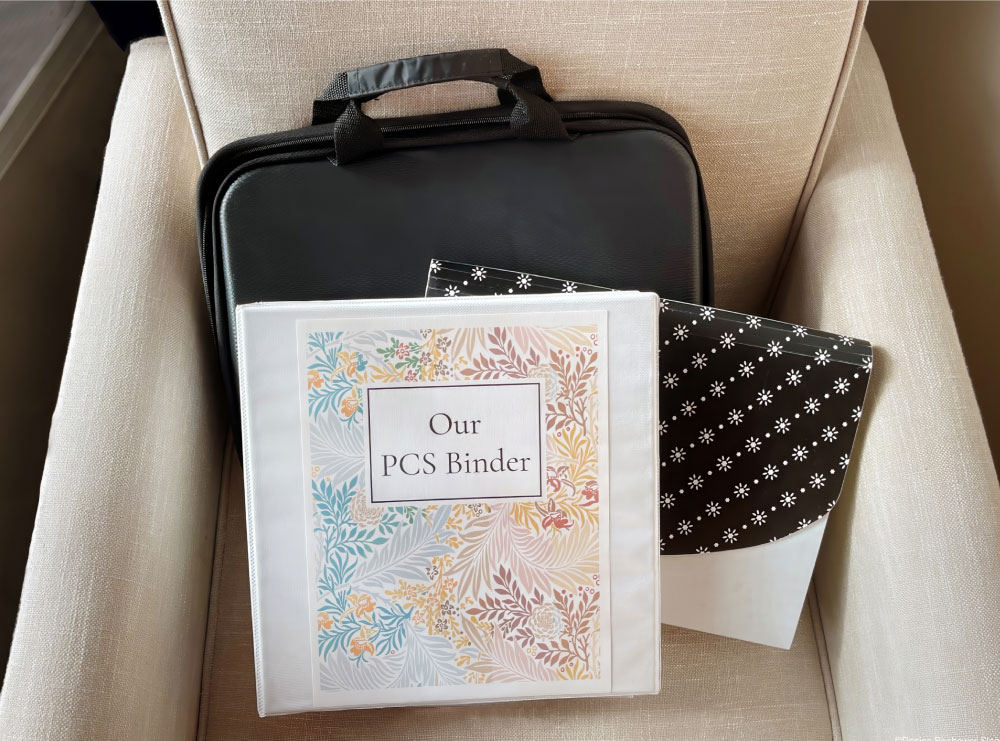
A PCS binder helps keep moving chaos under control.
Because this can be confusing, I like to print out the all emails and keep them in my PCS binder in case a question arises. If you don’t have a binder, I’d suggest creating one asap. I wrote a whole article on what to include in your PCS binder.
As I mentioned, the TSP will schedule a walk through of your home to get an accurate estimate not only on the weight of your HHGs, but also the type of boxes and packing materials they need to bring on packing day. These walk throughs can be in person or virtual.
This is the time to ask questions like, “Do I really have to take the treadmill apart before you arrive?”
Sadly, the answer was yes on our last move.
Now that you’ve got your moving dates figured out, you can get busy prepping your household for your move and there's some good prepacking advice here and here.
PPM: For a PPM, start by making a budget. Remember you’re paying for everyting up front. It may be months before you receive payment from the military. Next start making calls to get quotes and make reservations. Often it does pay to shop around.

Denise Sloan/PCS Adventures
People who’ve recently moved often gladly give away their used boxes.
Then locate boxes. Often you’ll see free boxes advertised in neighborhood groups online. Grocery and big box stores often give away boxes too. Or you may prefer new boxes. You can find these at Amazon, U Haul and even the Home Depot.
Next get packing. I’d start with the least used items in your house and continue until everything is packed.
Partial PPM: For a Partial PPM, set up two separate moves in DPS (one for the government contracted move and one for the PPM). Follow the previously listed guidance with one exception. Begin gathering the things you want to take on your PPM and seperate them from items the moving crew will take. I designate one room as the “Do Not Pack” room and stick a “Do Not Pack” sign on it.
Wrapping It Up
So there you have it, the basic steps to plan a CONUS PCS. Hopefully this demystifies the military moving process for you. Moving is always challenging, but understanding the basics makes it less stressful for everyone.
Now that you’ve got your move scheduled, you can start planning your PCS road trip!