
Denise Sloan/PCS Adventures
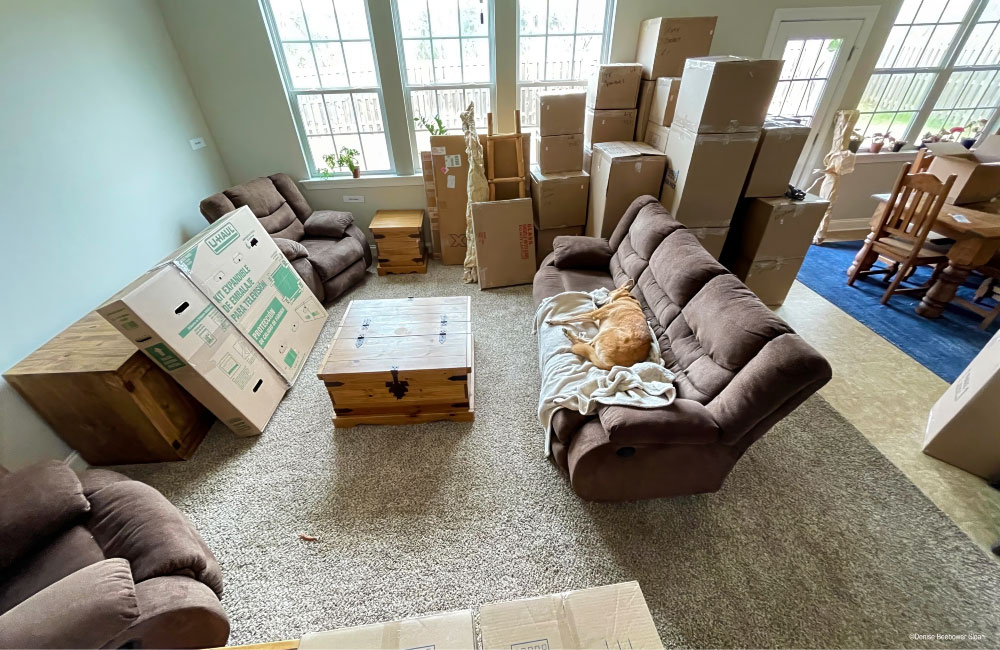
I wish I could deal with a PCS like my dog does by closing her eyes and taking a nap.
How To Plan a CONUS PCS (Pt. 1)
Denise Sloan
P.C.S. Those three little letters possessed the power to upend our lives. The destination attached to a Permanent Change of Station (PCS) often brought joy and sometimes disappointment to my husband and I. But no matter how I felt about our next move, I learned a little bit more about the PCS process each time. I quickly found that understanding the process brought some peace that carried me to the next duty destination.
A PCS means the military pays to move a service member to a new duty station 50 miles or more away from the current station. For most on active duty, this happens every one to three years.
During the installation assignment process, the service member may be asked to rank his or her top choices. They may also interview with various units within the military who are seeking new service members to fill slots.
The military does consider the service member’s choices, but ultimately they assign people where they need people. And, generally speaking, orders can’t be changed just because you and/or your family don’t want to move somewhere.
Service members move either within the Continental United States (CONUS) or Outside the Continental United States (OCONUS).

Denise Sloan/PCS Adventures
Ft. Huachuca, Arizona is a CONUS destination.
CONUS moves include 48 of the 50 states. The government classifies Alaska and Hawaii as OCONUS moves because Canada and the Pacific Ocean, respectively, separate them from the main part of the US.
OCONUS moves also include places like Guam, Puerto Rico, Germany, the United Kingdom, Greece, Japan or South Korea. To keep things simple, this article focuses strictly on CONUS moves.
PCSes can happen any time of the year, but the majority of service members move during the summer or peak season that runs roughly from May to August. A smaller number of people move during the winter season that runs from December to February. Each moving season offers different advantages. Summer moves position children to start school with all of their classmates. Winter moves often have more moving companies and housing options available.
Receiving Orders
How does a service member receive orders? In the Army the service member’s branch usually tells the soldier he or she is on orders to PCS. At this point the soldier can start researching the new assignment. But until the installation cuts the orders, they should not make hotel reservations, pay for a rental truck or buy a house. The military will not pay for expenses incurred before hard orders were cut. Why? Because assignments can change.
The service member’s orders contain plenty of information about the upcoming PCS. Read through it carefully. It should list dependents names who are authorized to move with the service member. Second, Army or Coast Guard service members should make sure the family pet (dog or cat only) appears in the orders. Failure to list either of these two groups means the military won’t pay the service member for their travel expenses.
Next check to see what the authorized weight is for this move. Rank and number of dependents determines the total weight. Going over the allotted weight means paying the military back for every pound above the limit.
If you’ve never moved before, you may have no idea how much your household goods weigh. A general rule of thumb when guessing is about 1,000 pounds per furnished room. Naturally a bathroom or small closet may have less than 1,000 but a kitchen may have more. A big book collection or extra heavy furniture will push this number up significantly. We emphasize purging things you no longer use to help you stay within your allowed weight.
Denise Sloan/PCS Adventures
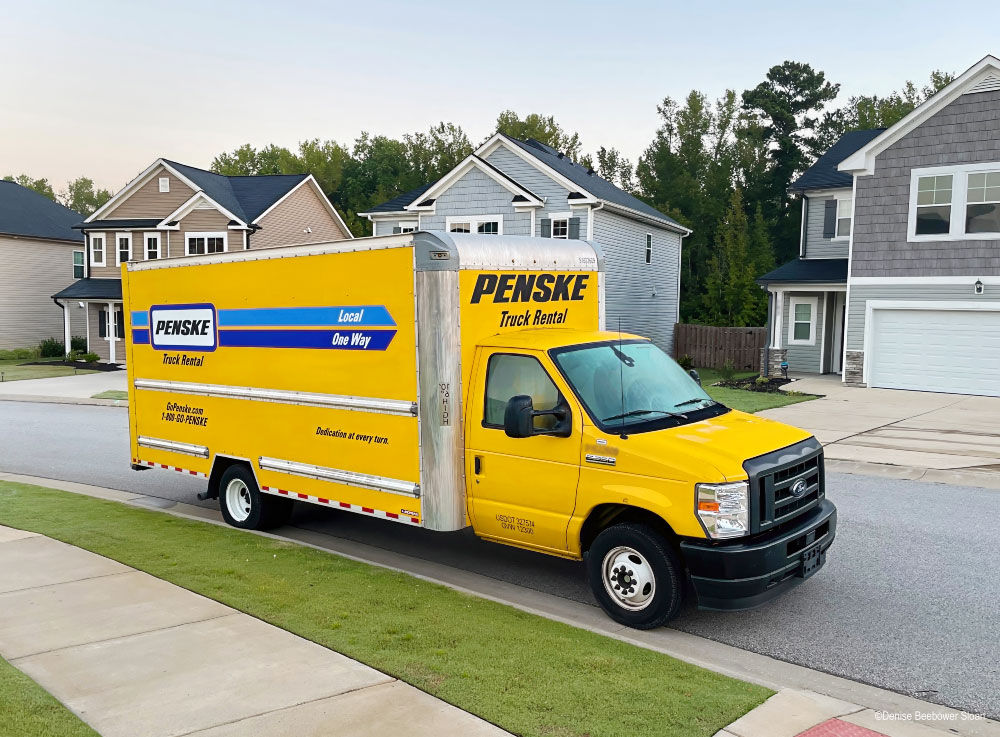
Service members can choose to move themselves by renting a moving truck.
The orders will also give the number of authorized travel days. This is the amount of time the government calculates a normal person would need to drive (CONUS) or fly (OCONUS) to their new installation with stops for food, fuel and rest.
For CONUS moves that’s 400 miles the first day and 350 miles per day for each following day. If the orders don’t have the milage listed, check the Joint Travel Regulations (JTR) for specifics. The JTR is the official rules and regulations document used by all six branches of the military when a service member PCSes.
The service member’s report date to their new installation will be listed too. Orders usually list if early reporting is allowed; however, each service does it differently so read carefully.
Generally, reporting more than 30 days before an assignment requires amendments to your orders. Both the report date and the early reporting option will be important later in the planning process.
Most installations require the service member to attend a moving brief done by the Transportation Office. Quite often spouses can attend as well. I’ve been to several and it was well worth my time. They go over the process, rules and regulations as well as the financial information like per diem and temporary lodging expenses (TLE).
If service members have questions and can’t find answers both the Transportation and Finance Offices should be utilized. If they can’t answer your question, go directly to the Joint Travel Regulations.
Join me next week for Part 2 of How to Plan a CONUS PCS. I’ll explain the three types of moves and housing options at the other end of a PCS.