
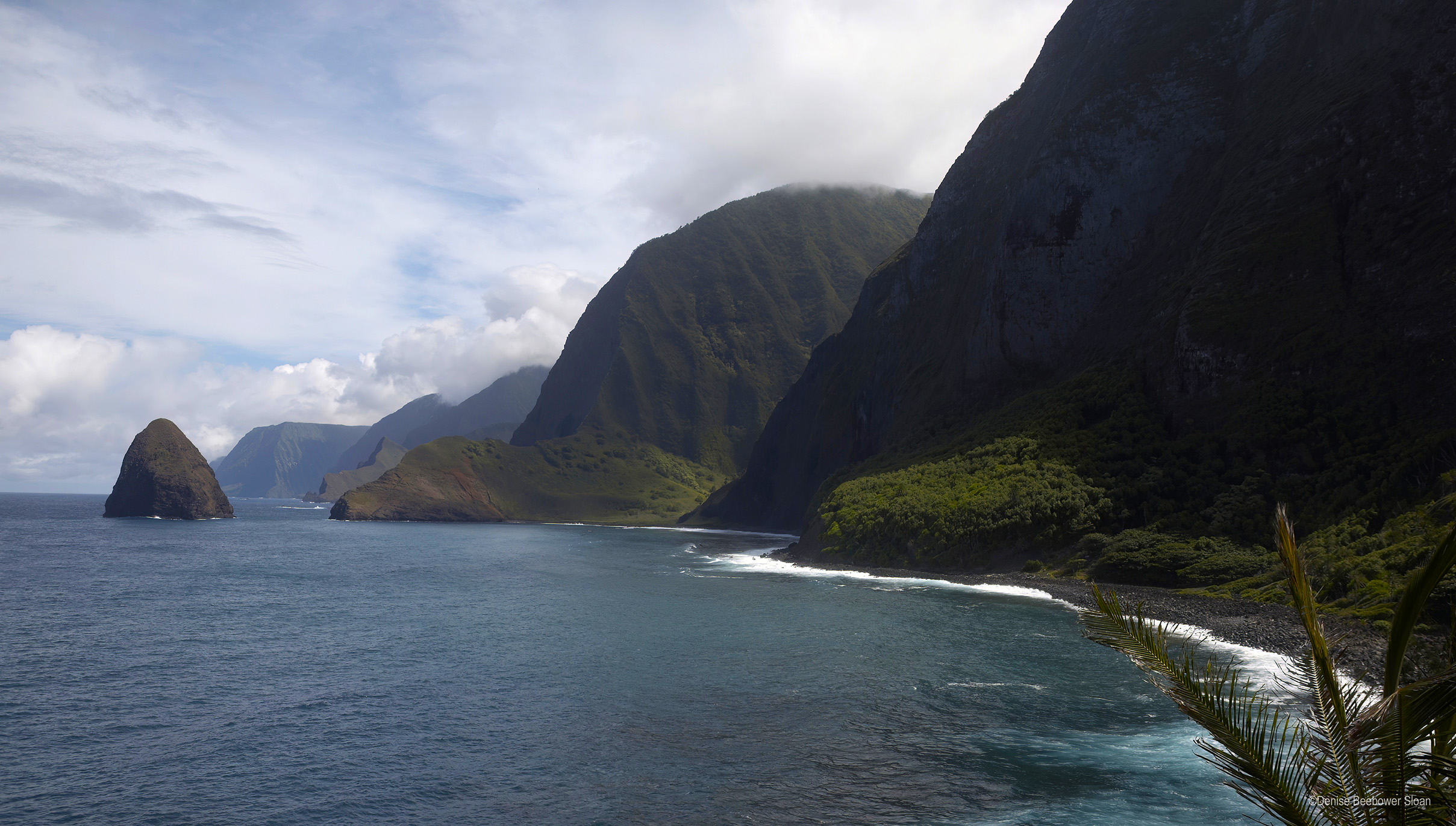
Denise Sloan/PCS Adventures.
The Molokai coast stuns visitors with its beauty.
Kalaupapa National Historic Park, HI
Denise Sloan
I stared at the tiny red plane with a bit of dismay. It was just…so tiny. Five people and our pilot supposedly would fit inside. My dismay increased when my fellow passengers elected the two smallest people to sit in the back seats. One of them was me.
To reach the back, the pilot flipped the middle row of seats forward. I and my fellow traveler reluctantly climbed in and exchanged worried looks as the pilot filpped the seat back in place.
We were thinking, “If this thing goes down, we’re doomed.”
A few minutes later, our pilot cranked the engine and we took off to Molokai, specifically the remote Kalaupapa National Historic Park.
At the time I visited there were a few ways to reach the park: fly in to Kalaupapa Airport with an official contractor in a tiny plane, ride mules down the steep Molokai cliffs trail or hike down and back up the cliffs. All of the above require permits and planning ahead.
I was fortunate. I found a pre-planned trip through my military ITT (Information, Travel and Tickets) office. I just paid and showed up.
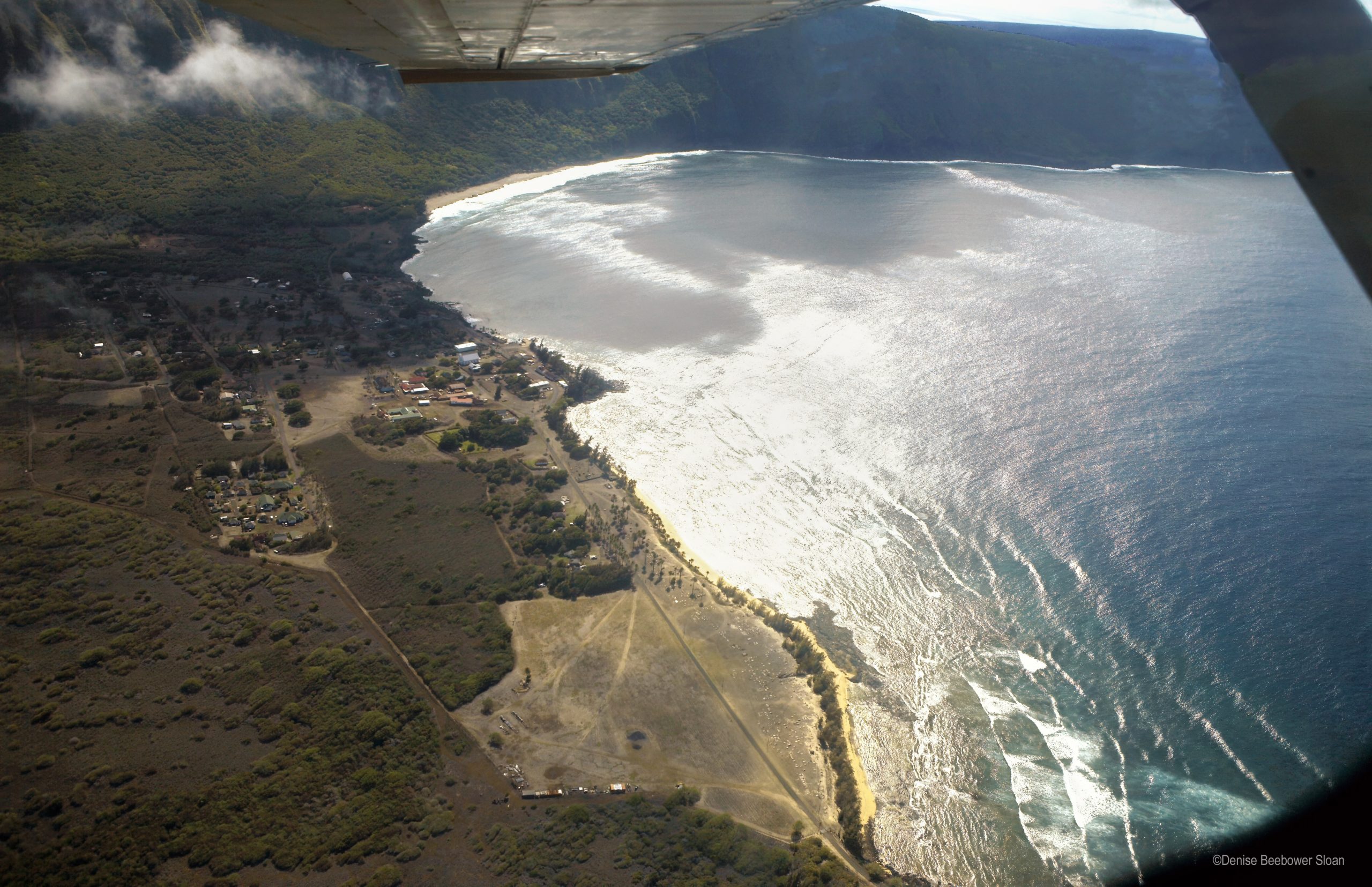
Denise Sloan/PCS Adventures
My plane ride gave me a birds eye view of Kalaupapa.
So why would I stuff myself like a sardine on a tiny red plane to fly to another island for a day, an island without accommodations, public medical facilities or food options? While my husband was deployed, I checked off things on my bucket list. We were immediately PCSing upon his return so it was now or never. Kalaupapa National Historic Park floated to the top of my bucket list.
The park chronicles the history of Hawaiians with Hansen’s disease (leprosy) in the 1800s. This fatal disease spread easily among the population and had no cure. So King Kamehameha IV ordered sufferers be rounded up and dropped off on Molokai’s peninsula. This historic park tells their stories of survival and isolation once the ships left them.
The Peninsula
After our tiny red plane crossed the ocean from Oahu, I got my first glimpse of Molokai. Imposing, sheer 2,000 foot cliffs towered over everything. The Pu’u ‘ua shield volcano formed the peninsula and the cliffs thousands of years ago. Today all that remains of the volcano is the 800-foot-deep Kauhako Crater.
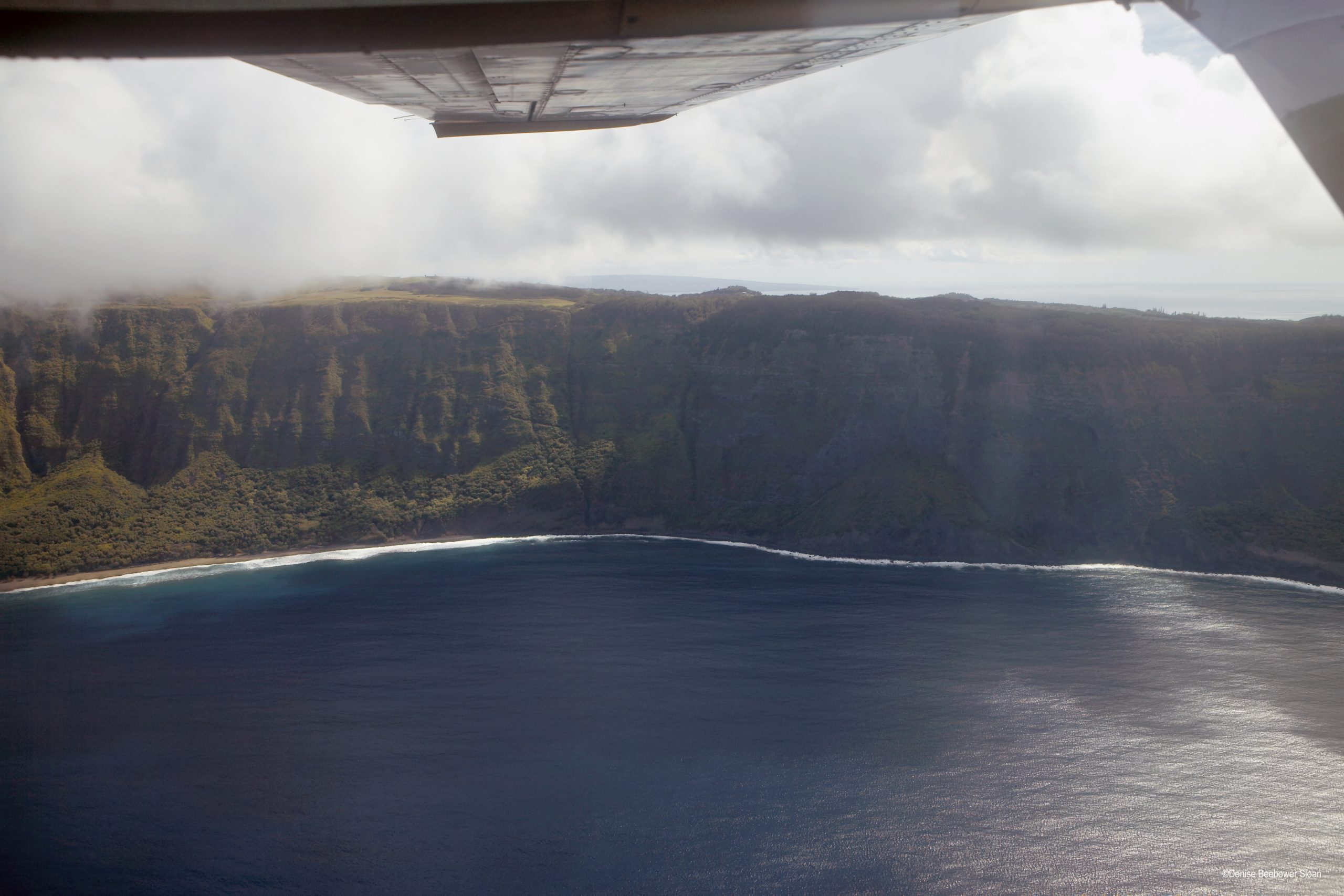
Denise Sloan/PCS Adventures
The sheer cliffs of Molokai tower over the ocean far below.
Next, the tiny Kalaupapa Airport and the Molokai Light, still operated by the U.S. Coast Guard, appeared out the plane’s window.
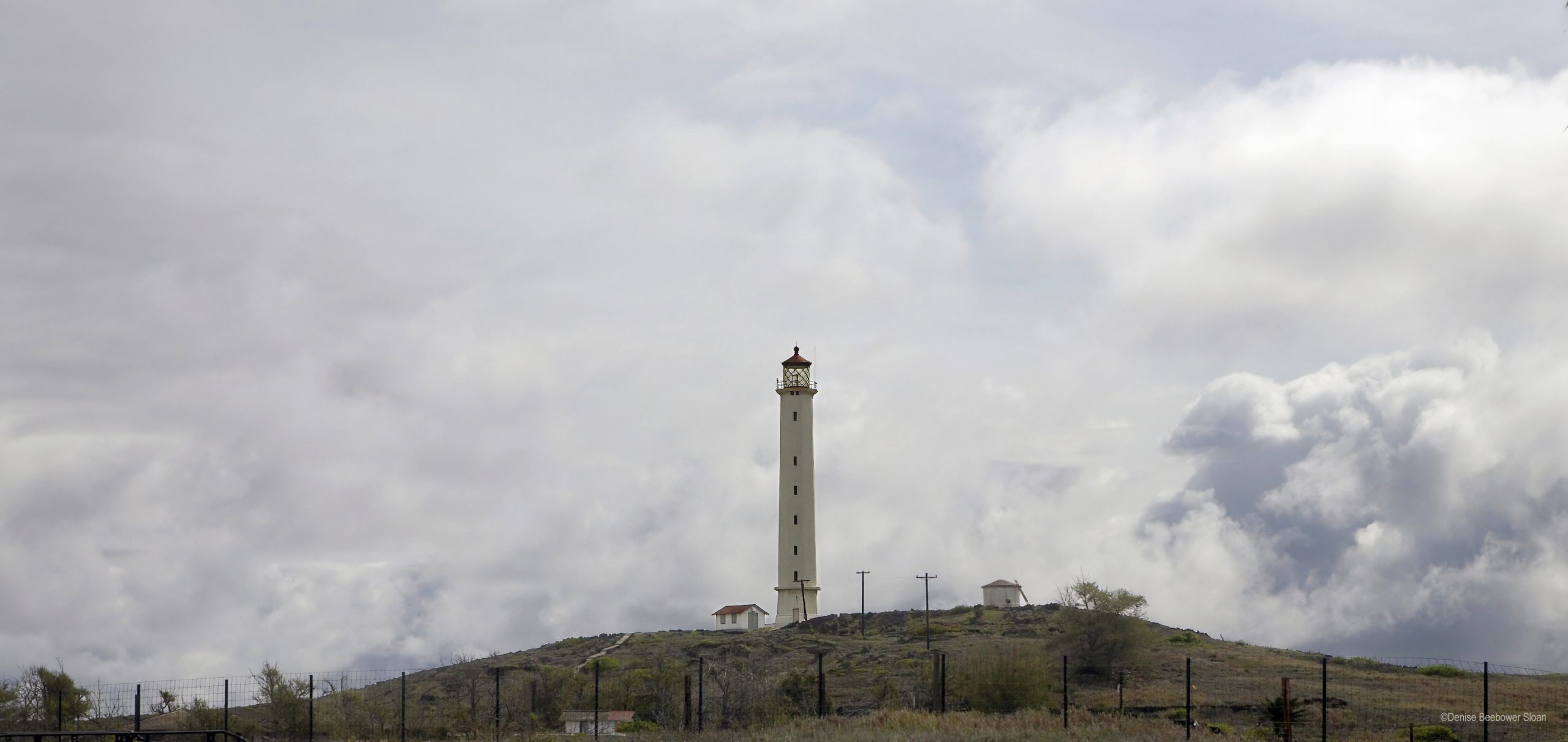
Denise Sloan/PCS Adventures
The U.S. Coast Guard still operates this lighthouse on Molokai.
We all breathed a sigh of relief as our plane touched down. We gleefully hoped out of our tiny tin can, especially those of us who had been in the back seat. We were eager to learn about this beautiful island full of rugged cliffs, deep valleys and an unusual history.
But First…
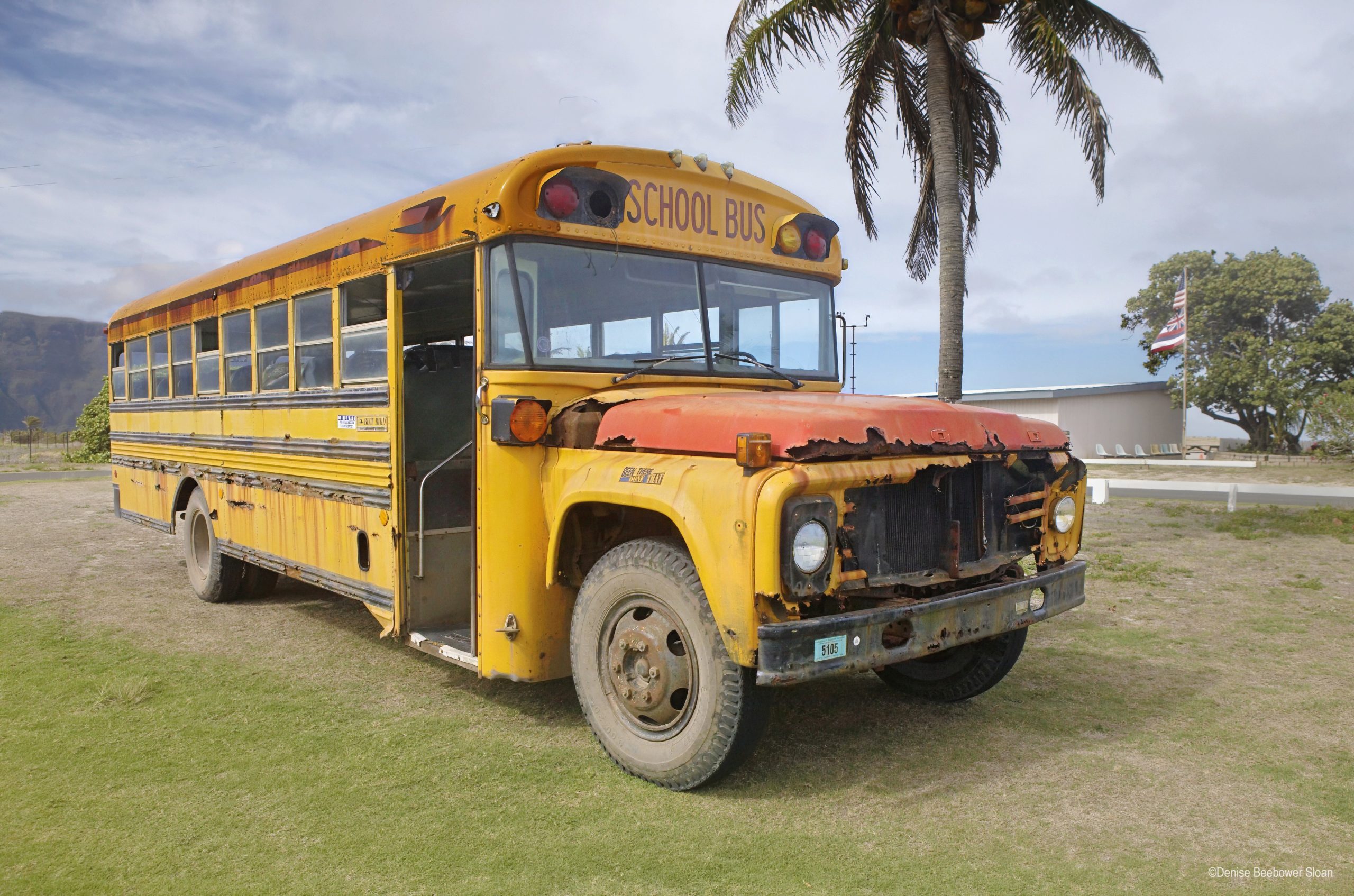
Our tour guide met us at the airport and led us to the rusted out school bus that would take us around the island. As my Dad would say, this bus had character.
Our tour started with some background information on the park and the people who who made Kalaupapa home. They came from all of the Hawaiian islands. The common denominator was leprosy. When someone contracted the disease, the government rounded them up and immediately sent them to Molokai. Most of these people never saw their families again.
Denise Sloan/PCS Adventures
Our tour guide gave us a fascinating tour while driving this rusted out bus.
As a result, those at Kalaupapa became a close-knit community. When a cure for leprosy was found and the isolation orders ended in 1969 many of the patients chose to stay on the island.
Since 1980 the National Park Service partnered with the local residents in an unusual way. They agreed to preserve the history of Kalaupapa while allowing the residents to maintain their normal lives within the park. This explained why we weren’t allowed to take photos of nor approach any of the residents. We also had to stay with our tour.
Father Damien’s Work
As I mentioned, Hansen’s disease or leprosy was easily spread and usually fatal. The first patients, three women and nine men, arrived at Kalawao, the original settlement location on the peninsula, in 1866. They were thrown off ships and had to swim through the shark-infested waters to shore.
Denise Sloan/PCS Adventures
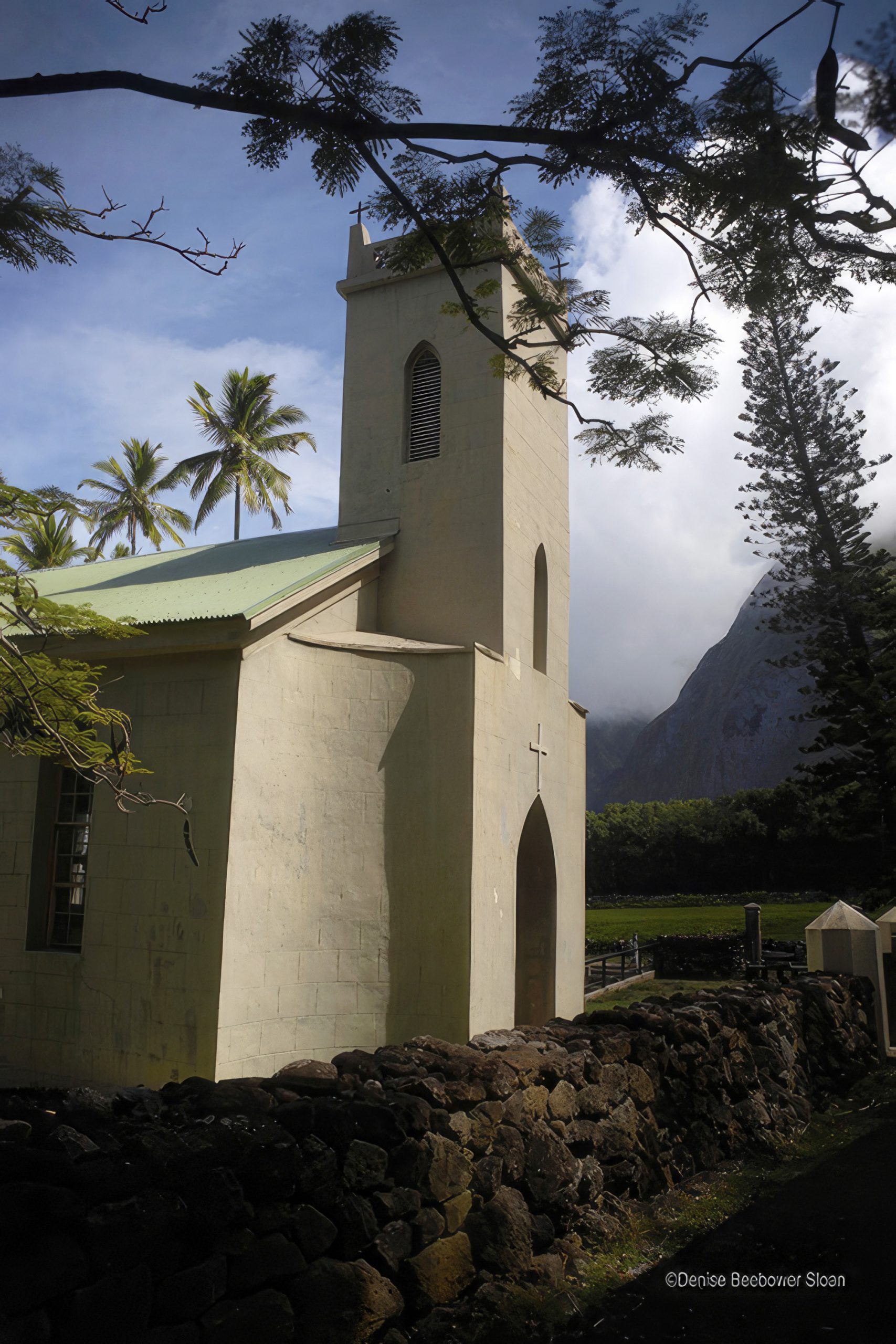
St. Philomena’s Church provided refuge for many leprosy patients.
The people lived in deplorable conditions until Father Damien, a Catholic priest, arrived in 1873. At the time he arrived, Father Damien did not have leprosy but he did have a a heart to improve the lives of the patients.
Immediately he worked on a water delivery system that ran from mountain springs all the way over to Kalawao. The water flowed through miles of hand-carved wooden pipes providing clean drinking water for the first time!
Denise Sloan/PCS Adventures
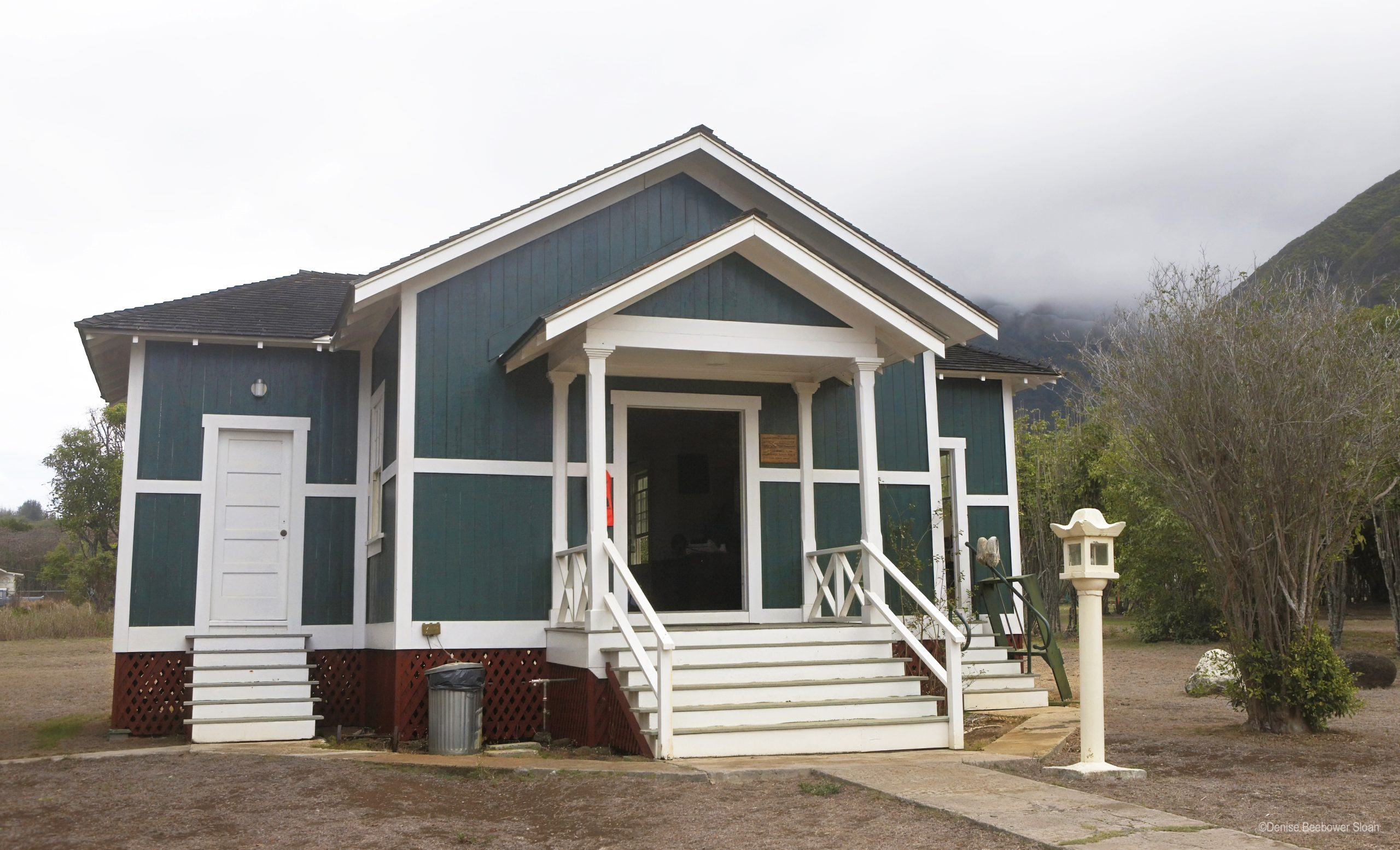
The Americans of Japanese Ancestry Hall was one of many buildings constructed in Kalaupapa.
Eventually the settlement moved from Kalawao to Kalaupapa because it was warmer and drier. As time went on homes, schools and churches were constructed. For such a small settlement, there were a lot of churches.
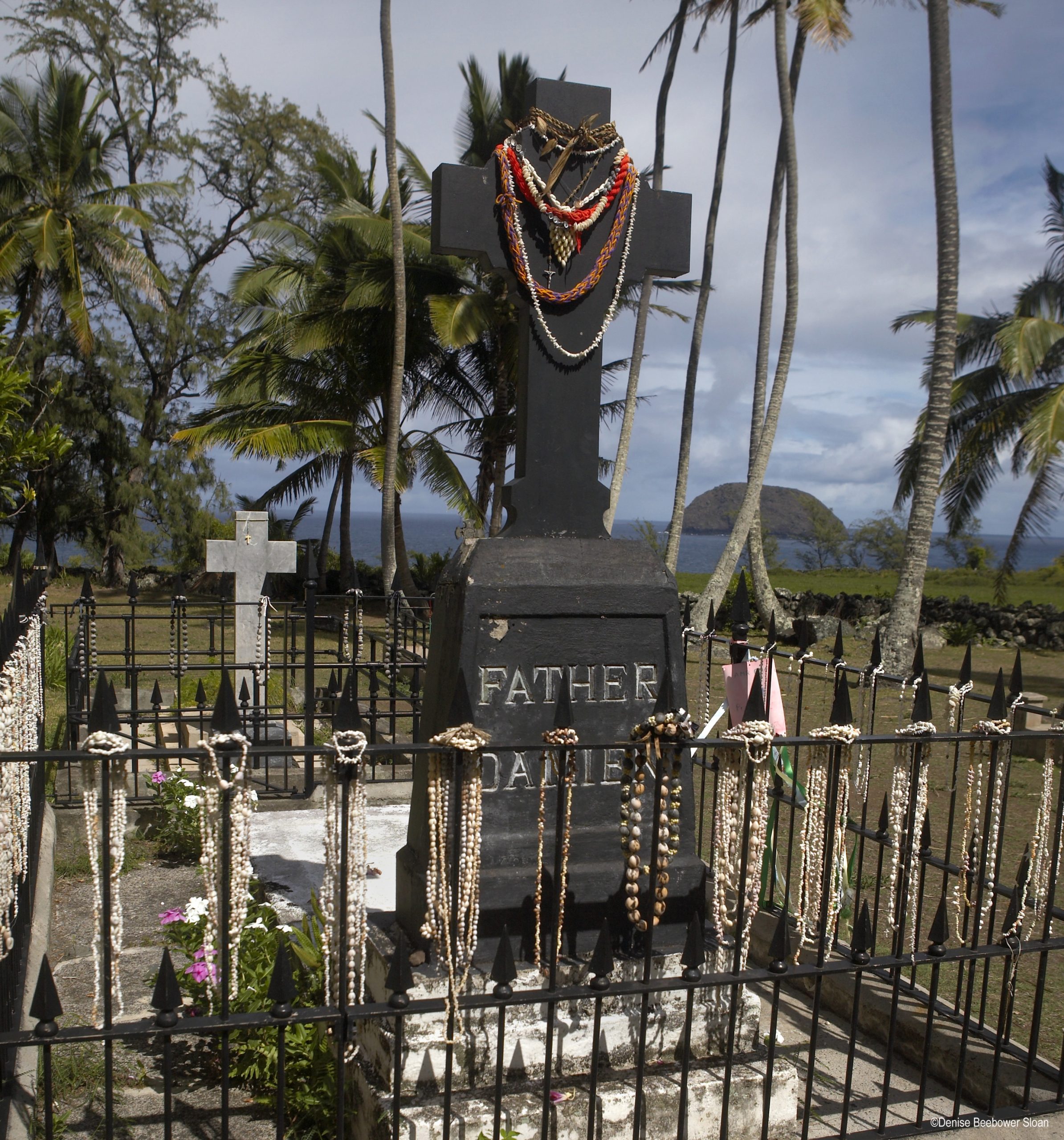
Father Damien contracted leprosy in 1884 and passed away from it in 1889. He is buried at St. Philomena Church.
Denise Sloan/PCS Adventures
Father Damien died of leprosy and is buried at St. Philomena Church.
Many others followed Father Damien to the island to minister to the patients. Among them, Mother Marinanne Cope operated the Charles R. Bishop Home for Unprotected Leper Girls and Women.
As our tour wrapped up, I contemplated the selfless sacrifice of people like Father Damien and the difference one person could make in many peoples’ lives.
Heading Home
My fellow travelers and I boarded our teeny, tiny plane, I felt more confident we’d actually make it home in one piece. I was happy that I’d taken a chance and flown to Molokai. It was an unforgettable trip to a beautiful island with a complicated history of isolation, suffering and triumph despite dire circumstances.
Closest Military Installations
There are none on Molokai
MWR Locations Nearby
There are none on Molokai
Kalaupapa National Historic Park
If You Go:
- Kalaupapa recently reopened after a long closure to the public. Regulations and travel options have changed since I visited. Please visit the park’s website to get the latest information.
- Hiking or riding mules into the park are no longer options.
- The only way to see the park is through a guided tour and visitors must be at least 16 years old.
- Tours are given through Seawind Tours & Travel . When I visited, I was able to book through ITT. The price has significantly increased since then.
- There is no entry fee but visitors need a permit from the Hawaii State Department of Health (obtained by the tour company). For details see the official tour company .
- Visitors may not take pictures of or approach the residents.