

The sun bakes Hovenweep House (foreground) and Hovenweep Castle (background) in the Utah desert.
Hovenweep National Monument, UT
by Denise Sloan
The absolute silence struck me as I stepped out of the van. Looking around I saw nothing but desert. And more desert. The desert even swallowed up the Native American ruins Dad and I sought.
Dad and I drove, literally, to the middle of nowhere. After a business trip to Ridgeway, Colorado we were really ready for a desert adventure.
A stiff breeze and a distant rumble of thunder were the only things to break the silence. A summer monsoon storm threatened to cut short our exploration of Hovenweep National Monument in Utah.
Little Ruin Canyon
We took the Little Ruin Canyon trail, a 1.5-mile hike around and through the ruins of an ancient village. The stifling 100-plus degree heat ensured we didn’t dawdle.
The remains of Hovenweep’s Square Tower Group rose up out of the desert floor, soaring along the edge of Little Ruin Canyon. Some buildings even perched on top of large boulders. The builders’ skills impressed us. Ancestral Puebloans created most of the structures about 1200 A.D. At one time about 500 people lived in this village.
In 1874 photographer William Henry Jackson first named the collection of abandoned villages along the Cajon Mesa “Hovenweep”. That’s Ute for “deserted valley”. It’s an apt name because civilization--and a hotel--is about 55 minutes away.
But 700 years ago, the villages bustled with activity. In addition to hunting, the residents also gathered plants and eventually grew corn, beans, squash and amaranth. They created stone dams to trap sediment and water during storms. They terraced the hillsides for planting crops. It’s a little hard to imagine all that looking at this rugged, parched landscape today. Multiple granaries suggest the ancestral Puebloans succeeded, though.
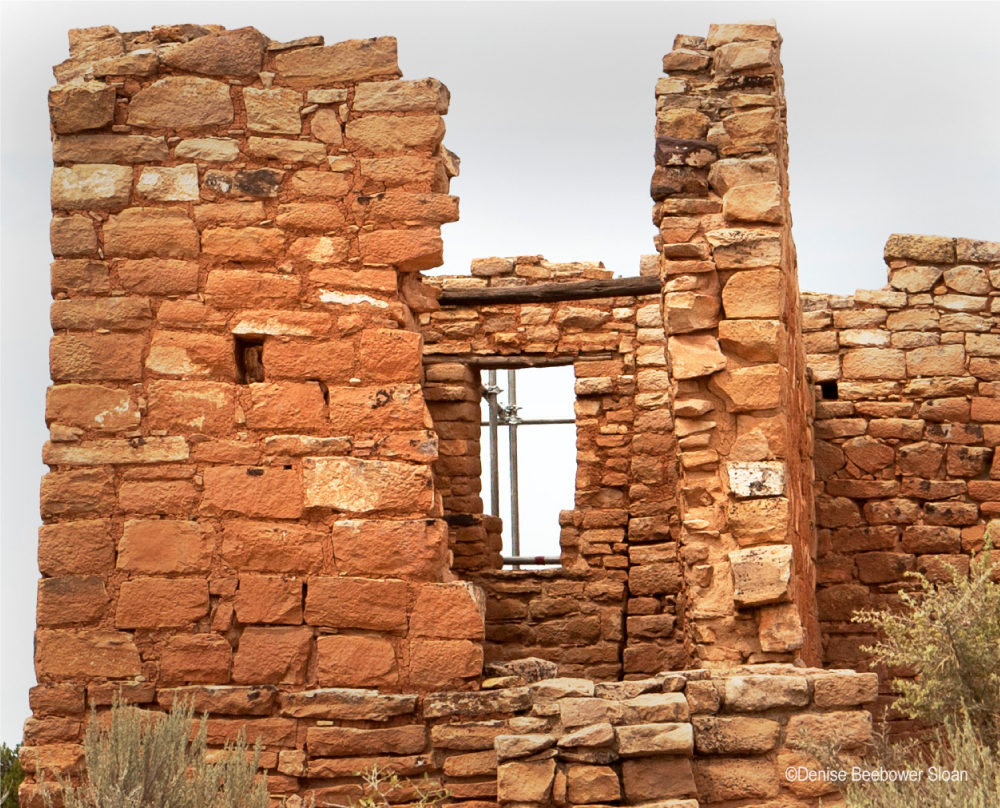
Hovenweep Castle provides a window into the lives of the ancestral Puebloan people.
These ancient people built the pueblos, kivas, storage buildings and towers that dominate Little Ruin Canyon. The towers are particularly interesting because their windows allowed shafts of light inside perhaps to mark the solstices and equinoxes. These shafts of light would have served as a calendar, letting the people know when to plant and harvest their crops. It’s possible they also used the towers for line-of-sight signaling or for defense.
But this community of skilled masons wasn’t alone. Six villages including the Square Tower Group dotted the Cajon Mesa. The mesa’s canyons and their streams that emptied into the San Juan River provided water for each of the farming villages. Each settlement lay just a day’s walk away.
For some reason, perhaps a drought or due to warfare, around 1300 A.D. the ancestral Puebloan people left the Cajon Mesa and moved south to New Mexico and Arizona. Their amazing buildings at Hovenweep gradually fell into disrepair and returned to the desert.
A Perfect Storm
I took pictures quickly knowing that the monsoon storm drew closer by the minute. Unfortunately we had just one day for exploration at Hovenweep. So it was now or never exploring the Square Tower Group.
What a place! The builders used meticulous masonry in construction. Local rocks formed the main walls and were surrounded by small, flat rocks filling the mortar joints. One house even used a naturally occurring boulder as the roof and part of the walls.
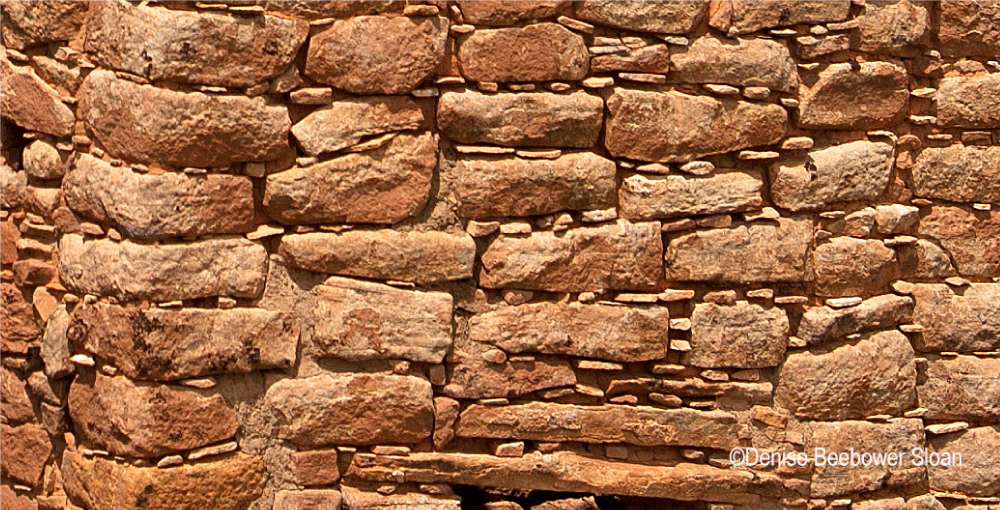
Local rocks formed the main walls of Hovenweep’s buildings and were surrounded by small, flat rocks to fill the mortar joints.
We took about two hours at the Square Tower Group, walking, photographing and learning. Cutthroat Castle and the Horseshoe Group, nearby settlements, were also on our list, but that storm I mentioned loomed overhead.
After taking a look at the dirt road that led to the next village, we decided to skedaddle. A van loaded to the gills and a rough, muddy road were a bad combination. Monsoon storms pack a pretty serious punch in the desert even if you have 4-wheel drive. Though the trip was short, the desert quietly revealed its rich history to us at Hovenweep.
Closest Military Installations
MWR Locations Nearby
If You Go:
Hovenweep patiently waits in the desert, ready to share its secrets. If you decide to go, you’ll need to know a few things:
- You’re headed to the middle of nowhere. Fill up the gas tank; take plenty of food and water. There are no stores for miles.
- Do not use a GPS to find Hovenweep. Instead, follow the directions on the National Park’s site at https://www.nps.gov/hove/planyourvisit/directions.htm
- Hovenweep is open year-round from 9 a.m. to 5 p.m. except for Thanksgiving, Christmas Day and New Year’s Day. Nonetheless, you should check for any closures before heading out. Trails open at sunrise and close at sunset. https://www.nps.gov/hove/planyourvisit/hours.htm
- Entry is free. Camping costs $15 per night.
- If you’re looking for some place to crash after exploring, you can stay at the campground near the visitor center. Check https://www.nps.gov/hove/planyourvisit/eatingsleeping.htm for details. Otherwise you’ll need to travel to Bluff or Blanding, Utah or Cortez, Colorado for a hotel.
- When hiking take a partner. Let someone know what trail you’re taking and when you expect to return.
- Watch out for rattlesnakes.
- The road to the Square Tower Group and the visitor center is paved. All other roads are dirt. It is best to travel the dirt roads with 4-wheel drive. Pay attention to storms (summer or winter) that may make these road and trails treacherous.
- Cell phone coverage is spotty to non-existent. Plan accordingly.
- Dogs may explore Hovenweep but must be kept on a leash at all times.
- The park occasionally holds special star gazing events. Check with the rangers for times and dates. Participants must stay in the visitor center parking lot and campgrounds as trails close at sunset. https://www.nps.gov/hove/planyourvisit/stargazing.htm