

Seattle, Washington is just a stone’s throw from Mt. Rainier.
Joint Base Lewis-McChord, WA (Pt. 1)
Ande Flagg
It was a first for us—a chance to choose our next duty station. As a lieutenant, Tim was told where he would be stationed the first time. Then there was a required school. After five years in the Army, Tim finally got to rank his top 50 duty stations where he might like to go for his captain or O3 time. We decided to ask for somewhere we had never been before.
During the ranking of our 50-duty-station list, we talked to a lot of people about the places we thought we most wanted to go once Engineer Captains Career Course (ECCC) was complete. Everyone spoke glowingly about Joint Base Lewis-McChord and loved living in the Pacific Northwest.
Our final request was number one-Germany and number two-Washington state. The Army decided and we were headed to JBLM! We were excited.
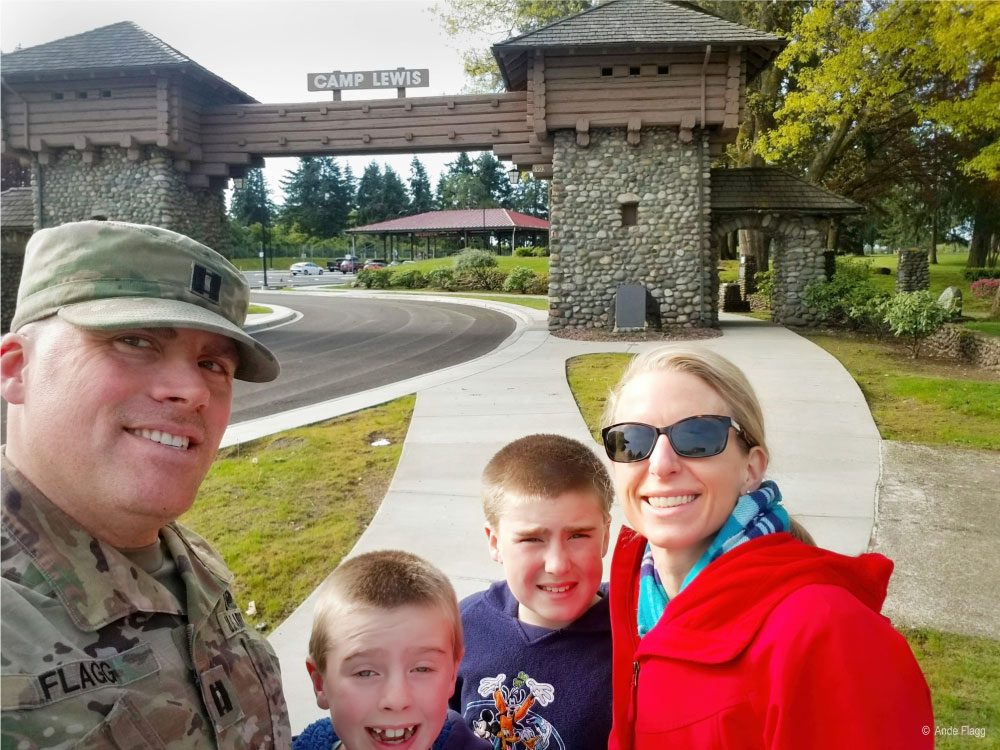
Team Flagg arrives at Joint Base Lewis-McChord.

Download Our FREE Moving Timeline
Use this moving timeline to help make the giant list of things to do a little less overwhelming. Complete the form below and download the timeline.
By submitting this form, you are consenting to receive information and special offers from: PCS Adventures. You can unsubscribe at any time by using the Unsubscribe Link, found at the bottom of every email.
Tim grew up in Indiana and Virginia. I was a Navy brat whose family had been stationed primarily in the eastern half of the country by the time I came into the world. I traveled to the West Coast to visit family and see a few sites after I graduated from college, but nothing more.
Now as parents of young ones, my husband and I thought this would be a great opportunity to experience new adventures as a family. Tim and I each had extended family in Washington state. So, we anticipated some family connections, even though our parents and siblings were 3,000 miles away on the East Coast.
I’m glad we went to the land of temperate rainforests and big mountains. We made some great family memories. However, as I reflect back on my experience, there is one thing I wish someone had told me before going to the Pacific Northwest. Order a sun lamp and keep it nearby!
Here comes the Sun, Little Darlin’
But you had to wait until May.
The Pacific Northwest (PNW) was different from anywhere I had ever been. I grew up in sunshine. Lots of sunshine. I hadn’t been away from the sun for more than a couple weeks. The sun in Pennsylvania and Virginia might disappear for a bit in the winter, but a stretch of gray days were always interrupted by sunshine.
The brightest days were those after a good snow. Intense light would reflect from the snow to my face and push the sides of my shivering mouth into a grateful grin. Ahh, the sunshine on a cold day warmed the heart.
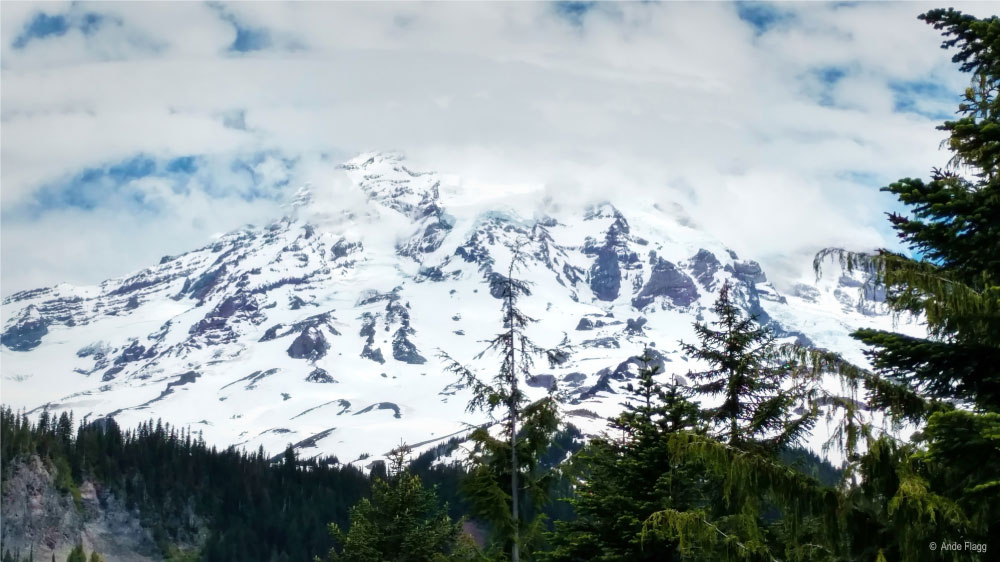
Mt. Rainier is often enshrouded in clouds.
That peek of sunshine rarely happened between the end of October and May first in the PNW. The only months I could count on for a lot of sun were June through August.
I thought of the seasonal calendar this way:
January – March The days were cold, wet and a little less dark with each passing week. Each day started with very dark and finished with not as dark.
April – May Consistent spring rain and never-ceasing gray skies left a couple hours each day that I might be able to take the kids to the park. If I did venture out I took a towel for wiping off the slide and rain boots to prevent wet socks.
June – August The days were sunny! Summer was pleasant with about three or four days of hot weather (upper 90s).
September — October The rains started up with a few intervening sunny days. October seemed to have about four crisp, sunny fall days each year.
November The rains came back to a constant drizzle or more, and the temperature dropped into the 40s and stayed there until February.
December The days got quite short and by December 23rd the sun went down at 3:30 p.m. and rose about 9:30 a.m.
My least favorite memory of dealing with the dark was taking the boys to the gym for practice at 4:30 p.m. It was often (i.e. always) raining and pitch dark. It felt like I should have been taking them home to go to bed, when in reality we hadn’t even eaten dinner yet.
My most favorite memory of the long summer days was letting the boys play. I had to rein them in about 9:30 p.m. at night because I wanted them in bed by 10 p.m. They were five and seven. I thought 10 p.m. was late enough.
They would complain saying, “But it’s too bright in our room! It’s not dark yet!”
So, you think you will have snow?
Joint Base Lewis-McChord (JBLM) is on the west side of the Cascade Mountains. Newbies should know there were several different ecosystems within the Pacific Northwest. The area near JBLM (from Olympia up to Seattle) was rainy. The closer to Seattle I got the less rain I experienced. We lived closer to Olympia. I didn’t know this would be the rainiest choice.
Additionally, the area between the Puget Sound and the Cascade Mountains was the wettest, with the exception of the snow on the mountains.
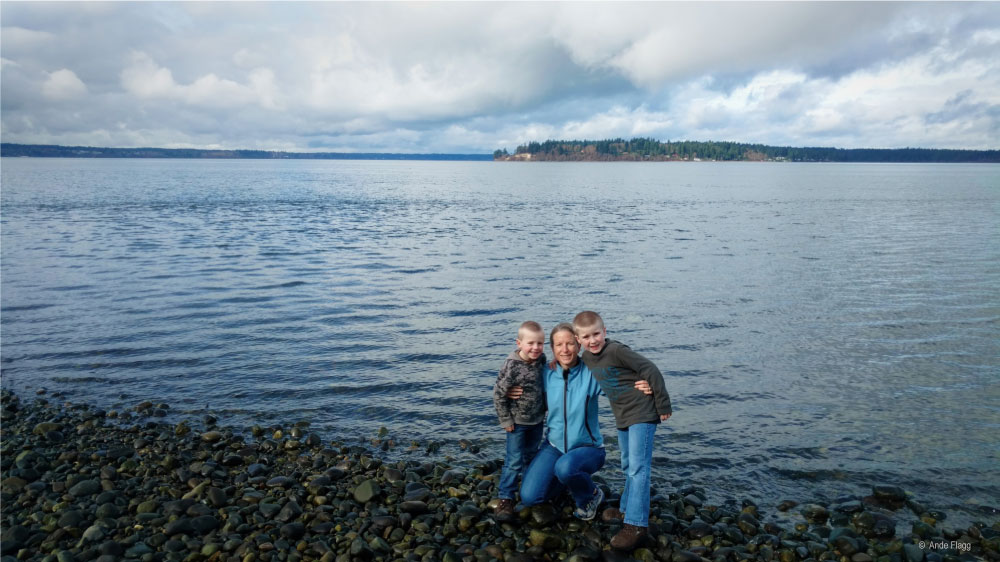
Puget Sound plays a big part in this part of the Pacific Northwest’s weather.
Yes, snow. Why no snow near JBLM? It’s the same reason the climate remained mild despite how far north the base was—the Pacific Ocean. As it had been explained to me, the Pacific waters remained warmer than the land in the winter and cooler than the land in the summer. Thus little to no snow.
Then there was the Puget Sound. The air mass that made it over the Puget Sound continued to be warmed. Warmed air condensed and made clouds. Voila. It was 50 degrees and cloudy much of the year.
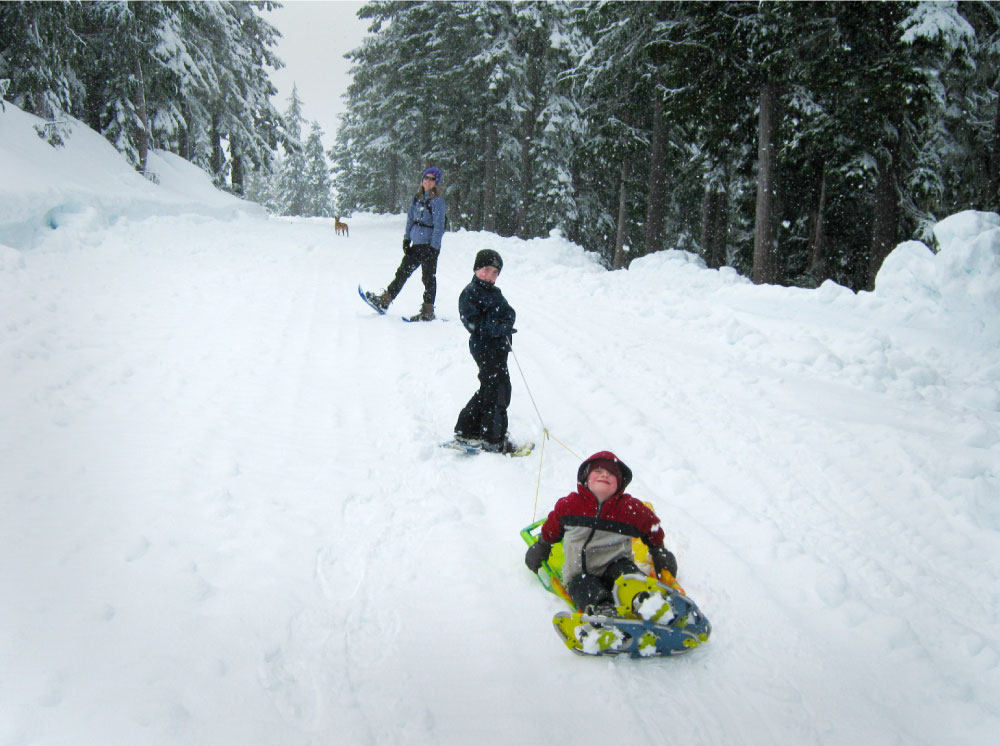
The Cascade Mountains provide plenty of snow-filled activities.
If I wanted snow and some good skiing, the Cascades were just a short jaunt from the JBLM area. Typically it was a one or two hour drive depending on where you lived. Those who choose to live in Yelm (the “backdoor” of JBLM) were 45 – 60 minutes closer than those in Olympia.
How long does it take?!
I thought I understood traffic, having lived in the Washington D.C. area and driven through Atlanta, Georgia several times. Alas, driving on Interstate 5 was a new experience.
Some days it would take just 10 minutes from my exit off I-5 to the JBLM gate and sometimes (like when I had a specific meeting to get to) it took 35 minutes.
The worst traffic our family has ever experienced was when a train fell onto I-5. You might remember that. It made national news. The garrison sent all of the soldiers home. It took Tim 13 hours to get from post to home. That was not the norm, but it is still something that I relive all these years later as I think “traffic” and get shivers down my spine.
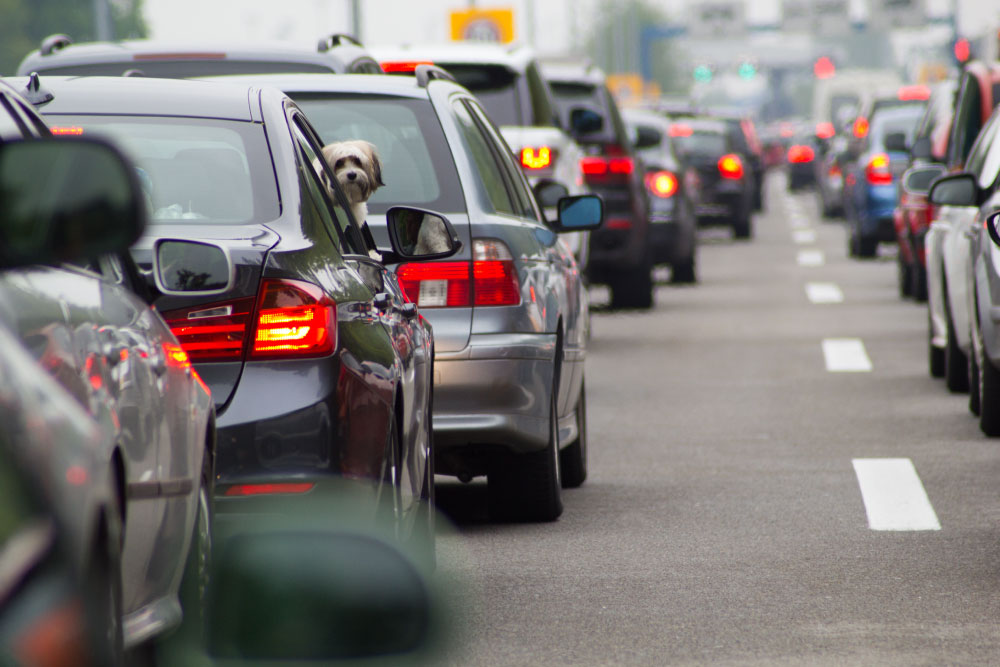
Traffic can be a bear along Interstate 5.
The traffic seemed to be continual with windows of good flow. However, if we missed that window, we planned on sitting. When was the window? The DOD employees and soldiers who lived in the area knew to leave for post early in the morning. Yes, 4:45 a.m. seemed to be a reliable time. Once that window had passed, there probably wouldn’t have been another window until the next day.
I took to social media and asked friends what they would have wanted to know before moving to the JBLM area. Most of them said they would have lived somewhere they didn’t have to drive on I-5 daily. That meant either living on post or living in Yelm. All other roads led to I-5. And if you lived south of JBLM, unless you went 30 minutes out of your way, your soldier or airman had to drive “5” in order to get to post.
We left Washington in 2019, a year prior to Covid-19. I am told the problems Washington state and western Oregon struggled with in 2019 are the same problems there today, but worse. In Washington the homeless encampments catch fire often and are interspersed between communities.
One friend said to be sure you know where the homeless camps are and stay away from living in those areas. Perhaps the word here is vigilance. Know your surroundings.
We lived in an area of Washington just north of Olympia, south of JBLM on the I-5 corridor. While traffic was a factor in trying to get anywhere fast, ultimately it was something we learned to live with. The 5 also made getting to other places in the Pacific Northwest (PNW) pretty easy.
Join us next week when Ande shares more about her ridiculously easy PNW wardrobe, naked baristas and rain gear that ensures you’ll blend in with the locals.