

The Palisades allow drivers to experience glorious fall foliage.
Driving in the Northeastern United States
Denise Sloan
Thirty minutes to go. Our loaded car and UHaul sat just outside the house, ready to go. Our super clean house gleamed in the late afternoon light. We were ready for our housing inspection and PCS south.
Except a nagging thought wouldn’t leave my head. Wasn’t there some silly law about trucks on 9W, otherwise known as the Palisades Parkway? No, I convinced myself. I was just worrying about nothing.
Our final move with the Army had taken an unexpected turn. Three days before the movers arrived, we learned our minivan’s transmission needed to be replaced. We decided, after wrestling with several options, to tow the van from New York to Georgia. Problem solved.
Because it was a last minute decision, we didn’t give much thought to the route we’d take. Just head south on 9W toward New York City and then west through New Jersey.
Except that nagging thought 30 minutes before check out kept coming back. So I finally googled trucks on 9W and, much to my horror, discovered you really couldn’t drive large trucks on on 9W. In fact, police issued tickets for that sort of thing because the bridges were too short for a UHaul. Oh my!
I began panic planning. It was worse than I thought! Not only was 9W restricted, so was the Garden State Parkway in New Jersey. How on earth were we going to get out of here, I wondered. This required two heads working on a solution.

Our PCS route changed drastically thanks to parkway restrictions on trucks.
As the minutes ticked by my husband and I cobbled together a crazy route on a napkin leftover from lunch. Over the fields and through the woods we’d go. East, west and then south to New York City. Cross a bridge, zag back to another bridge and then head west to New Jersey and Interstate 95 south. It looked like a drunken sailor had planned our route. But we thought it just might work.
The route did work, although we did get separated in New York City (and thankfully reunited about 15 terror-laden minutes later). How does one lose a giant UHaul in New York City traffic? Pretty easily I learned.
As we finally pulled in to our New Jersey hotel that night, I thought why doesn’t anyone tell you about all these crazy rules? The Army loves to brief soldiers on every minute detail. I can assure you this never came up in my husband’s briefings.
Even after three years in New York State and almost four years in Maryland, I was still learning about stuff in last-minute stress mode. Driving in Texas, where I grew up, was a piece of cake compared to the peculiarities of the North.
So I put together a a list of everything I wish someone had shared with me before we headed North.
Highway vs Parkway
My Texas childhood consisted of giant highways with trucks roaring at top speeds. I also can’t think of a single limited-access road we encountered either.
By contrast Northern states have a variety of roads. Highways offer plenty of on/off access points. Expressways or freeways also offer many on/off access points and often intersect with highways.
Parkways, however, were designed to connect several parks with a scenic drive. They have limited access points and are usually restricted to passenger vehicles. Many states have multiple parkways.
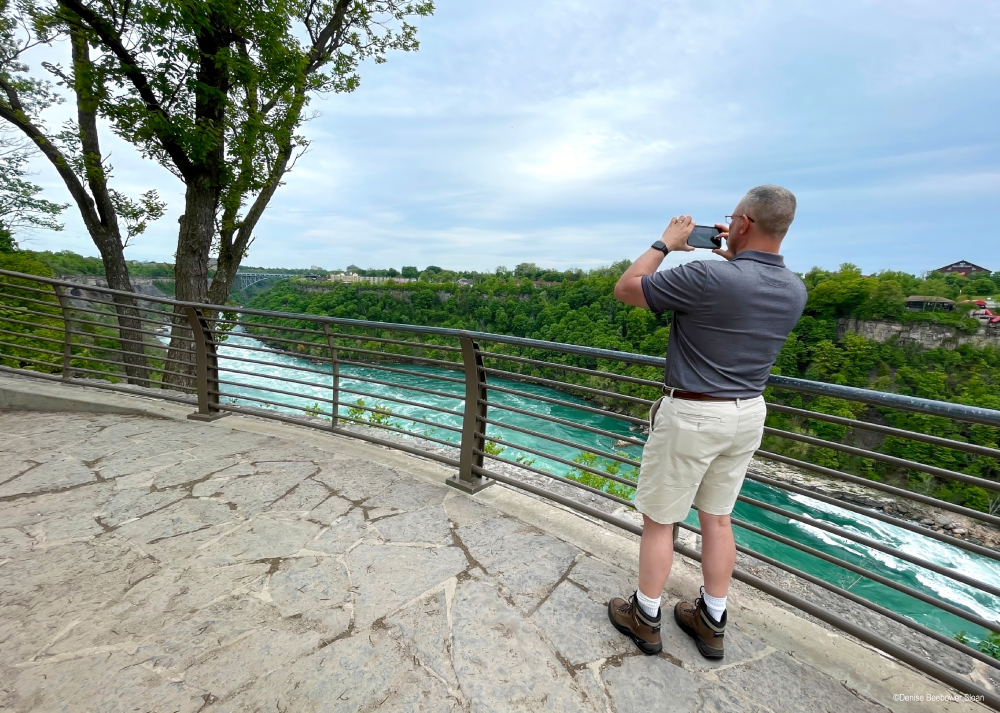
We enjoyed the beautiful overlooks along the Niagara Scenic Parkway.
They make a nice drive unless you’re piloting a large moving truck. Then you’re out of luck. We found parkways in many Mid-Atlantic states as well as the Northeast. So check road restrictions before planning a PPM move with a large truck.
Toll Road Transactions
Toll roads seemingly rule the entire northeastern US. We quickly learned that these tolls add up. Purchasing a toll pass means cheaper tolls plus less hassle at toll booths.
At first it wasn’t clear if a Maryland EZ Pass transponder worked in other states. I can assure you after traveling up and down the Northeast highways, it does.
I created an online account with EZ Pass Maryland and kept a credit card on file. Their system calculated an average amount spent per month. When my available cash amount dipped below the average, the system automatically added $25 to my account. Each month I received an email with a link to the monthly statement. Easy or EZ!
Many states only use “cashless” tolls, meaning there is no toll booth attendant to pay. A camera scans the transponder in your vehicle and charges your account. If you don’t have a transponder, a camera captures an image of the license plate. Then you receive a bill in the mail.
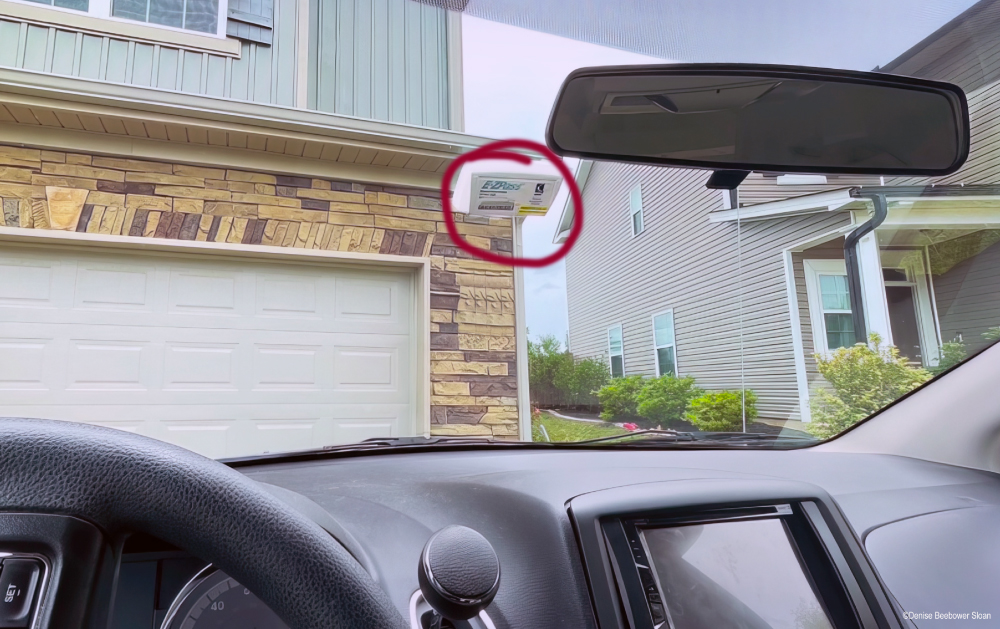
The EZ Pass transponder simplifies paying tolls in the northern states.
One exception to this might be smaller exits in New Jersey. On this last move, we discovered the toll booths only accept cash, no credit cards. My husband barely managed to scrape $48 together. Would my husband have been held hostage if he couldn’t pay cash? I’m not sure, but I’d say it was a 50/50 chance.
Driving a rental truck and dealing with tolls was a confusing experience. We had transponders for our two vehicles, one of which we were towing behind the UHaul truck. So did we leave the transponder in the van? Use it in the UHaul or what?
After a frantic search for answers on the UHaul website, it turned out that they paid the toll fees in the “cashless tolls” and then billed us. Before we left New York, we removed our transponder from the van windshield and wrapped in foil to prevent scans. We only paid at exits that had a toll booth like the one in New Jersey.
Traffic Trials
I did grow up in a big city with rush hour, but Northern cities like Washington, DC, Philadelphia and New York City make Dallas’ rush hours seem inconsequential.
We quickly learned a few things: 1) Plan your trip before or after rush hour if at all possible. 2) Add a lot of extra time in your commute. 3) Expected frustrated, annoyed drivers.
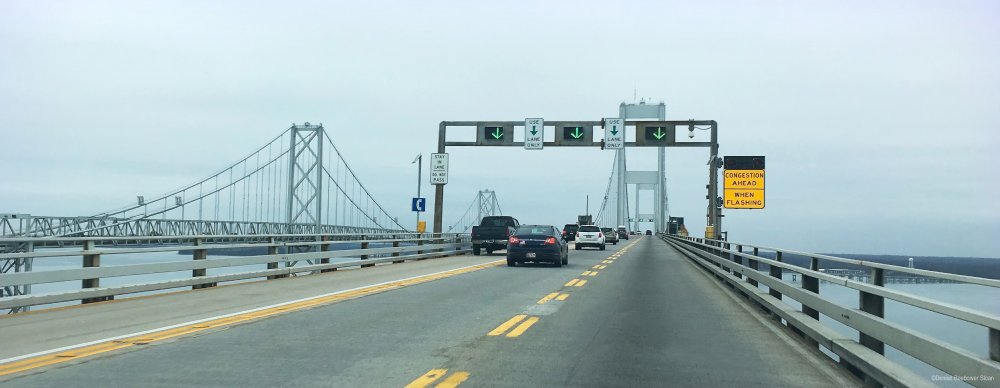
Even the Chesapeake Bay Bridge experiences traffic!
Annoyed drivers are a bit scary on the next traffic trial. Civil engineers up North seem to love traffic circles. At best, they are confusing. At worst, they’re a traffic accident waiting to happen. My best advice is drive defensively and assume the other driver really is about to do the dumb thing you think they’re about to do.
Northern roads also have very short highway on-ramps compared to the reasonable, long ramps of the South. Know that warp speeds will be necessary to successfully merge with flowing traffic.
And sometimes merging with the traffic is impossible. When we were at stationed at West Point in New York, groups of motorcyclists regularly whizzed in and out among drivers. So expect speed demons and aggressive driving no matter where you might live up North. To be fair, the South has it’s share of aggressive, fast drivers too, though.
Winter is a Thing Up North
For those moving from the South, take winter driving seriously. Within one week of moving to Maryland and two weeks in New York, snow storms hit us. The two states couldn’t have responded more differently.
The Maryland snow storm dumped 14” of snow on us overnight, something rather unusual for the Old Line State. It took four days for a snow plow to reach our street and that happened only because our neighbor trudged through snow drifts to flag down a snow plow.
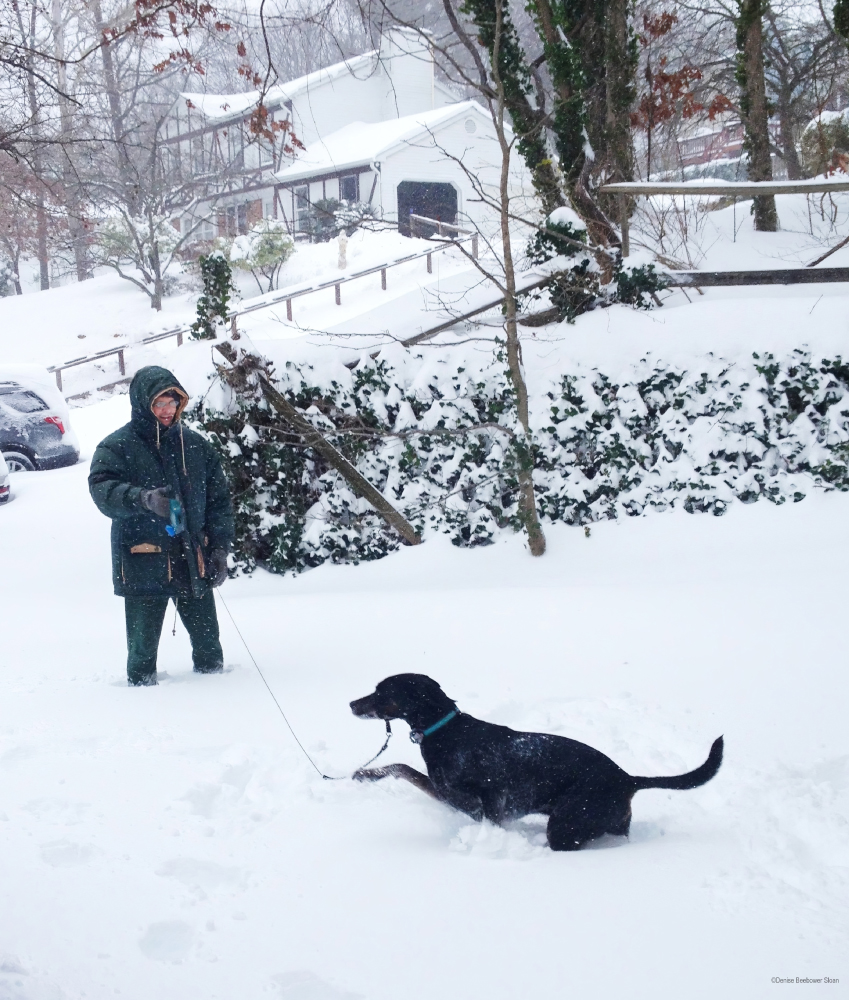
A giant snow storm dumped several feet of snow on us.
The New York snow storm dropped about six inches of snow. I conned my husband into driving me over Storm King Mountain to pick up my parents the next day at the airport. I was really nervous based on my Maryland experience.
Within hours, the roads were plowed, salted and drivable. A bit scary for a Southerner but definitely drivable.
I did cut Maryland a little slack. It was a monster storm. But, in general, states like New York and Pennsylvania deal with snow more often and life goes on quickly.
In addition to keeping up with the weather reports, I kept a winter kit in my car. I was a Girl Scout. Our motto was “be prepared”. My kit consisted of: kitty litter (for traction on snow or ice), a small shovel, MREs, bottled water, flares, brightly colored flag to attract attention (if I got stuck in a snow bank), batteries, a mirror, flashlight, jack knife, hand warmers, blanket, socks, jacket, old school map and first aide kit. I also kept my AAA membership up to date for things like flat tires and dead batteries.
I lived in Maryland for four years and New York for three years. We never put snow tires on my minivan or my husband’s car. However, in New York we lived on post and chose to stay home if the roads were bad. If you must drive everyday and live in an area with treacherous roads, it’s something to consider.
How much?!
Finally, driving in northern states costs more. From insurance to gas everything seemed more expensive. When planning a trip, we had to include the toll costs as well. It took us a couple of months to get our budget adjusted.
While exiting New York state was like a game of Chutes and Ladders, we did enjoy our time in the up north. All of the Northern states offer amazing fall foliage, historic landmarks and intriguing cities. So now that you’re prepared, go and enjoy all that the Mid-Atlantic and Northeast have to offer.